
Byrd Park
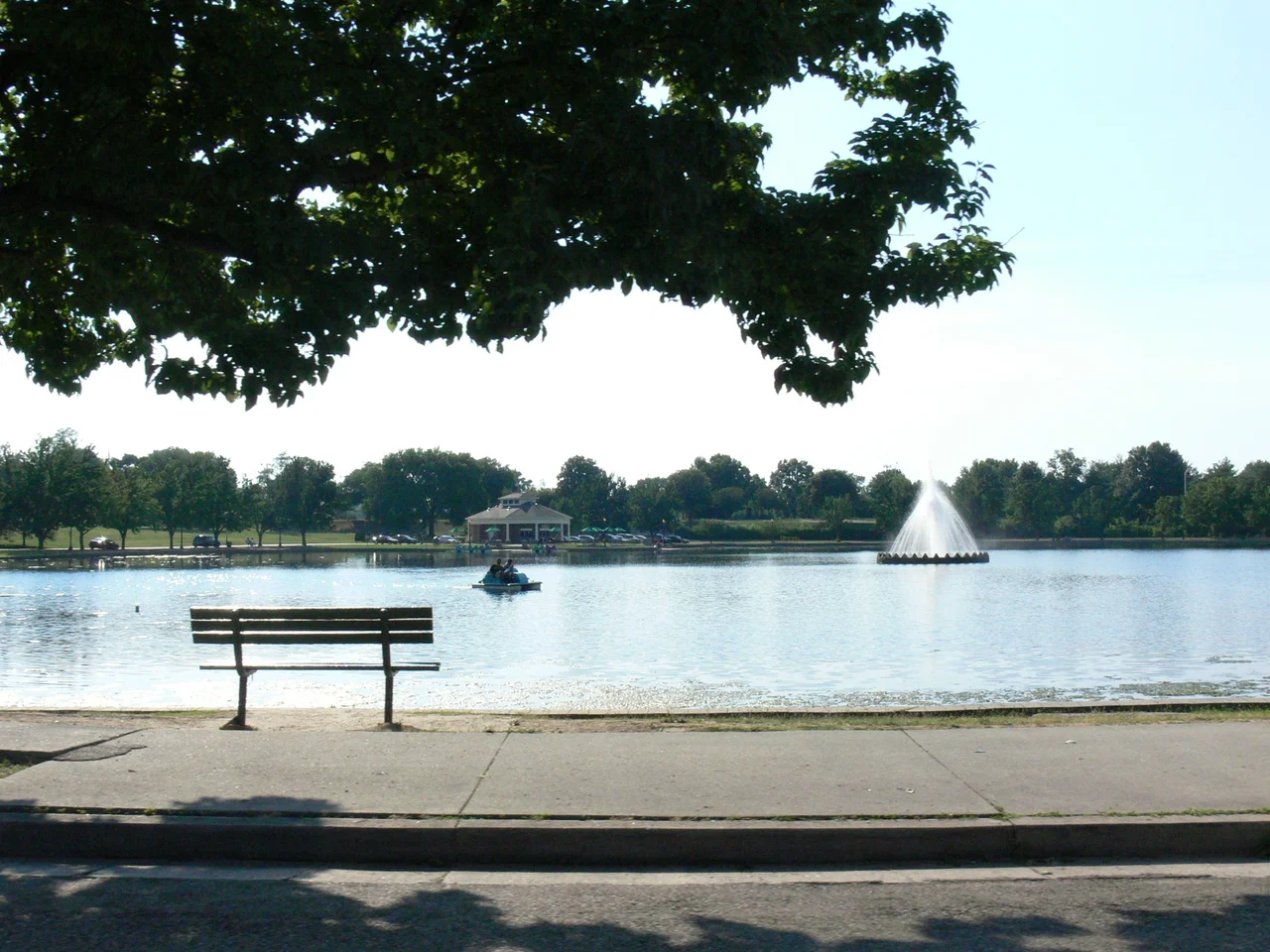
On the night of June 9, 2020, a bronze Christopher Columbus went into Fountain Lake. The statue had stood in Byrd Park since 1927; the lake had been dug a century earlier as a borrow pit to build the city's new reservoir, then left to fill with water. The pit's accidental beauty had outlasted its industrial purpose, the same way the park itself had outlasted the 19th-century waterworks that gave birth to it. The 287 acres around the reservoir were originally called, with civic frankness, New Reservoir Park. By 1907, after the trees had grown in, Richmond decided the place deserved a better name and gave it to William Byrd II, whose family had owned this stretch of the James long before there was a city to need parks.
The Reservoir That Grew a Park
The story starts in 1873 with a city outgrowing its plumbing. Richmond's old waterworks couldn't keep up, and engineers chose a site upriver to the west for a new reservoir. From 1875 to 1888 they bought the land and dug the basin, throwing the excavated earth into berms. The pit they left behind filled with water and became Fountain Lake. In 1884 they built the New Pump-House at the bottom of the hill, drawing water from the defunct James River and Kanawha Canal and pumping it up the bluff. The road carrying the main was named, with the same civic literalism, the Boulevard. Around all this functional infrastructure, the city laid out a park. By 1914, plans were underway for two more lakes - Shields and Swann - and what had started as municipal water management was on its way to becoming Richmond's signature green space.
The Carillon
Stand anywhere in Byrd Park and you can see it: a 240-foot brick tower in Georgian classicism, Virginia's interpretation of an Italian campanile. The World War I Memorial Carillon was designed by Boston architect Ralph Adams Cram and dedicated on October 15, 1932, in memory of the roughly 3,700 Virginians who died in that war. Inside hang 53 bells. They ring on Veterans Day, Memorial Day, and the Fourth of July, and they are loud enough to be heard across a wide swath of the city. The carillon went on the National Register of Historic Places in 1984; the park around it joined the register in 2016. There is something fitting about a memorial that doesn't just stand there but actually speaks - that on certain days throws sound across the lakes and lawns where everyone can hear it whether they came to remember or not.
Dogwood Dell and the Cannons
Tucked into the trees below the carillon is Dogwood Dell, an amphitheater that has hosted Richmond's Summer Festival of the Arts since the 1950s. The festival celebrated its fiftieth season in 2006. Plays, concerts, children's events, and one tradition that is pure Richmond: every Fourth of July, the Richmond Concert Band closes the evening with Tchaikovsky's 1812 Overture, accompanied by real cannon fire and a fireworks display, with the carillon ringing across the whole thing. May brings the Arts in the Park festival, when more than 400 artists and artisans set up to sell their work. December brings a live Nativity pageant at the carillon, a Richmond tradition for more than 60 years.
What the Park Holds
Byrd Park is bigger than most visitors realize - 287 acres of paths, fields, woods, and water. There is a mile-long fitness trail. There are tennis courts, Little League fields, and a children's playground. There are three lakes: Shields (occasionally spelled Sheilds, just to keep things interesting), Swan, and Boat Lake - which is also called Fountain Lake because of the lighted fountain rising from its center. You can rent pedal boats in season. There is the historic round house, once part of the waterworks. There is Poplar Vale Cemetery, quietly tucked into the grounds. And in 2016 the Richmond Police Memorial moved here - an eight-foot bronze officer carrying a girl who clutches a teddy bear, with a plaque naming 28 Richmond officers killed in the line of duty between 1869 and 2003. The memorial was later removed after being vandalized in the summer of 2020. The lakes and the trees and the carillon stay; the smaller things at the edges keep shifting.
From the Air
Coordinates 37.5408 N, 77.4839 W, west of downtown Richmond just north of the James River and adjacent to Maymont. Best viewed from 1,500-3,000 ft AGL. The 240-foot World War I Memorial Carillon is the most distinctive landmark from the air - a brick campanile rising from the trees, visible for several miles. Look for three small lakes clustered to its east. Richmond International Airport (KRIC) lies 8 miles east-northeast; Chesterfield County Airport (KFCI) is 7 miles south.
Nearby Stories
- Kings Dominion 8.4 km away
- Battle of Hatcher's Run 9.7 km away
- Francisco's Fight 14 km away
- Piney Grove at Southall's Plantation 17 km away
- Jamestown Settlement 19 km away
- Battle of Amelia Springs 22 km away
- Menokin 29 km away
- Highland (James Monroe House) 42 km away