
The Forgotten Rush
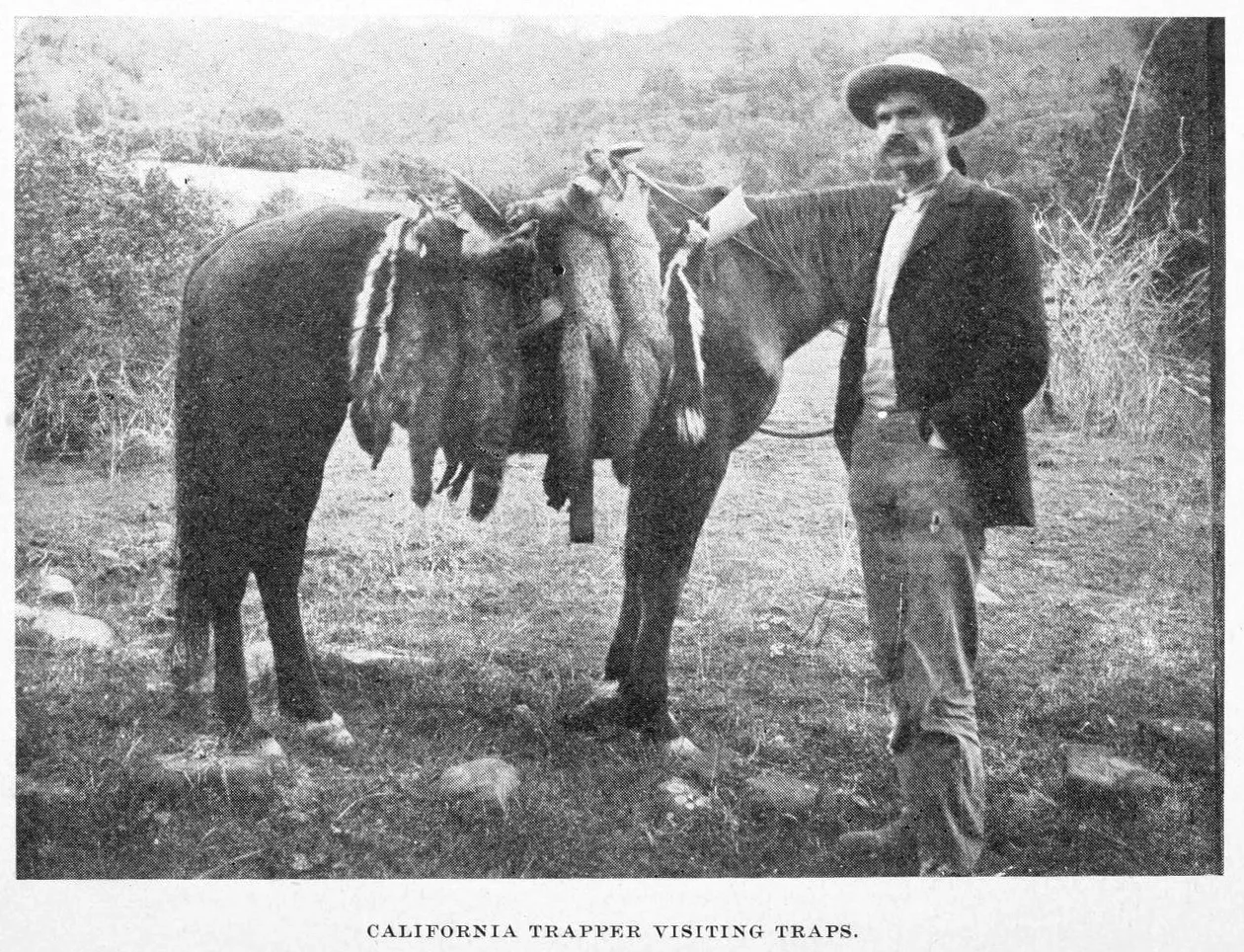
In 1786, an otter skin in California was worth no more than two hare pelts. Within a year, a single sea otter pelt sold in Canton for ten dollars, and every maritime power on earth wanted in. Long before the forty-niners panned the American River, a quieter rush was already reshaping California. American, Russian, English, and Spanish hunters converged on its coastline and estuaries, pursuing sea otters, fur seals, and beaver with an intensity that would drive species to the edge of extinction and, almost as a side effect, open the San Francisco Bay Area to world commerce.
Captain Cook's Accidental Fortune
The Pacific fur trade began with a dead man's cargo. In 1778, Captain James Cook's crew obtained otter skins at Nootka Sound on the Northwest Coast during his third voyage. Cook was killed in Hawaii before reaching China, but when his surviving sailors arrived in Canton, the prices Chinese merchants paid stunned them. The skins yielded an 1,800 percent profit. Five years later, John Ledyard brought the news to Connecticut, and New England merchants, still reeling from the economic collapse that followed the American Revolution, saw their salvation. By 1787, American ships were hunting sea otters along the Pacific coast. By the 1790s, they dominated the coastal fur trade south of Russian America. The rush for fur accomplished what the struggle for independence could not: it gave New England's shattered merchant class a new route to prosperity, one that ran through the kelp beds and estuaries of Spanish California.
Empires in the Estuary
Spain had sailed California's coast since Cabrilho's voyage in 1542, but it took a Frenchman and a bureaucrat to reveal what the Spanish had been sitting on. In 1786, La Perouse sold a thousand otter skins in China for ten thousand dollars and reported that the Indians at Monterey caught the animals with snares. Vicente Vasadre y Vega, arriving just one month before La Perouse, implemented a monopoly: all otter skins had to be sold to him. He sailed from San Blas that November with 1,060 pelts, bound for the Philippines aboard the Manila galleons. Russia pushed from the north. In 1809, the Russian-American Company's Ivan Kuskov sailed into Bodega Bay, returning to Sitka with over 2,000 sea otter pelts and establishing what would become Fort Ross. Americans contracted to the Russians smuggled Aleut hunters into San Francisco Bay in kayak-like baidarkas, despite Spanish soldiers capturing or shooting them in the estuaries of San Jose, San Mateo, and San Bruno. Three empires contested the same waters, hunting the same animals toward oblivion.
The Farallons' Silent Rocks
Twenty-seven miles west of the Golden Gate, the Farallon Islands became a killing ground. In 1810, four American ships rendezvoused there and took at least 30,000 seal skins in a single season. The harvest was so thorough that by 1822, the annual take had collapsed to 1,200. The Russians suspended the hunt for two years, hoping numbers would recover. They did not. From 1824 onward, catches fell steadily to around 500 per year until the northern fur seal was extirpated from the islands entirely. The pattern repeated everywhere: hunt to exhaustion, move south, hunt again. By 1817, sea otters near San Francisco were practically eliminated, and the Russians petitioned Spanish and Mexican authorities to hunt progressively further down the coast, eventually reaching the Baja California peninsula. Hudson's Bay Company trapper Michel Laframboise arrived at San Francisco Bay in 1832 and noted that it still abounded in beaver, but by 1841, even the Russians conceded the game was over. They abandoned Fort Ross, and the age of California fur was finished.
Hides Replace Pelts
The transition was swift and unglamorous. Richard Henry Dana, sailing the California coast in 1836, recorded the new reality at his last stop in San Diego: forty thousand cattle hides and thirty thousand horns stowed below, alongside just a few barrels of otter and beaver skins. The hide trade had overtaken fur. California's economy shifted from wild harvest to ranching, a transformation that would itself be overtaken within a generation by the gold rush of 1849. Yet the fur rush had already done its most consequential work. It had brought Russian settlements, American trading networks, British trappers, and French explorers into collision along a coastline Spain could no longer defend. The San Francisco Bay Area, in particular, had been mapped, exploited, and connected to global markets decades before anyone discovered gold at Sutter's Mill.
The Slow Return
By 1911, the California sea otter had been hunted to near extinction, prompting the U.S. government to begin managing the species as a protected resource. The international Fur Seal Treaty of the same year banned hunting fur seals in the ocean. For decades, recovery seemed impossible. Then, in 1938, a colony of roughly 50 southern sea otters was discovered near Bixby Creek along the Big Sur coast, descendants of a population everyone assumed had vanished. As of the spring 2019 survey, that colony's descendants numbered 2,962 along the central California coast, still far below the estimated pre-trade population of 16,000, but growing. Fur seals began recolonizing the Farallons in 1996. California golden beaver are spreading through the Bay Area's creeks and marshes, reclaiming territory from Martinez to Palo Alto. Both the sea otter and the golden beaver are keystone species whose return reshapes entire ecosystems. The animals the fur rush nearly erased are, slowly, writing themselves back into the landscape.
From the Air
The California fur rush played out across a vast coastal geography. Key landmarks include Bodega Bay and Fort Ross (38.51N, -123.25W) on the Sonoma Coast, where Russian hunters established their base. The Farallon Islands (37.70N, -123.00W) are visible west of the Golden Gate as rocky outcroppings in the Pacific. San Francisco Bay (37.75N, -122.42W) and the Sacramento-San Joaquin Delta to the east were the primary beaver-hunting grounds. From altitude, Crystal Springs Reservoir and the linear valleys of the Coast Range trace the routes trappers used. Nearby airports include San Francisco International (KSFO), Oakland International (KOAK), and Sonoma County Airport (KSTS).
Nearby Stories
- Kearney Park: A Raisin King's Utopia in the Dust 13 km away
- Panoche Hills: California's Last Desert Refuge 17 km away
- Yamato Colony: The Forty-Acre Bet 18 km away
- Merced National Wildlife Refuge 20 km away
- California's Underground Treasury 24 km away
- Sequoia: Standing Among the Largest Living Things on Earth 91 km away
- Mono Lake: Where Salt Towers Rise From Dying Water 94 km away
- Mono Lake 122 km away