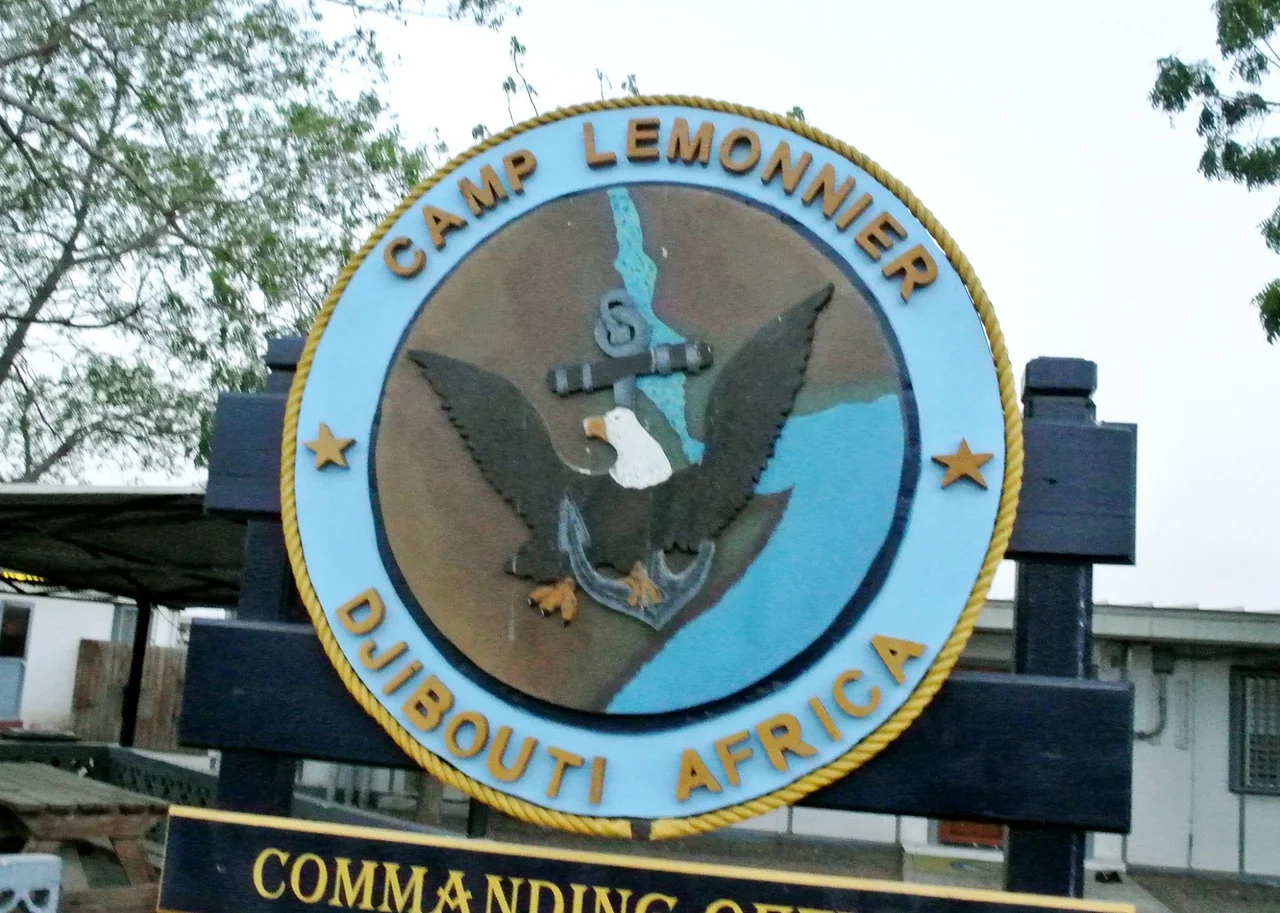

Camp Lemonnier
When American Marines first walked through the gates of Camp Lemonnier in 2002, the place was a ruin. The buildings were concrete shells stripped of wiring and pipes; several roofs had collapsed; goats roamed the property. The former French Foreign Legion swimming pool had been used as a trash dump. Two decades later, the same compound - expanded from 88 acres to nearly 500 - hosts roughly 4,000 American personnel, is rented from Djibouti for $63 million a year, and sits at the centre of the most sustained drone campaign in history.
Why Djibouti
Djibouti is small, dry, and strategically positioned. It sits at the mouth of the Red Sea where every tanker to Asia passes through the Bab-el-Mandeb strait, just across from Yemen and an easy flight from Somalia. That geography matters. After the USS Cole was bombed in Yemen in October 2000 and the September 11 attacks followed a year later, the U.S. needed a forward operating base for what it called the Combined Joint Task Force - Horn of Africa. The base would be operated initially by Marines, then from 2006 by the Navy under Captain Robert Fahey. Camp Lemonnier itself is named for General Emile-Rene Lemonnier, a French officer who led the 3rd Brigade of the Tonkin Division in fierce resistance to the 1945 Japanese coup d'etat in French Indochina and was executed for it. The U.S. Navy spelled his name wrong for years before correcting it in 2009.
The Drone Campus
Initial American operations at Lemonnier involved SEAL Team One Bravo, Air Force combat controllers and pararescuemen from the 23rd Special Tactics Squadron, Marine FAST teams for security, and the 7th Special Forces Group. On 3 November 2002 a CIA General Atomics MQ-1 Predator flying from Djibouti launched a missile into Yemen that killed six Al-Qaeda suspects, including Qaed Salim Sinan al-Harithi - one of the alleged masterminds of the USS Cole bombing. That single strike, carried out weeks after the base was barely habitable, set the template for everything that followed. By 2012 The Economist described Lemonnier as 'the most important base for drone operations outside the war zone of Afghanistan.' An estimated 300 JSOC personnel operated from a secure compound inside the camp, tasking a flight of eight MQ-1 Predators against targets in Somalia, Mali, and Yemen.
Operations Copper Dune, Jupiter Garnet, Octave Shield
The operations had names: Copper Dune for Yemen, Jupiter Garnet for Somalia, Octave Shield for the broader Combined Joint Task Force activity. In October 2011 a squadron of USAF F-15E Strike Eagles arrived. They flew combat missions into Yemen, sometimes supporting Yemeni government forces, sometimes carrying out unilateral strikes directed by JSOC and CIA targeting cells. Pilatus U-28s conducted signals intelligence flights. Between March and May 2011 three MQ-1 Predators had mid-flight mechanical problems at Lemonnier, leading to two crashes and a drone with a live Hellfire missile crashing into a Djibouti suburb. By 2013 the drones had been moved inland to Chabelley Airport, a remote desert strip. In May 2014 President Obama and Djiboutian President Ismail Omar Guelleh agreed to a 20-year lease extension at double the previous rate, with plans to spend $1.4 billion on upgrades.
The Base Next Door
In 2017 China opened the Chinese People's Liberation Army Support Base in Djibouti just a few kilometres from Camp Lemonnier - the first overseas military installation Beijing had ever built. The two bases exist in uneasy proximity. In May 2018 the U.S. Air Force said military-grade lasers had been aimed at American pilots' eyes during operations out of Lemonnier, and that the incidents had originated on the Chinese base. China denied it. The incident captured the small country's new strategic reality: Djibouti now hosts bases operated by the United States, France, Japan, Italy, and China, earning hundreds of millions of dollars a year in rent on a coastline of just 314 kilometres.
The Shipping Container
In May 2025 the Trump administration attempted to deport eight men - convicted of serious crimes in the United States, and citizens of Vietnam, South Korea, Mexico, Laos, Cuba, Myanmar, and South Sudan - to war-torn South Sudan. A federal judge blocked the removal. The administration instead held the men at Camp Lemonnier in what court filings described as a conference room inside a Conex shipping container, in conditions including smoke from burn pits that made it 'difficult to breathe' and 'imminent danger of rocket attacks from terrorist groups in Yemen.' For the men inside the container, Camp Lemonnier was not a strategic asset or a drone hub. It was a box on the hottest coastline in Africa where American law, briefly, could not reach them. The New York Times and NPR reported on the detention. The Trump administration eventually removed them to South Sudan anyway after further court rulings - leaving, for a few months in 2025, an unusual footnote on the base's quarter-century of operations.
From the Air
Camp Lemonnier sits at 11.32N, 43.09E, adjacent to Djibouti-Ambouli International Airport (HDAM/JIB) which the base shares. The airport lies 6 km south of Djibouti City, at sea level, surrounded by arid coastal plain. Chabelley Airport, where the drone fleet moved in 2013, is about 10 km southwest at 11.52N, 42.75E. Expect hot, hazy conditions year-round; summer highs routinely exceed 42C with limited haze-free visibility. Ambouli is one of the busiest multinational military aviation facilities in Africa - coordinate carefully with ATC and military airspace users.
Nearby Stories
- Port of Djibouti 7.9 km away
- Lake Assal (Djibouti) 14 km away
- Djibouti 53 km away
- Adal Sultanate 164 km away
- Berbera 170 km away
- British Attack on Berbera (1827) 185 km away
- Somaliland 201 km away
- Aden 203 km away