
Djibouti
Planet of the Apes filmed its 'Forbidden Zone' here, and the location choice was not an accident. Lake Abbe, on Djibouti's western border with Ethiopia, is a landscape of steaming lakes, limestone chimneys up to 50 meters tall, and a lunar desolation that looks less like Earth than like somewhere Earth used to be. This small country - about 23,000 square kilometers wedged between Eritrea, Ethiopia, and Somalia on the Gulf of Aden - spends most of its existence being overlooked. Then you arrive, and the scale of its strangeness becomes immediate.
Africa's Lowest Point
Lake Assal sits 155 meters below sea level, making it the lowest point in Africa and the third-lowest on the planet. Its shores are salt pans so bright they hurt to look at under full sun. The lake itself is one of the saltiest bodies of water on Earth - saltier than the Dead Sea - a crystalline blue so clear and dense it looks almost artificial. Nearby is Ardoukoba, a volcano that last erupted in 1978, part of the geologically restless Afar Triangle where three tectonic plates are pulling apart. The roads out there are rough - destroyed, local travelers warn, by truck traffic running cargo between Djibouti's port and landlocked Ethiopia. Going requires a car and a willingness to be awestruck.
The Port That Runs Ethiopia
Djibouti's strategic value is impossible to overstate. The country sits on the Bab el-Mandeb strait, the narrow chokepoint where the Red Sea meets the Gulf of Aden. Every ship heading from the Suez Canal to the Indian Ocean passes within sight. For landlocked Ethiopia - a country of over 100 million people - Djibouti's port is the lifeline that connects it to world trade. Passenger train service between Ethiopia and Djibouti City was restarted in December 2016 along the Addis Ababa-Djibouti railway. Trains now make the 750-kilometer journey in about 12 hours. The same journey by road used to take three days. The line mostly handles freight, but it also carries passengers who once had no practical rail option at all.
Camp Lemonnier and the Military Landlords
Foreign military bases crowd Djibouti's small territory. The United States operates Camp Lemonnier, the only permanent U.S. military base on the African continent, out of a facility that was once part of a French colonial fort. France, the former colonial power, maintains significant forces. Japan operates its only overseas base here. China built a naval facility in 2017 - its first foreign military installation. Italy, Germany, Spain, and others have troops on rotation. For Djibouti's government, this represents lease income. For the small population of around 1 million - predominantly Somali and Afar peoples speaking French, Arabic, Somali, and Afar - it represents a peculiar form of importance. A country most people couldn't find on a map hosts military forces from most of the nations most people could.
Of Khat and Commerce
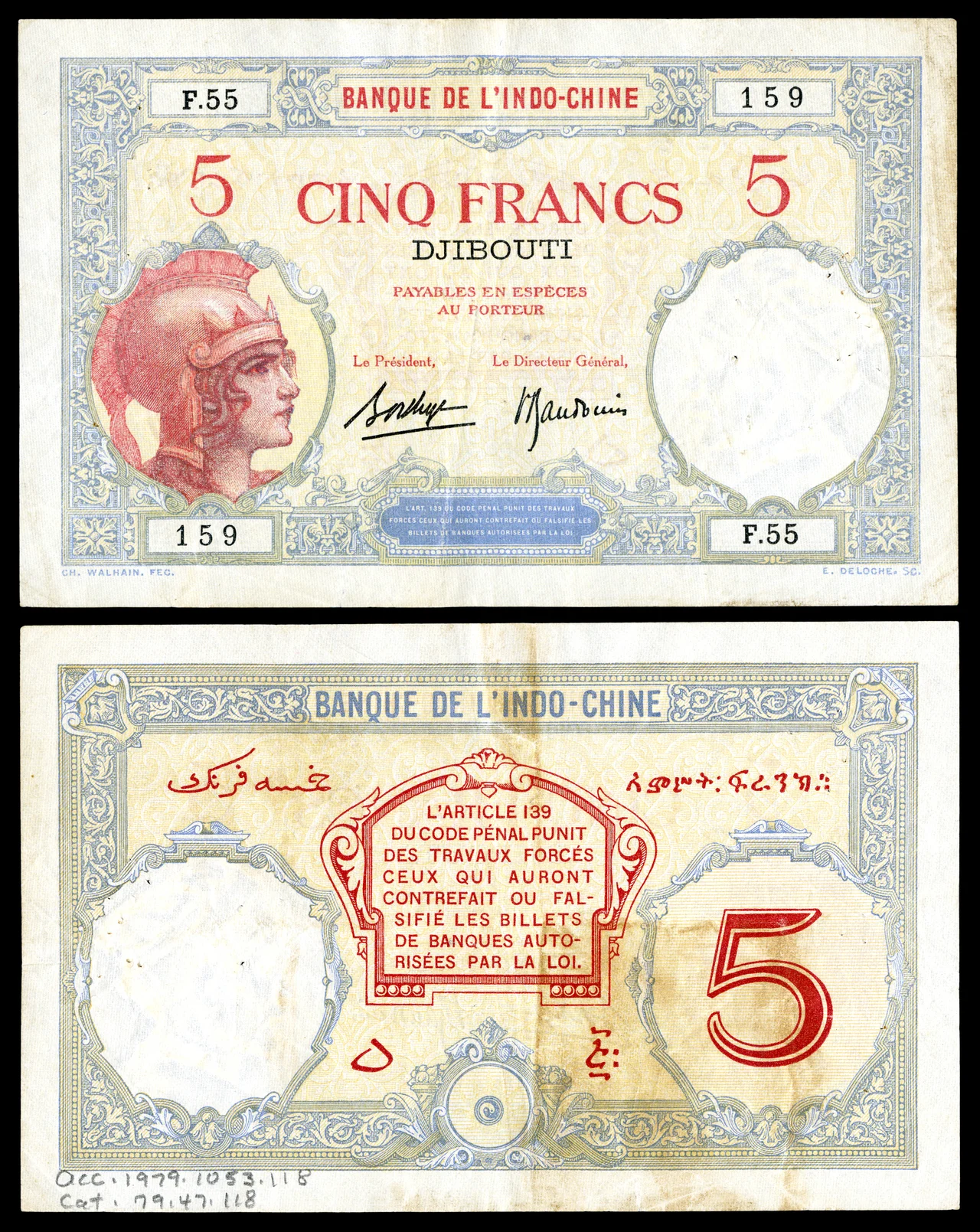
Khat arrives by truck in Djibouti's Central Market around 1 pm each day, flown in that morning from Ethiopia. The leafy stimulant is a central pillar of daily life - chewed in bundles through the afternoons, sold at variable quality and fairly inexpensive prices. You cannot take it out of the country through the airport. The Djiboutian franc, pegged to the U.S. dollar, comes in banknotes up to 10,000 and coins as small as 1 franc. Street money-changers - women who line the market area waiting to convert foreign currency - are generally honest brokers. Most of them speak basic English. The markets are boisterous, the tourist traps ready, and the Ethiopian Community Center offers some of the best and cheapest food in Djibouti City.
Whale Sharks and Volcanic Reefs
Despite the arid interior, Djibouti's coast is one of the richest and most accessible whale-shark sites in the world. The Gulf of Tadjoura and the narrower Ghoubet Kharrib draw these massive filter-feeders between November and January, when plankton blooms bring them close to shore. The chance of seeing them during peak season runs 70-80 percent; during warmer months it drops close to zero. Sea kayaking, snorkeling, and scuba diving all work along this coast, where reefs teem with life fed by the upwellings that the Afar Triangle's geology creates. It is a country of extremes: some of Earth's most desolate landscapes inland, some of its richest marine biodiversity offshore, and a human population that navigates between them with a practiced ease.
From the Air
Coordinates: 11.80°N, 42.43°E. Recommended viewing altitude: FL350-FL400. Visible landmarks: Gulf of Tadjoura (distinctive deep blue indentation), Lake Assal (white salt pan 155m below sea level), Djibouti City port and urban area on Gulf of Aden, Bab el-Mandeb strait to the southeast. Primary airport: Djibouti-Ambouli International (HDAM/JIB). Climate: hot arid year-round, extreme summer heat (often 40°C+), moderated by sea breezes on coast; cyclones from Indian Ocean possible in wet months.
Nearby Stories
- Afar triple junction 16 km away
- French Submarine Vengeur 27 km away
- Sultanate of Aussa 44 km away
- Djiboutian-Eritrean Border Conflict 70 km away
- People's Liberation Army Support Base in Djibouti 76 km away
- Lake Abbe 78 km away
- Assab 106 km away
- Southern Red Sea region 184 km away