.jpg)
Cardiff Docks
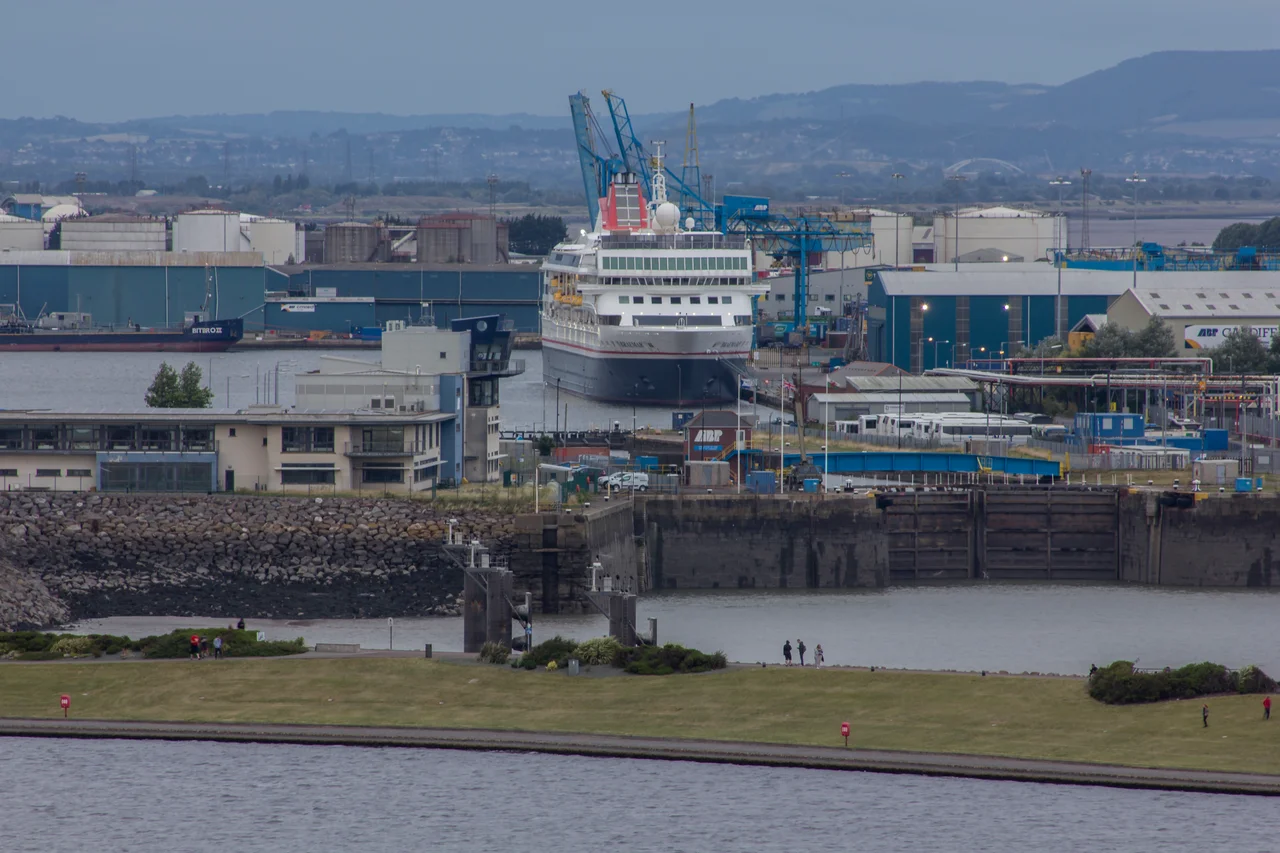
In 1913 something like 10.7 million tons of coal left Cardiff Docks for ports across the world. By 1964 the last shipment sailed. The intervening fifty-one years took out almost every industry the docks had ever supported: 122 shipping companies in 1920 dwindled to a handful by the 1960s; the Coal Exchange where coal traders had set world prices over breakfast became a derelict ruin; the rows of merchants' offices, ships' chandlers and seamen's boarding houses went one by one as the work that supported them vanished. What lifted Cardiff to one of the world's great ports, and what eventually drained it again, were the same two things: the Welsh coal seams in the valleys to the north, and the choices of the men who owned the land between those seams and the sea.
Iron, Then Coal
The story begins with iron. The works at Merthyr Tydfil and Dowlais needed an export route, and in 1794 the Glamorganshire Canal opened from Merthyr down to Cardiff, with a sea basin built in 1798 to connect canal traffic to the Bristol Channel. By the 1830s Cardiff was shipping almost half of all British iron exports abroad. The town was still small - a few thousand people clustered near the castle - but the iron trade was already remaking it. Then came the coal seams. From the 1840s the Cynon Valley and the Rhondda Valley opened up. Coal supplanted iron as the export of choice; between 1840 and 1870 the volume rose from 44,350 tons a year to 2.219 million. The man who saw what was coming was John Crichton-Stuart, second Marquess of Bute, who owned most of the land. He pushed Parliament to authorise the West Bute Dock, designed by Admiral William Henry Smyth with George Turnbull as resident engineer. It opened in October 1839 and changed Cardiff's fortunes.
The Bute System
Bute kept building. The East Bute Dock, designed by James Walker and built by Thomas Cubitt's firm, opened in 1859. The Bute Docks Feeder - the canal that supplied dock water from the River Taff at Blackweir in Maindy - still flows largely open through central Cardiff, except for a culvert between the New Theatre and the Cardiff International Arena. By 1862 coal exports had reached two million tons. Rival ports got impatient. Penarth Docks opened in 1865 to serve coal owners frustrated with Bute prices and Bute delays. Then in 1889 a much greater threat: Barry Docks, championed by David Davies of Ocean Collieries, deep-water and tidally unobstructed. Barry could handle bigger ships and turn them around faster. Cardiff responded by building Roath Dock in 1887 and Queen Alexandra Dock in 1907 - the latter opened by Queen Alexandra herself, sailing in on the royal yacht. By 1913 Cardiff was second only to Barry in coal exports, and the two together made the South Wales coalfield the busiest export coalfield on earth.
The Coal Exchange
What made Cardiff Cardiff was not just the volume of coal but the trade in it. Each working day the captains of industry walked from their offices in Mount Stuart Square into the opulent Coal Exchange and there, on its floor and in its private rooms, set the price of coal for the world. The first million-pound cheque in history was reputedly signed in the Coal Exchange, though the documentation is debated. The exchange opened in 1888 and ran through the great years. By 1910, 250 tramp steamers were registered to Cardiff owners alone. William Cory and Son, Morel, Evan Thomas Radcliffe, Tatem, Reardon-Smith - the names of the great Cardiff shipping firms became known in every port from Genoa to Buenos Aires. The first Cardiff-registered steamship, the Llandaff, had been launched in 1865. By the First World War the city had a merchant fleet of global reach. Then 1913 happened, and after 1913 nothing was quite the same.
Tiger Bay
The seamen who manned the ships came from everywhere. Cardiff Docks brought Norwegian, Somali, Yemeni, Caribbean, Spanish, Italian and Irish sailors ashore, and many stayed. They settled in Butetown, the residential quarter next to the docks, and the area became known as Tiger Bay - a name that referred originally to the fierce currents of the local stretch of the Severn estuary, but came to mean any rough dockside neighbourhood in Victorian slang. The reputation was harder than the reality. Many of the murders and crimes attributed to Tiger Bay were committed in Charlotte Street and Whitmore Lane outside it, by sailors who shipped out before they could be arrested. But the multicultural mix was real and lasting. Wales' first Black head teacher Betty Campbell grew up here. So did Shirley Bassey. The Cairo Cafe at the corner of Bute Street operated as restaurant, boarding house and mosque between 1940 and 1968, run by Yemeni sailor Ali Salaman and his Welsh wife Olive.
The Slow Goodbye
Cardiff's decline was visible from 1910 onward, when Barry overtook it as the biggest coal exporter in Britain. The First World War interrupted the rhythm. The Treaty of Versailles flooded Europe with cheap German reparation coal. Oil began replacing coal as ships' fuel. The Great Depression laid up tramp steamers along every quayside. The last shipment of coal sailed from Cardiff in 1964. What followed - the redevelopment of the area into Cardiff Bay through the 1980s and 90s under the Cardiff Bay Development Corporation - is told in the Tiger Bay story. The Cardiff Barrage, completed in 1999, dammed the Taff and the Ely to create a freshwater lake where mudflats had been. Today only two of the original docks remain operational - Roath Dock and Queen Alexandra Dock - handling timber, oil, scrap and container traffic with shipping movements of perhaps ten or twelve per tide. Roath Basin survives as a hospitality berth. The rest of the dock system has been filled in, built over, or - in the case of the freshwater lake - drowned. Cardiff is still a port. It is no longer a Coal Metropolis.
From the Air
Cardiff Docks sits at 51.4653 degrees north, 3.15382 degrees west, on the southern shore of Cardiff facing the Severn estuary. From cruising altitude in clear weather, look for the line of remaining wet docks - Roath Dock and Queen Alexandra Dock - to the east of the Cardiff Bay freshwater lake. Cardiff Airport (EGFF) lies about 8 nautical miles southwest; Bristol Airport (EGGD) is about 30 nautical miles east. The vast brown tidal range of the Bristol Channel is visible as a band of exposed mud at low water, while the freshwater lake behind the Cardiff Barrage remains constant. The white roof of the Wales Millennium Centre and the red-brick Pierhead Building of 1897 are easy landmarks at the northern end of the bay.
Nearby Stories
- Berkeley Castle 1 km away
- Tower Colliery 5.9 km away
- Battle of Sedgemoor 5.9 km away
- Royal Victoria Park 7.1 km away
- Ewenny Priory 8.9 km away
- Crumlin Viaduct 10 km away
- Stourhead 11 km away
- Exmoor 16 km away