
Cát Tiên Archaeological Site
In 1985, a local farmer stumbled across something that didn't belong in the jungle of southern Vietnam: the crumbling remains of brick towers and stone carvings half-swallowed by roots and undergrowth. The Cát Tiên Archaeological Site had been waiting for centuries to be rediscovered. Wedged between the two sectors of Cát Tiên National Park in Lâm Đồng Province, this sanctuary poses one of Southeast Asia's most intriguing historical puzzles — a Hindu civilization that flourished deep in the Central Highlands from the 4th to the 9th centuries AD, leaving behind temples, gold-leaf offerings, and a 2.1-meter stone lingam that remains the largest ever found in the region.
A Civilization That Doesn't Fit the Map
Scholars still debate who built Cát Tiên. The site's deeply Indianized character — its lingams, yonis, temple towers, and iconography of Hindu deities — points toward a civilization connected to the wider Indianized kingdoms of mainland Southeast Asia. Yet its location in the Central Highlands, far from the coastal polities that most historical accounts focus on, makes it an outlier. The people who inhabited this sanctuary between roughly 300 and 900 AD left no written records that have survived. What they left instead was stone: carefully carved, ceremonially significant, and still rich with meaning more than a thousand years after they placed it here. The site encompasses multiple temple mounds, each containing the ruins of brick towers built in the tradition of South and Southeast Asian Hindu architecture. Archaeologists have catalogued dozens of ritual objects — copper axes, crystal lingas, ceramic burial jars, gold leaf stamped with the figure of Lakshmi — that speak to a community deeply engaged with religious practice and trade.
The Lingam That Rewrote the Record Books
At Temple 1A, perched on a hilltop within the site, stands the object that brought Cát Tiên to international attention: a stone lingam measuring 2.1 meters tall. It is the largest stone lingam ever found in Southeast Asia. The lingam — a symbolic form of the god Shiva in Hindu and Shaivite tradition — would have been the devotional centerpiece of the temple, the focal point of ritual, prayer, and community identity. Its sheer scale suggests the community that commissioned it commanded substantial resources and held Shaivite belief at the core of their spiritual life. Surrounding it, archaeologists found yoni bases, stone pedestals, and architectural fragments that once formed a complete ritual complex. The hill itself amplified the sacred quality of the site: elevated, commanding views of the forest canopy, positioned to receive the first and last light of the day.
What the Earth Gave Back
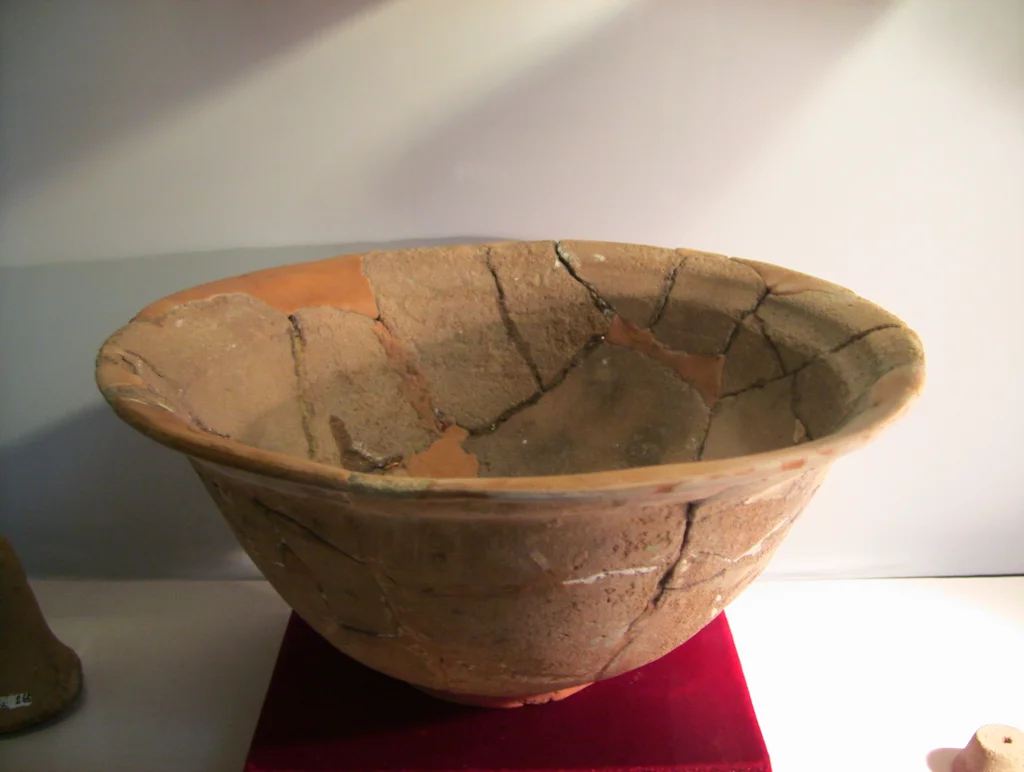
Excavations at Cát Tiên have produced an extraordinary range of artifacts, many of which are now held at the Vietnam Museum of History in Hanoi. A golden leaf bearing the image of Lakshmi, goddess of wealth and prosperity, speaks to the devotional life of ordinary worshippers. Copper axes and their casting molds point to craft production on-site. Ceramic bowls and burial jars suggest a community that honored its dead with ceremony. A statue of Uma riding the Mahisa buffalo monster — a scene from Hindu mythology — reveals an artistic sophistication that surprises visitors accustomed to thinking of the Central Highlands as a peripheral zone. These were not provincial copies of lowland art. They were the genuine expressions of a people who had made this jungle highland their own sacred world, and who brought to it the full depth of an Indianized spiritual tradition.
Mystery Preserved by Jungle
One reason Cát Tiên survived at all is that the jungle swallowed it. The dense canopy of Cát Tiên National Park — itself one of the most biodiverse remaining forests in southern Vietnam — grew over the temples for centuries, protecting the brickwork from human disturbance if not from the patient pressure of roots and humidity. When the site was accidentally discovered in 1985, it was substantially intact by the standards of Southeast Asian archaeological sites, many of which were looted or destroyed long before professional excavation could begin. Conservation remains a challenge: tropical climate accelerates decay, and the site sits in a region that saw intense conflict during the Vietnam War. Yet what has been preserved and excavated tells a story of remarkable depth. Cát Tiên is not a footnote to Vietnamese history. It is evidence that the Central Highlands hosted a sophisticated, spiritually rich civilization whose full story is still being pieced together.
From the Air
Located at 11.528°N, 107.399°E in Lâm Đồng Province, southern Vietnam. From the air at 3,000-5,000 feet, the site sits within the dense forest of Cát Tiên National Park, flanked by the Đồng Nai River valley. The river's course is a useful navigation landmark — the archaeological site lies between the two park sectors. Nearest airports: Liên Khương International Airport (DLI) is approximately 140 km to the northeast near Da Lat. Tân Sơn Nhất International Airport (SGN) in Ho Chi Minh City is roughly 150 km to the south. The terrain from above is a mix of intact forest canopy and agricultural clearings along the valley floor, with the temple mounds invisible under the tree cover.
Nearby Stories
- Di Linh 17 km away
- Battle of Coral–Balmoral 21 km away
- Battle of Long Khanh 29 km away
- Battle of Ong Thanh 39 km away
- Gia Nghia 40 km away
- Mui Ne 52 km away
- Trúc Lâm Monastery of Đà Lạt 57 km away
- Cambodian Genocide 148 km away