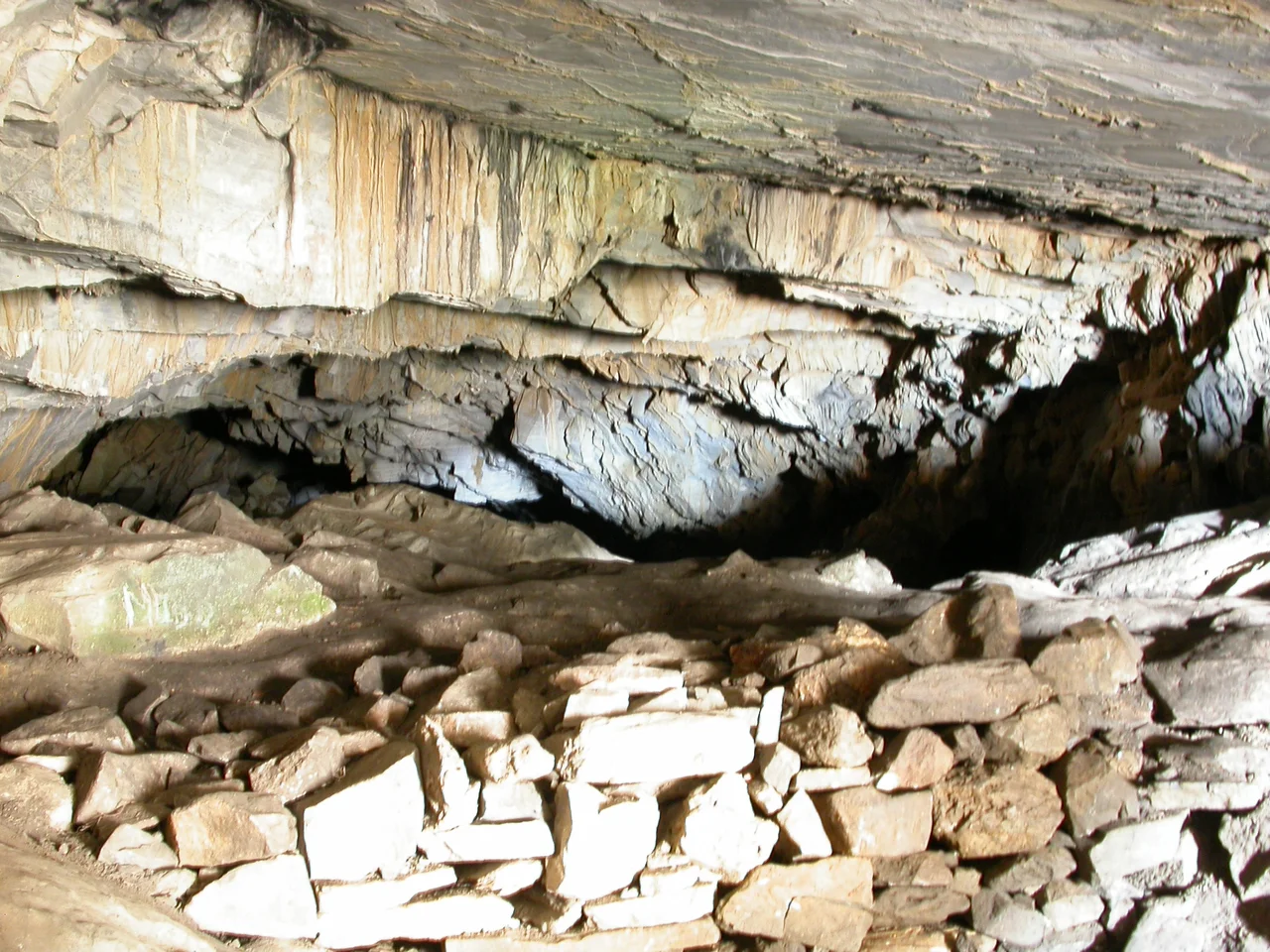

Cave of Zas
Naxos keeps its oldest secret near the top of its highest mountain. Mount Zas rises to roughly 1,004 meters, the loftiest summit in the entire Cyclades, and on a clear day its peak looks out over Paros, Ios, Amorgos and the distant rim of Santorini. Partway up its flank, at 630 meters above the sea, the rock opens into a cavern of stalactites and stalagmites. The Greeks called it the Cave of Zas, the Cave of Zeus, and the name was no accident. This mountain carried the king of the gods in its very syllables.
Where Zeus Was Raised
Myth holds that Zeus spent part of his childhood on this mountain, hidden away, and that an eagle delivered to him here the thunderbolt that would let him rule from Olympus. The connection was no passing folk tale. High on the ancient path to the summit, carved into the living rock, an inscription from the 4th century BC still reads as a dedication to Zeus, marking the mountain as sacred ground long before the modern world arrived. To climb toward the cave is to follow a route worshippers walked more than two thousand years ago.
Older Than the Gods
The cave's human story runs far deeper than Greek mythology. Archaeologists have found that people used it from the Late Neolithic through the Early Cycladic III period, beginning thousands of years before anyone told stories about Zeus. That makes this one of the oldest known inhabited places on Naxos, a shelter in use while the great Cycladic civilization, famous for its spare marble figurines, was still taking shape on the islands all around it.
Reading the Floor
What the cave was used for is a puzzle the excavations of 1985 to 1986 and 1994 helped solve. The archaeologists noticed something absent: there was almost no residue from processing crops, the telltale debris a year-round settlement leaves behind. Their conclusion was that no one lived here permanently. Instead the cave most likely served herders, a cool refuge for people and animals during the driest, harshest stretch of the Aegean summer, when the lowland pastures burned away and the high mountain held what little shade and moisture remained.
Into the Dark
The cave sits southeast of Filoti, a village tucked at the foot of the mountain, and reaching it still takes a hike along an old trail. Step inside and the temperature drops; large stalactites hang from the ceiling and stalagmites rise to meet them, the slow handiwork of dripping water over uncounted millennia. Standing in that cool dark, it is easy to understand why people kept returning here, from Stone Age shepherds to ancient pilgrims to the hikers who climb today. The mountain offered shelter, mystery, and a view fit for a god.
From the Air
The Cave of Zas lies at about 37.03 degrees N, 25.50 degrees E, at 630 meters on Mount Zas, southeast of the village of Filoti in the interior of Naxos. The nearest airport is Naxos Island National Airport (LGNX) on the island's west coast, a short distance away. From the air, Mount Zas is the dominant peak of Naxos and the highest point in the Cyclades, its bare upper slopes rising above the green Tragaia valley. Summer offers the clearest conditions, though mountain haze can build in the heat of the afternoon.
Nearby Stories
- The Big Blue 15 km away
- Italian submarine Jantina (1932) 17 km away
- Archaeological Museum of Sifnos 19 km away
- Miaouli Square 20 km away
- Astypalaia 37 km away
- Ikaria 38 km away
- Milos 49 km away
- Monastery of Saint John the Theologian 58 km away