
Celbridge
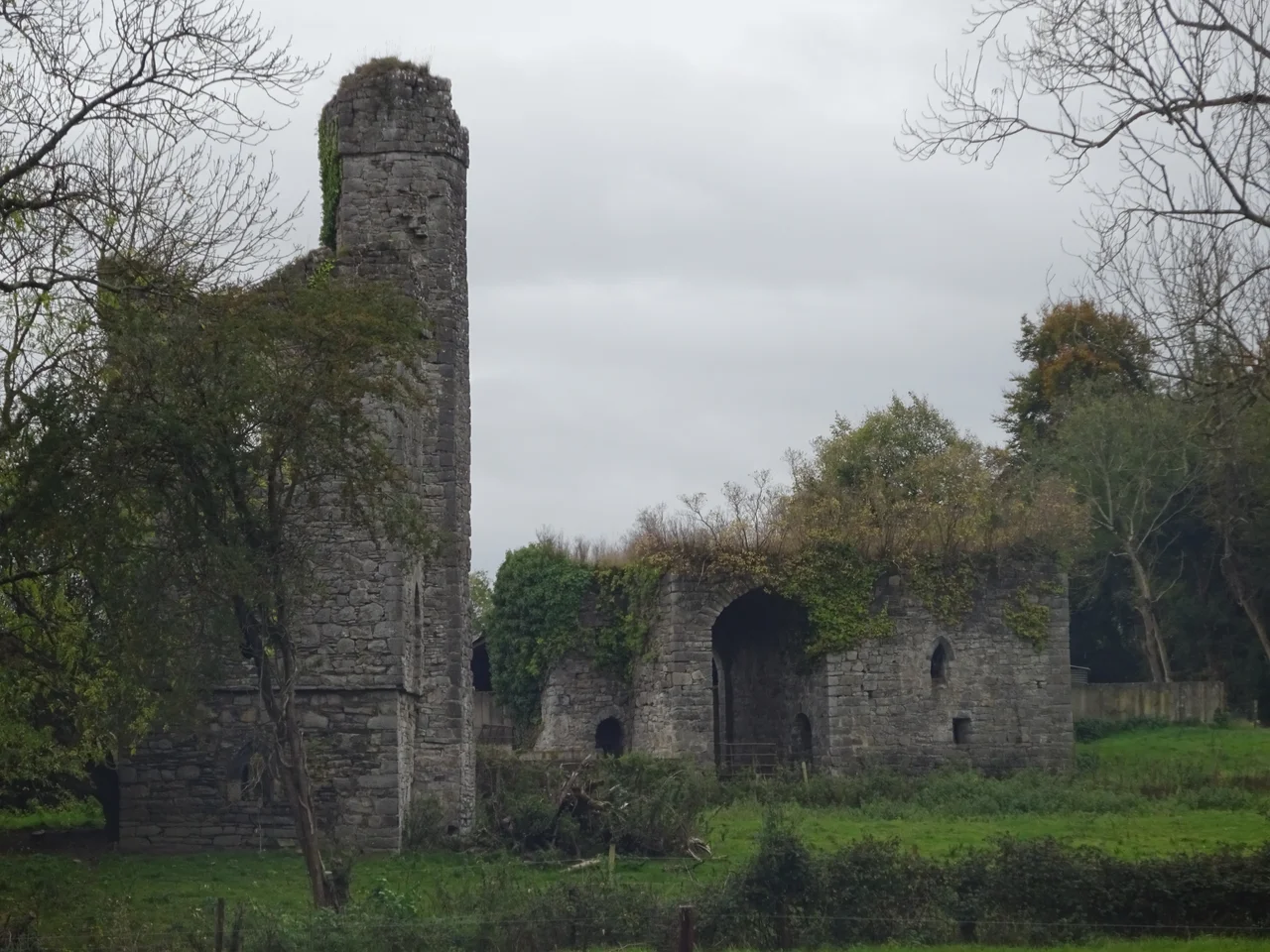
Cill Droichid - the church of the bridge - is what the Irish called this place, and the bridge over the Liffey has been the hinge on which Celbridge has turned for fifteen centuries. Beads and quern stones in the National Museum mark five thousand years of human work on these riverbanks. By the fifth century there was a church at the confluence; by the thirteenth, a Norman castle and mill; by the early eighteenth, Bartholomew Van Homrigh had built Celbridge Abbey beside the river, and his daughter Vanessa would soon be exchanging letters - and something more - with Jonathan Swift. By 1762 a young man named Arthur Guinness was working in his father's brewery on Main Street. And by 2022, twenty thousand six hundred and one people called Celbridge home, the third-largest town in County Kildare.
From Kildrought to Celbridge
The town's old name, Cill Droichid or Kildrought, lasted as long as the medieval order it described. After 1724 the spelling began to drift toward Celbridge. Swift, stubborn in his correspondence, kept writing Kildrought; Esther Vanhomrigh, his beloved Vanessa, signed her replies from Celbridge. The change was symbolic. William "Speaker" Conolly, the wealthiest commoner in eighteenth-century Ireland, had bought the rundown Castletown estate in 1709 and complained that all the previous earl's tenants were beggars. He set about rebuilding. The new leases required substantial stone houses with gable ends and two chimneys, replacing mud cabins. Developers followed him. Within a generation the axis of the town shifted away from the old bridge and mill toward a planned Main Street that stretches today between the gates of Castletown House and the Liffey. The Down Survey had counted 102 souls in Celbridge in the 1650s. By 1861 there were 1,674.
Guinness Before the Stout
Number 22 Main Street, where Conolly's land agent George Finey had once lived, was for a time the home of Richard Guinness. Richard married Elizabeth Read, of the Bishopscourt brewing family and an aunt of Arthur Guinness, and in 1722 he took over the town brewery and moved it to a spot where the Holy Faith convent forecourt now stands. There he produced what contemporaries called "a brew of a very palatable nature." His son Arthur was twenty-seven in 1752 when Dr Price's estate left him £100 to expand the business. He moved first to Leixlip in 1755, then in 1759 to a derelict brewery at St James's Gate in Dublin and signed a famously long lease. The doors of the original Celbridge brewery were eventually bricked up; you can still see their outlines in the perimeter wall of the Catholic Church forecourt. A pint poured in Dublin tonight traces its origin to a small stream-side brewery in a Kildare town.
The Mill That Fed and Failed the Town
In 1785, Lady Louisa Conolly built the Manor Mills beside the river. It was extended in 1805 by Laurence Atkinson, who went bankrupt in 1815, and then run by the Houghtons of Yorkshire, who told a parliamentary committee that this was the biggest wool manufactory in Ireland. When King George IV visited in August 1821, several hundred people worked the looms, some of them children of eight and nine. Yorkshire workers settled in Tea Lane - so named for the leaves discarded in the gutter - and English Row. At full capacity the mill employed six hundred people. When it closed in 1879, Celbridge collapsed. The population fell from a high of 1,674 to 988 in two years, then to 811 by 1891. The building eventually became a community centre. A wallmount still marks its date: 1785.
The Workhouse on the Maynooth Road
Built between 1839 and 1841 at a cost of £6,800, Celbridge workhouse was designed to hold 519 people drawn from a region of 25,424. When the Great Famine arrived in 1845, the building filled past breaking. A site beside the workhouse memorializes between 1,500 and 2,500 inmates who died and were buried there during the worst years. According to Tony Doohan's history of Celbridge, at the height of the disaster "a human being died every hour." After the worst had passed, the workhouse continued as a fever hospital, then a refuge for the elderly and for unmarried mothers, then a base for the Free State army visited by Michael Collins in 1922. By 1933 it was a paint factory. It is still a paint shop today. Walk past it on the Maynooth Road and you walk past a building that has known almost every chapter of modern Irish history.
From the Air
Located at 53.33°N, 6.54°W on the River Liffey, 23 km west of Dublin city centre. Best viewed at 2,000-4,000 ft AGL; the town and its single bridge across the Liffey are clearly visible, with Castletown House and its long avenue prominent to the north. Nearest airports: Weston (EIWT) 6 km east, Dublin (EIDW) 25 km north-east.
Nearby Stories
- Athcarne Castle 4.2 km away
- Wicklow Mountains National Park 10 km away
- Castlepollard 12 km away
- Portlaoise 19 km away
- Edward Pakenham 20 km away
- German submarine U-1051 39 km away
- HMS Manners (K568) 52 km away
- HMS Tyler 61 km away