.jpg)
Central Black Earth Nature Reserve
The soil here is the reason for everything. In the forest-steppe south of Kursk lies some of the richest earth on the planet, the deep black chernozem that made this region the breadbasket of empires, so fertile that a nineteenth-century Russian scientist reportedly sent a cubic block of it to a Paris exposition as a national treasure. Fertile land, though, gets plowed, and over the centuries nearly all of it was. The Central Black Earth Nature Reserve exists to protect what almost vanished: fragments of the original steppe as it looked before the plow, kept untouched not for farming but for science, a living reference sample of a landscape the world nearly erased.
A Scientist's Steppe
The reserve carries the name of the botanist Vasily Alekhine, who championed the study of these meadow steppes, and it was established in 1935 as a zapovednik, the strictest category of Russian nature reserve, where land is set aside for research rather than recreation. It is not one continuous tract but six scattered sites spread southeast of Kursk across three districts, together covering some 5,287 hectares. Around the protected core runs a buffer zone a kilometer wide, where any human activity happens only under the reserve staff's watch. In 1978 the reserve earned international recognition, joining the World Network of Biosphere Reserves, a signal that these unplowed acres mattered far beyond the Kursk countryside.
A Meadow That Changes Color
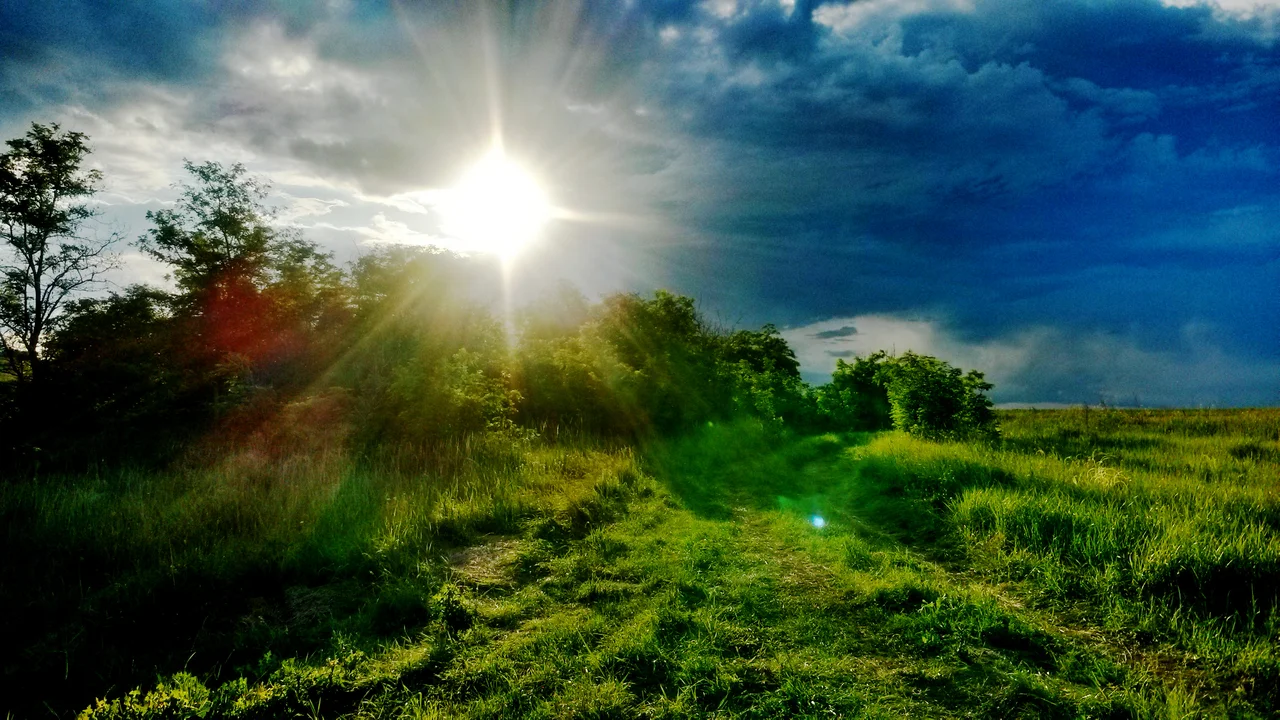
The heart of the reserve is meadow steppe, which makes up nearly half its territory, and it does something the plowed fields around it never do: it changes color through the seasons, a slow wash of flowering that moves across the grassland as one bloom gives way to the next. Woven through are deciduous woods where oak predominates, joined by Norway maple, aspen, and wild pear and apple, with an understory of wild cherry and hazel. Strangest of all, the reserve holds sphagnum bogs, a kind of wetland one does not expect in dry steppe country, marked by white birch. Botanists working these sites have catalogued 1,340 species of flowering plants, a staggering richness packed into a few surviving parcels of untouched ground.
Foxes, Boar, and the Stone Woman
The animal life is that of the classic European forest-steppe. Foxes, badgers, and hares move through the grass and scrub, while larger roe deer and wild boar shelter in the woods; researchers have recorded 51 species of mammals in all. Underfoot, the steppe teems with field mice, voles, and mole-rats, and overhead more than 226 species of birds have been counted, over a hundred of them songbirds. Because it is a strict reserve, the land is mostly closed to casual visitors, open chiefly to scientists and to educational groups by arrangement. A few permitted ecotrails do let the public in, among them one called the Stone Woman, which passes a carved stone monument dated to the eleventh century, a silent marker standing where the grasses have grown undisturbed for a thousand years.
From the Air
The reserve's sites lie scattered southeast of Kursk, centered near 51.0 degrees N, 36.4 degrees E, in the forest-steppe of Kursk Oblast. From altitude they appear as irregular islands of unplowed grassland and oak woodland set within a patchwork of cultivated black-earth fields. The nearest regional airport serves Kursk (ICAO: UUOK) to the northwest.
Nearby Stories
- Cathedral of Our Lady of the Omen 46 km away
- Maryino Estate 70 km away
- Hryhorii Skovoroda Literary Memorial Museum 72 km away
- Aeroflot Flight 1491 72 km away
- Sumy 76 km away
- Giant Ukrainian Radio Telescope 130 km away
- Second Battle of Kharkov 205 km away
- Grace Darling 424 km away