.jpg)
Chernobyl Nuclear Power Plant Sarcophagus
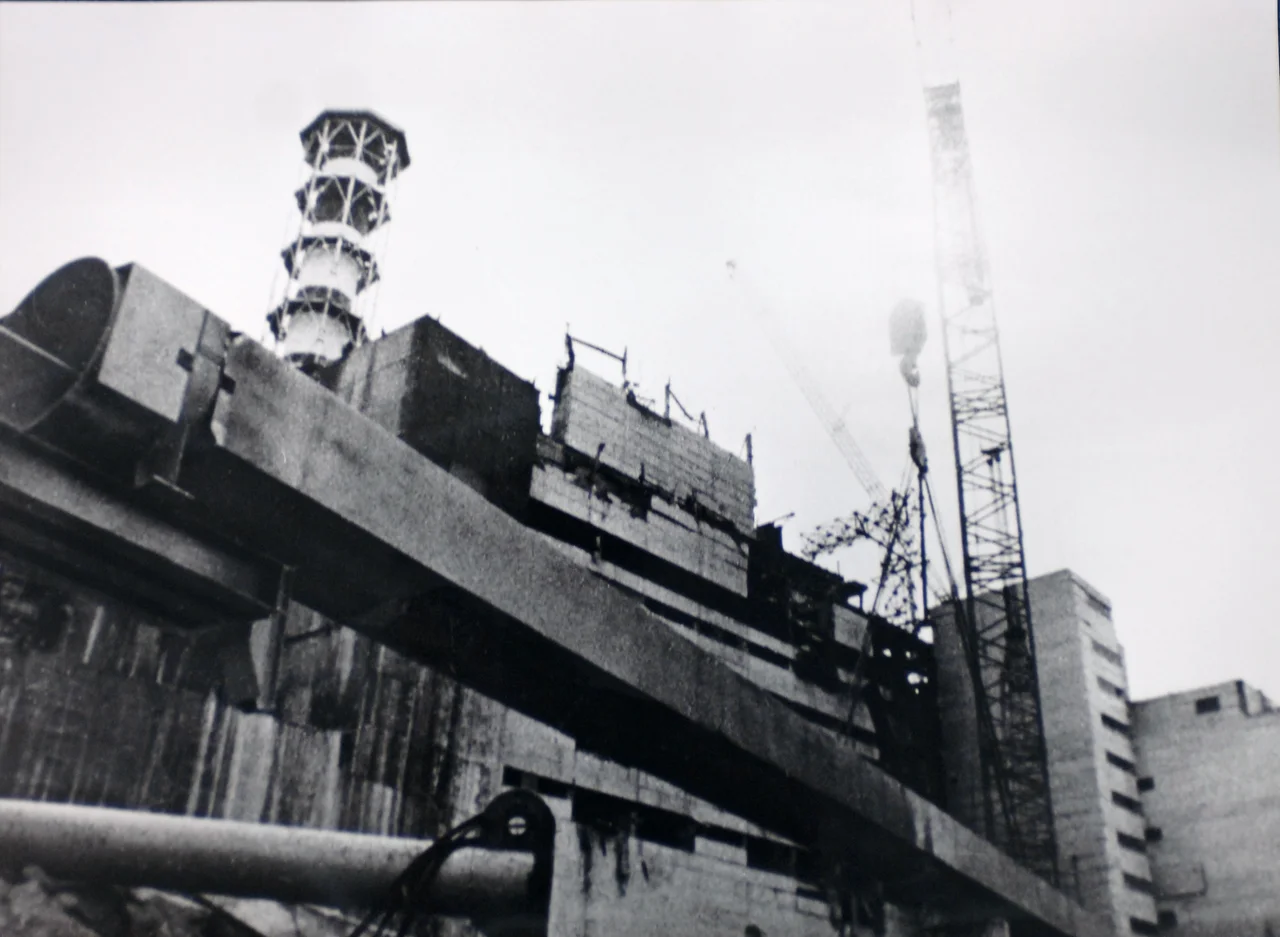
It was never meant to last this long. Between May and November 1986, while the destroyed core of Reactor 4 was still throwing gamma rays into the sky, Soviet construction crews raced to build a tomb around it. They poured concrete from helicopters. They welded steel onto buildings whose walls were too radioactive to touch with bare hands. They worked in shifts measured in seconds, not hours, and they called what they built simply Ukrytie - the Shelter. Western reporters renamed it the sarcophagus, and the name stuck. It enclosed roughly 740,000 cubic meters of contaminated debris and bought the world thirty years to figure out what to do next.
Built in a Hurry
The original Soviet name, Obyekt Ukrytie, simply meant 'Shelter Object.' There was nothing ceremonial about it. Roughly 600,000 liquidators - soldiers, miners, engineers, firefighters, conscripts - rotated through the cleanup in 1986 and 1987. Many of them spent only minutes on the most contaminated rooftops, scraping radioactive graphite into the open reactor with shovels because robots failed in the radiation. The shelter went up around them, beam by beam, much of it leaning on the damaged remains of the reactor building itself. The western end was supported by a reinforced concrete wall that the explosion had already cracked. On October 11, 1986, just over five months after the disaster, the Soviet Governmental Commission accepted the structure. It was complete. Nobody pretended it was permanent.
Elena and Her Hair
Inside the shelter, the reactor's upper biological shield - a steel and concrete disk 17.7 meters across, weighing roughly 1,000 tons - had been thrown nearly upright by the explosion. It rests today at about 15 degrees from vertical, balanced on debris. Engineers nicknamed it Elena. The twisted fuel assemblies still attached to its underside became Elena's hair. If she falls, she could rupture the shelter and loft a fresh radioactive cloud. The risk has been calculated and re-calculated for forty years. Sixty bore holes in the sarcophagus walls let monitoring instruments peer inside. Ventilation shafts allow some convection. None of it is reassuring.
Leaks and Buttresses
By the late 1980s, Soviet scientists were already warning that the sarcophagus would last only 20 to 30 years before requiring major repairs. Rain seeped through gaps in the roof, becoming radioactive on its way through, then dripped through the cracked floor and into the soil. In 1998 the European Bank for Reconstruction and Development funded the first international stabilization program, securing roof beams against collapse. Between 2004 and 2008, a yellow steel structure called the Designed Stabilisation Steel Structure was bolted to the western buttress wall and gradually loaded with about 400 tons of roof weight - half the load of the most fragile section, transferred onto a brace built six decades after the building it was holding up. It was, like everything at Chernobyl, a temporary fix on top of a temporary fix.
The Bigger Tomb
The permanent solution was always supposed to be something larger sliding over the top. The New Safe Confinement, an arch the length of one and a half football fields, was finally pushed into place in November 2016 after delays, funding gaps, and engineering challenges that took two decades to resolve. The sarcophagus now sits inside a much bigger sarcophagus, which gives crews working under remote-control cranes time and space to disassemble both shelters and the reactor remains beneath. The current Ukrainian deadline for dismantling the original is October 31, 2029. Then came February 2025, when a Russian drone strike damaged the New Safe Confinement above. The IAEA says the outer arch has lost its primary safety functions. Underneath it, the old Soviet Shelter is still doing what it was hastily built to do in 1986: holding the line.
From the Air
Coordinates 51.39 N, 30.10 E. The original sarcophagus sits inside the larger New Safe Confinement arch at the Chernobyl Nuclear Power Plant complex, 16 km northwest of the town of Chernobyl and about 100 km north of Kyiv. From altitude on a clear day, the bright NSC arch is the dominant landmark. Reactor 4 is directly beneath it; the cooling pond stretches south toward the Pripyat River. Closest civilian airports: UKKK (Kyiv Zhuliany) and UKBB (Boryspil), both ~110-130 km south. Ukrainian airspace remains closed to civil traffic.
Nearby Stories
- Liubech 5.9 km away
- Slavutych 17 km away
- Oster 31 km away
- Malyn 46 km away
- 1995 Borodianka Mid-Air Collision 46 km away
- Ovruch 51 km away
- Battle of Listven 100 km away
- Nesvizh Castle 258 km away