.jpg)
Liubech
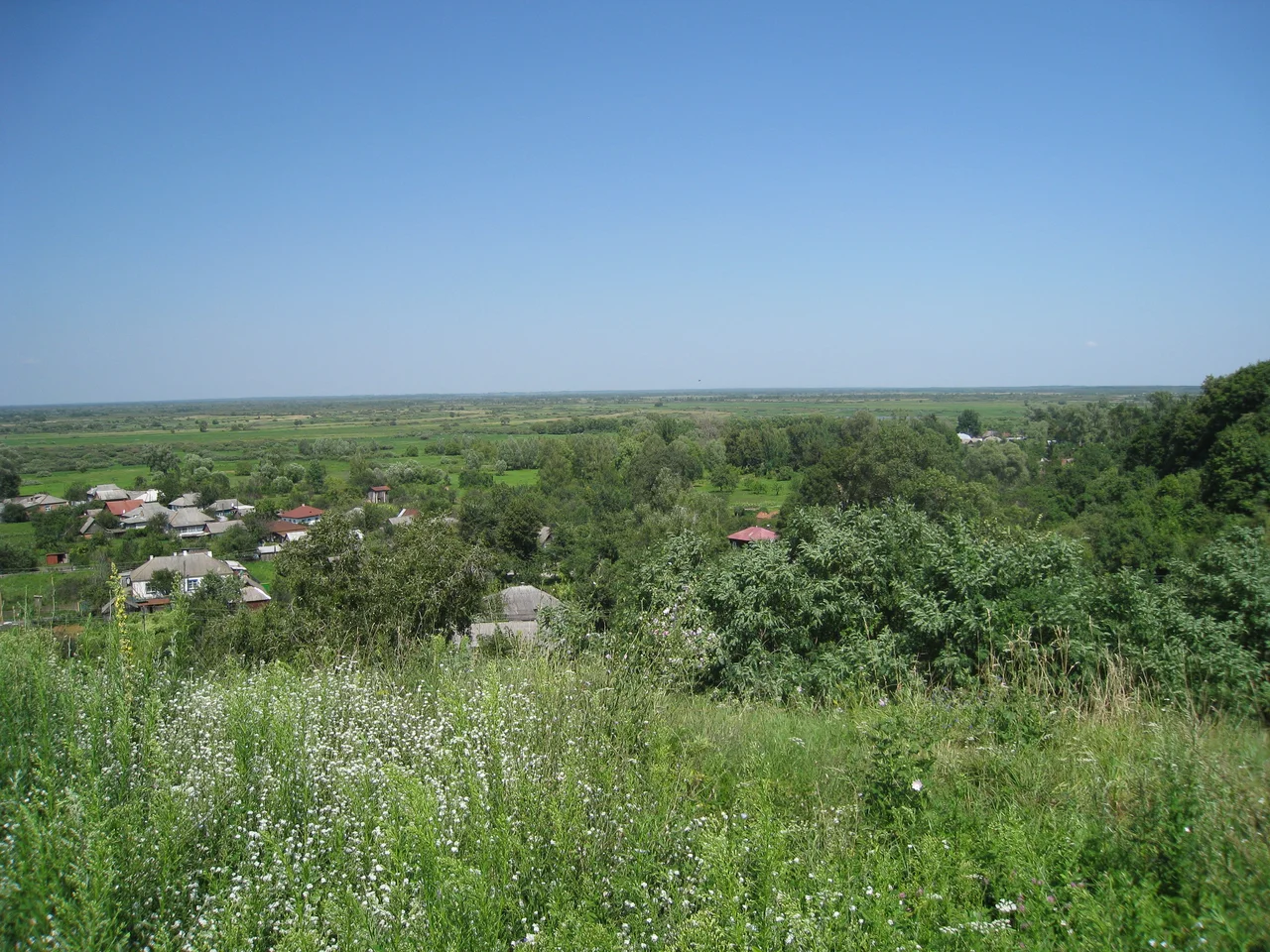
In 1097, the princes of the Rus' gathered in a small town on the Dnieper to redraw a world. They were exhausted by wars among cousins, and at the Congress of Liubech they agreed to a principle that would echo for centuries: each prince would hold and pass down his own patrimony. It was meant to bring peace. It also, in effect, divided the once-unified realm of Kievan Rus' into hereditary pieces. That decision was made here, in Liubech, a place that today is a rural settlement of quiet streets near the Belarusian border, its enormous past hidden behind a very modest present.
Older Than the Chronicles Can Say
Liubech first steps into the written record in the year 882, when Oleg of Novgorod captured it on his way to seizing Kyiv, but it was clearly old even then. It grew into a town of the Principality of Chernigov, one of the fortified river settlements that formed the skeleton of early Rus'. Standing on the high bank of the Dnieper, 200 kilometers north of Kyiv, it guarded the water road that carried trade and armies between the north and south. To read its history is to watch the whole medieval story of these lands pass through one small town: princes and monks, battles and treaties, all leaving their mark and then moving on down the river.
The Battle and the Congress
Twice in the eleventh century, Liubech shaped the fate of Rus'. In 1016, a great battle was fought near here between Sviatopolk the Accursed, the Grand Prince of Kiev, and Yaroslav the Wise, the prince of Novgorod racing south to claim supreme power. Yaroslav's victory set him on the throne of Kyiv and toward one of the golden ages of Rus'. Then in 1097 came the Congress of Liubech, convened at the urging of Vladimir II Monomakh, where the feuding princes agreed that each would keep his own inheritance. Historians still debate whether that meeting saved the Rus' or hastened its fragmentation. Either way, few villages anywhere can claim to have hosted a summit that reordered an entire civilization.
The Boy Who Dug the First Cave
Liubech's most lasting export was not a treaty but a saint. Around 983, a boy was born here who would become known as Anthony of the Caves, or Antony Pechersky. He traveled, took monastic vows, and returned to dig a cave in the hills above Kyiv, living as a hermit. Others came to join him, and from that hollow in the earth grew the Kyiv Pechersk Lavra, the great Monastery of the Caves that remains one of the holiest sites in the Orthodox world. Anthony is remembered as the father of East Slavic monasticism, the man from whom a whole tradition of prayer and learning descends. The spiritual life of the region has one of its roots in this ordinary Dnieper village.
Passed From Hand to Hand
Empires rose and fell around Liubech, and it changed masters with each turn. In the fourteenth century it was absorbed into the Grand Duchy of Lithuania. During the negotiations over the Union of Lublin in 1569, King Sigismund II Augustus transferred it to Poland, and in 1632 King Sigismund III Vasa granted it the rights of a royal city. For decades it sat within the Chernihiv Voivodeship of the Polish Crown before the shifting borders of Eastern Europe carried it onward again. Today the honors have quietly faded. As recently as 2024 Liubech was reclassified from an urban-type settlement to a rural one. It is a place where the depth of the past far outstrips the size of the present, and where the river still runs past the same high bank the princes once knew.
From the Air
Liubech lies at 51.71 N, 30.66 E on the west bank of the Dnieper in northern Ukraine, close to the Belarusian border. View from 5,000 to 8,000 feet in clear weather; the broad sweep of the Dnieper and the elevated riverbank the old fortress once crowned are the best landmarks. Nearest airport is Chernihiv Shestovytsia (UKRR) to the southeast; Kyiv Boryspil (UKBB) lies about 200 km south.
Nearby Stories
- Chernihiv 1.2 km away
- Battle of Listven 15 km away
- Chernobyl Nuclear Power Plant Sarcophagus 16 km away
- Polesie State Radioecological Reserve 22 km away
- Russian attacks on civilians in the Russo-Ukrainian war (2022–present) 36 km away
- Battle of Lesnaya 168 km away
- Mogilev Ghetto 169 km away
- Katyn Commission 306 km away