.jpg)
Chillingham Castle
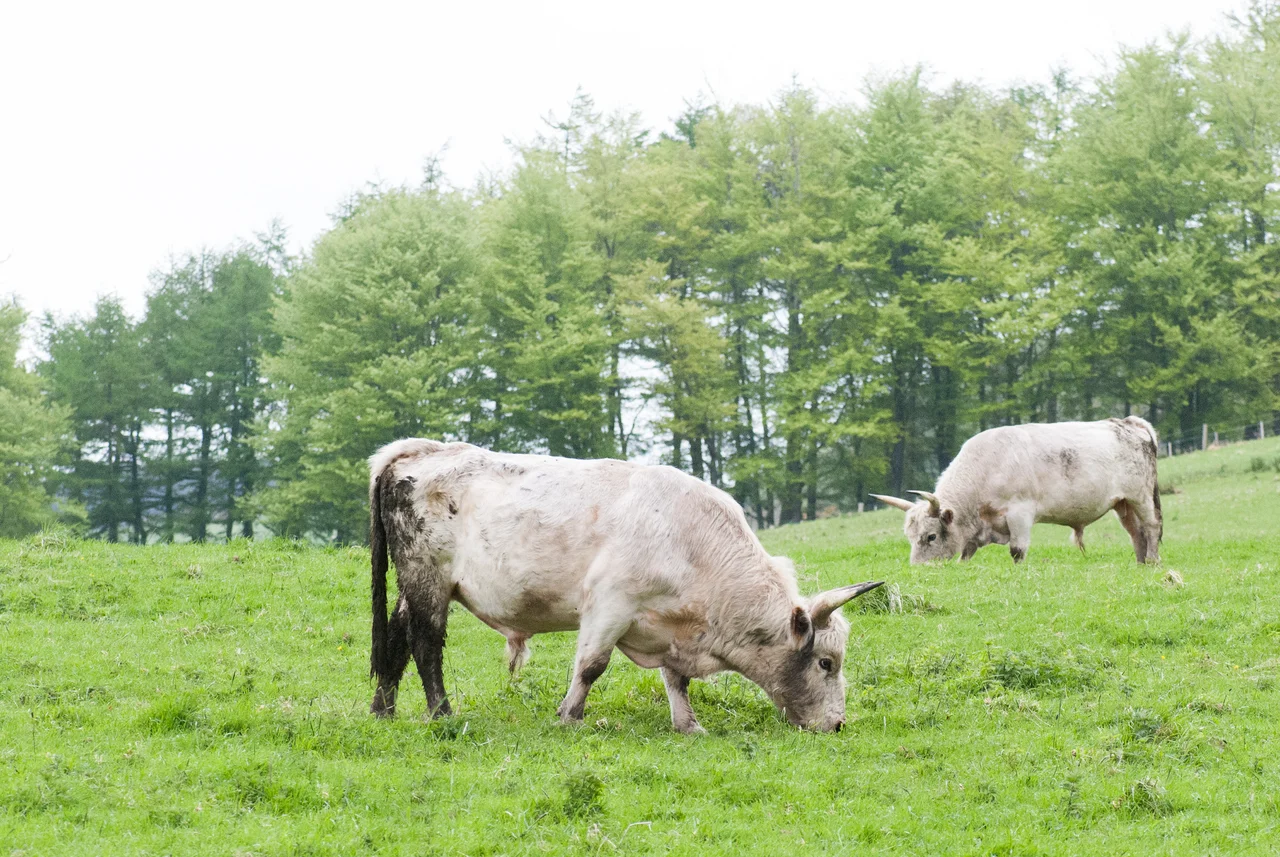
There is a herd of white cattle in a walled park at Chillingham that has remained genetically isolated for at least seven hundred years. They are not pets. They are not domesticated. Visitors view them from a respectful distance, escorted by a warden, because no one has bred selection or kindness into them. They are about as close as Britain comes to a glimpse of a medieval landscape that has otherwise vanished, and they happen to graze beside the castle that has, for as long as anyone can recall, been called the most haunted in England.
On the Border
Chillingham began as a monastery in the late twelfth century. By 1298 it was important enough that King Edward I stayed here on his way to fight William Wallace, and a glazed window in a wooden frame was specially installed for the king - a luxury so unusual at the time that it counted as royal accommodation. The castle sat directly on the line between two feuding nations, and that location shaped everything about it. It served as a staging post for English armies marching into Scotland and as a target for Scottish raiders heading the other way. The fortifications grew to twelve feet thick in places. In 1344 Edward III granted a Licence to Crenellate, formally upgrading the stronghold to a quadrangular fortified castle with battlements.
From Fortress to Country House
The Union of the Crowns in 1603 changed the castle's purpose almost overnight. Anne of Denmark, Queen of Scotland, stayed at Chillingham with her children on 6 June 1603, travelling south to join her husband James in London. A poem celebrating her welcome was probably written by her secretary, William Fowler. James I himself stayed at Chillingham in 1617, journeying between his two kingdoms. With the border quiet, the castle no longer needed to fight. The moat was filled in. The battlements were rebuilt as residential wings. A banquet hall and library replaced the apparatus of defence. In the eighteenth and nineteenth centuries Sir Jeffry Wyattville landscaped the grounds, and the Prince and Princess of Wales stayed here on their way to Scotland in 1872. The Grey family - Earls of Tankerville - held it for centuries.
Rescue from Ruin
The Second World War nearly finished Chillingham. The army billeted soldiers here as a barracks, and much of the decorative woodwork was stripped out and burned. After the war, lead was taken from the roof, and weather did the rest. By 1980, when the 10th Earl of Tankerville succeeded, the estate was broken up and sold. In 1982 Sir Humphry Wakefield, 2nd Baronet, bought the castle. His wife Catherine is descended from the Greys of Chillingham, so this was a homecoming as much as a purchase. Wakefield set about a painstaking restoration. The fibreglass fireplaces in the great hall, installed for a film shoot, were left in place to cover eighteenth-century white marble fireplaces salvaged from the demolished Wanstead House in east London. Today, eight apartments are available for holiday rentals and the public can tour the rooms, including for late-night ghost tours.
The Blue Boy and the Wild Cattle
Chillingham's most famous ghost is the radiant boy, sometimes called the blue boy, who according to the owners used to haunt the Pink Room. The castle has been visited by the Most Haunted television show and attracts overnight visitors hoping for a sighting. The Chillingham wild cattle, about 130 head of pure white animals, graze a separately owned park in the grounds. Sir Walter Scott singled them out in The Bride of Lammermoor (1819) as a last refuge of an ancient breed. They inspired Eva Ibbotson's 2005 children's book The Beasts of Clawstone Castle. The cattle have outlasted kings, queens, wars, and almost the castle itself - which makes the bat weather-vane on the roof of Chillingham feel less like decoration and more like a statement of intent.
From the Air
Located at 55.53°N, 1.90°W in north Northumberland, between the Cheviot Hills and the coast. Nearest commercial airport is Newcastle (EGNT) approximately 38 nm south. The castle sits in a wooded valley with the Chillingham wild cattle park immediately adjacent. Best viewed VFR at 2,500-3,500 ft AGL with the Cheviot massif rising to the west. The A697 runs roughly north-south a couple of miles east; Alnwick and the coast lie 8 nm to the south-east.
Nearby Stories
- Kielder Water 2.8 km away
- Wallington Hall 5 km away
- Jedburgh 5.7 km away
- Berwick-upon-Tweed Lifeboat Station 6 km away
- HMS Nottingham (1913) 10 km away
- MS Oslofjord (1937) 21 km away
- Yester Castle 24 km away
- Alexander L. Kielland (Platform) 292 km away