_-_geograph.org.uk_-_5597466.jpg)
Wallington Hall
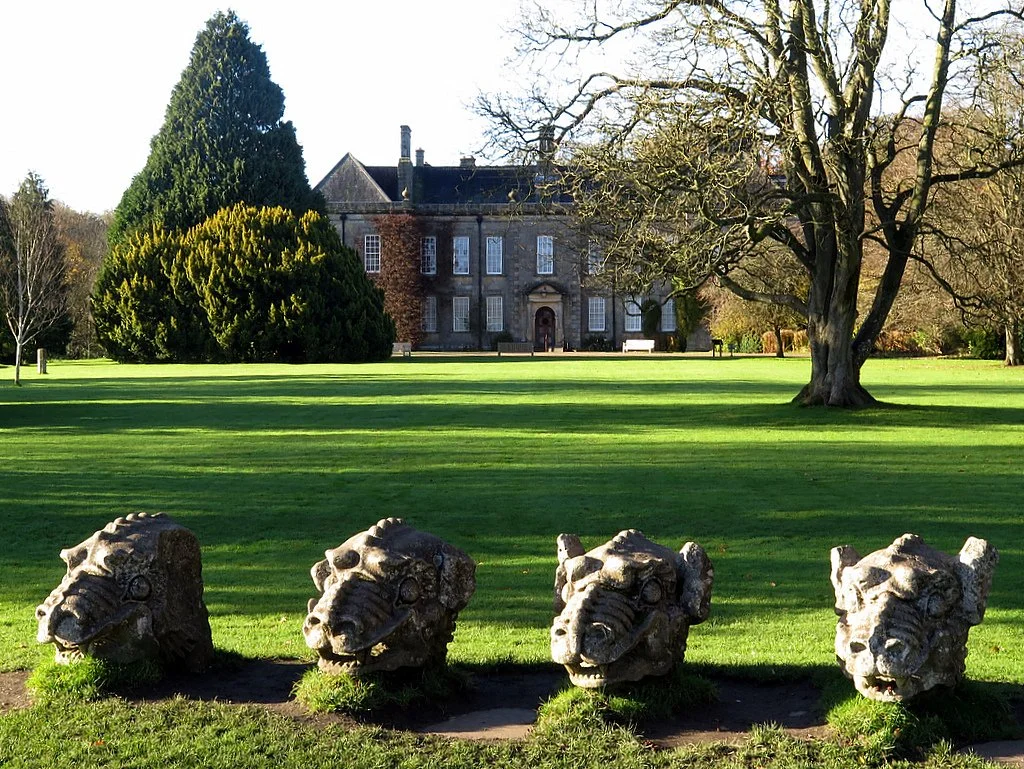
In 1688, Sir John Fenwick sold his ancestral seat for £4,000 and a £2,000 annual annuity, payable until both he and his wife died. Sir William Blackett thought he was being generous. Then he discovered lead on the land and became one of the richest men in the North East. The Fenwicks had owned Wallington since 1475. The Blacketts would own it for less than a century. The Trevelyans, who inherited it in 1777, would still be there in 1942, when Sir Charles Philips Trevelyan, 3rd Baronet, did something no English baronet had ever done before: he gave the entire estate - house, farms, gardens, parkland - to the National Trust, free and complete. It was the first donation of its kind in the Trust's history.
Lead, Slaves, and the Honest Reckoning
Wealth at Wallington came from places you cannot see from the lawn. Some of it rose from the Pennine lead veins the Blacketts discovered after their bargain with Sir John. A great deal more, the National Trust now openly acknowledges, came from enslaved labour on Trevelyan family sugar plantations in Grenada. The hall does not hide this. The interpretation tells visitors plainly: this is a beautiful country house built and sustained by money made from the suffering of enslaved people on a Caribbean island. That honesty is comparatively recent, but it matters. A Grade I listed building can be both an architectural treasure and a record of harm; Wallington's modern caretakers have decided to be honest about both.
Palladio in Cambo
The current house was rebuilt for Sir Walter Calverley-Blackett, 2nd Baronet, in the Palladian style favoured by 18th-century English aristocrats who wished their country seats to evoke Roman villas. The architect was Daniel Garret. The medieval pele tower that had once stood here was demolished, though parts of the early house survive in the cellars. The Italian artist Pietro Lafranchini decorated the dining and drawing room ceilings in flowing rococo plasterwork. After Pauline Jermyn married the naturalist Sir Walter Calverley Trevelyan, Wallington became a meeting place for Victorian thinkers - the Pre-Raphaelite Brotherhood among them. William Bell Scott painted eight murals in the central hall depicting the history of Northumberland, which remain the room's defining feature.
Macaulay's Desk
Wander into the right room and you can stand beside the desk where Thomas Babington Macaulay - brother-in-law of Sir Charles Trevelyan, the 1st Baronet - wrote much of his vast History of England. Macaulay's prose shaped the Victorian sense of the past, and the desk where he wrote it sits in a house that itself shaped the family's politics. Sir Charles, 3rd Baronet, the donor of 1942, was a Liberal cabinet minister who crossed to Labour in the 1920s, becoming President of the Board of Education under Ramsay MacDonald. Giving Wallington away was both a gesture of socialist conviction and a practical solution to a country-house economy that no longer worked. The collection of antique dollshouses, eccentric and beloved, has nothing to do with politics and everything to do with the house's other defining quality: it is genuinely lived-in.
Wilder Wallington
Today the estate is rewilding. A long-term project called Wilder Wallington aims to plant one million trees by 2030 - some 115,000 already in the ground - and to restore peat and wetlands across the hundred acres of parkland and beyond. In November 2023 the Vincent Wildlife Trust named Wallington one of three Haven Sites for pine martens under the Martens on the Move project, funded by a £1.2 million National Lottery Heritage Fund grant. Water voles are also being considered for reintroduction. A house once built on lead and sugar is becoming, slowly and deliberately, a sanctuary for animals the British countryside has been losing for centuries. The Trevelyans were always trying to leave something behind. The current project is the most ambitious one yet.
From the Air
55.152N, 1.957W. Wallington Hall sits in 100 acres of parkland near the village of Cambo, about 12 miles west of Morpeth and 18 miles northwest of Newcastle. Best viewed at 2,000-3,000 ft AGL on clear days, with the wooded dene and ornamental lakes clearly visible. Nearest airport: Newcastle International (EGNT), 16 nm to the southeast. Northumberland's open moorland stretches west toward Hadrian's Wall.
Nearby Stories
- Seaham 4.3 km away
- Murder of Harry Collinson 6.6 km away
- Kielder Water 8.8 km away
- Battle of Hedgeley Moor 11 km away
- MS Oslofjord (1937) 12 km away
- Jedburgh 13 km away
- Cross Fell 16 km away
- HMS Nottingham (1913) 17 km away