
Murder of Harry Collinson
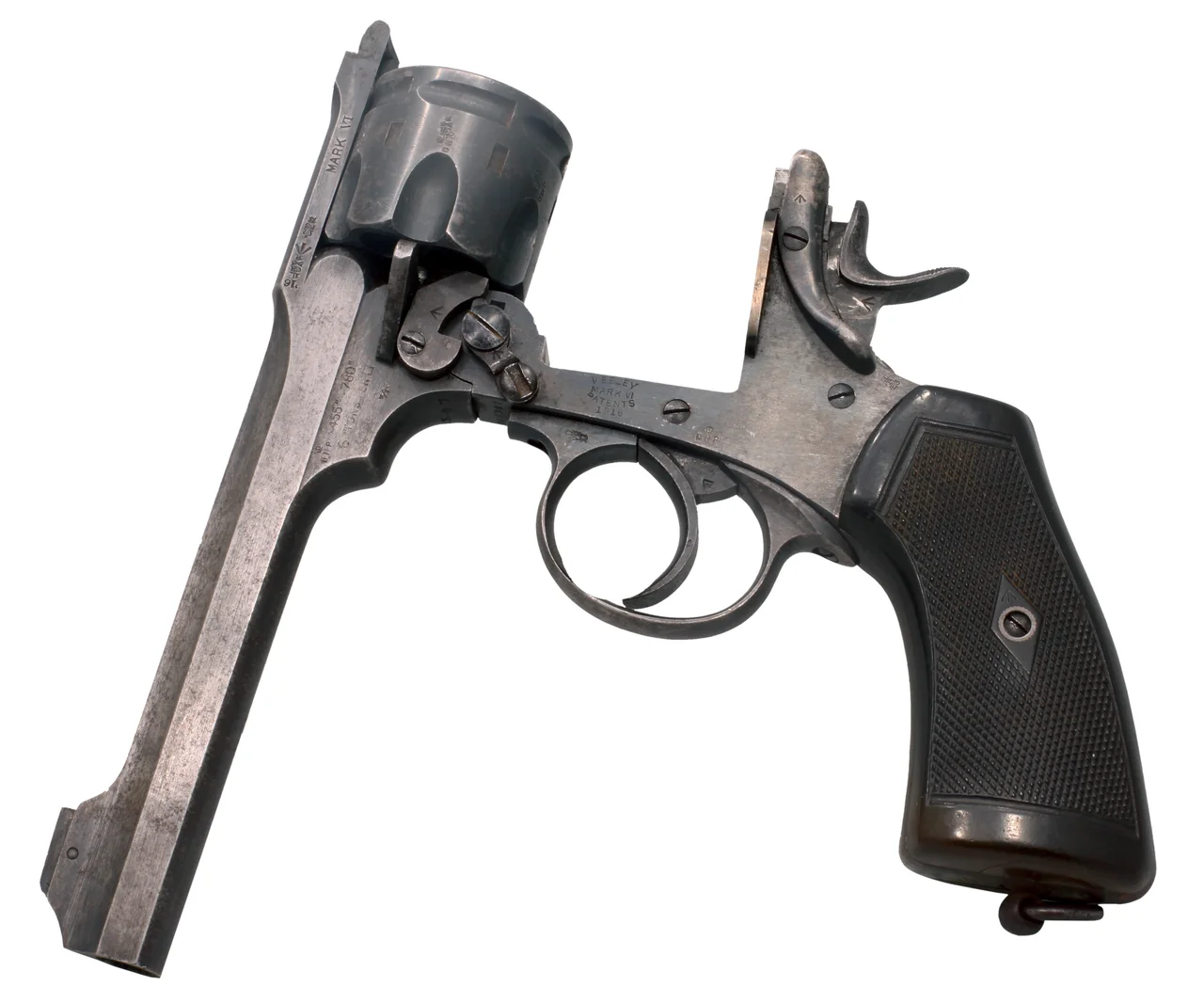
Harry Collinson did not expect Albert Dryden to back down. The Derwentside District Council planning officer had arranged for camera crews to be present on 20 June 1991 precisely so that, if Dryden refused, the council could withdraw with the footage and take it to the High Court. Collinson had also insisted the visit happen in daylight, in plain view of the media, rather than under cover of darkness as some on the council preferred - he refused to give anyone grounds to call the action underhand. He was doing his job, with notable care, when Albert Dryden shot him dead at point-blank range with an unlicensed World War I Webley Mk VI revolver. The cameras kept rolling.
A Planning Dispute
Dryden had built a dwelling on his rural land at Eliza Lane, Butsfield, without planning permission - in fact he had dug a trench and built a bungalow with only the roof showing, an attempt to disguise it as something less than a house. The council had asked him to remove it. They had warned, written, and offered concessions. Collinson had visited the property repeatedly to advise on screening trees and what would or would not be permitted. The two men had been on friendly terms once. But Dryden's behaviour had grown stranger. He had begun threatening council staff and physically assaulting some. The relationship broke down. On the morning of 20 June, with reporters and three unarmed police officers present, the council arrived with demolition vehicles. Dryden came out, drew the revolver he had bought as an eleven-year-old in Consett for ten shillings, and shot Collinson in the chest. Then climbed the fence and shot him again as he lay in a ditch. Then turned the gun on the fleeing journalists, council staff and police, wounding BBC reporter Tony Belmont in the arm and PC Stephen Campbell in the thigh.
The Footage That Trained a Generation
What followed was televised live in part and broadcast in fuller form afterwards. Dryden walked back to the demolition vehicles and methodically shot up an excavator, a low loader and a car. He shouted that the buildings were booby-trapped with explosives, that he had laid land mines in the surrounding ground, that hand grenades waited inside the caravan. None of it was true. But by then he had killed a man on television and wounded two more, and the police negotiators who arrived at the scene took the threats seriously. For two hours they talked. Around 11:20 they offered to install a field telephone. Dryden came to the perimeter fence to watch them set it up. Sergeant John Taylor, a tactical firearms officer, noticed that Dryden's holster was empty and tackled him. PCs Chris Barber, Andy Reay and Philip Brown helped subdue him. A search of his property and his home in Consett later uncovered ten handguns, fifteen rifles, three shotguns, two homemade mortars with eight projectiles, an improvised propane bomb, and a 20mm cannon modified to mount on one of his vehicles - all illegally held. None of it was licensed. The recording of the shooting now forms part of the BBC's internal training course on filming safety, taught to crews who go out to dangerous assignments.
What Came After
Dryden was tried at Newcastle's Moot Hall in March 1992 and pleaded diminished responsibility. After thirteen days of evidence, the jury took two hours to convict him of murder, the attempted murder of council solicitor Michael Dunston (whom Dryden later said he had actually been aiming for), and the wounding of Belmont and Campbell. Mrs Justice Ebsworth sentenced him: "The state of your mind on June 20 was abnormal, but not abnormal to the extent of diminishing your responsibility for what you did. You are a dangerous man." He served twenty-six years. Four parole applications were refused. Throughout his imprisonment Dryden maintained that he was the victim of a Masonic conspiracy, that Collinson had been a golfing partner of the Chief Constable - despite Collinson being neither a Freemason nor a golfer - and that the prison staff were poisoning him. In 2017 he suffered a severe stroke and was released to a care home on compassionate grounds. He died there in September 2018, aged 78, having never expressed remorse. "He never showed one bit of remorse in all the 26 years he has been in prison," Collinson's brother said. "He still tried to justify his actions." The Northeastern punk band the Angelic Upstarts wrote a song about it. Former police officer David Blackie, who witnessed the killing, wrote a book. The footage remains - and so does a council officer's name, attached to a job he did carefully and well.
From the Air
Coordinates 54.806058N, 1.854791W. The site lies near Butsfield, on rural farmland between Consett and Lanchester in northwest County Durham, on the moorland edge of the North Pennines. Nothing particularly distinctive remains visible from the air today - the location is significant for what happened there in 1991, not for any built landmark. Best viewed at 2000-4000 ft AGL to appreciate the isolated rural setting between Consett to the north and Lanchester to the southeast. Nearest aerodromes: Newcastle (EGNT) about 14 nm north-northeast, Durham Tees Valley (EGNV) about 22 nm southeast. The A68 trunk road passes a few miles to the west.
Nearby Stories
- RAF Ouston 3.9 km away
- Cross Fell 6.1 km away
- RAF Spadeadam 9 km away
- Seaham 10 km away
- Howgill Fells 11 km away
- Mount Grace Priory 14 km away
- Richmond Castle 16 km away
- SM UB-115 22 km away