.jpg)
Ciudad Vieja, Montevideo
The whole city of Montevideo started on this small finger of land. Ciudad Vieja, the Old Town, occupies a peninsula at the mouth of the Bay of Montevideo, and for the first century of the city's life it was Montevideo, the entire place, ringed by a defensive wall and entered through a single great gate. The Spanish Empire founded it as a fortified town in 1724, a bulwark against rival powers eyeing the River Plate. The fortress is long gone, but its bones are everywhere underfoot, and the old quarter remains the city's historic heart, where banks and theaters and cathedrals crowd a grid first laid out for muskets and cannon.
A City Behind Walls
Through the colonial era, Montevideo lived as a walled city, the area now called Ciudad Vieja enclosed for defense until 1829. When the wall came down, only one fragment was kept: the main gateway to the Citadel, which still stands as a landmark in the old town. The fortifications left their mark on the map in subtler ways too. Streets carry names like Ciudadela, for the citadel, and Brecha, for the breach that British forces blasted through the wall during their brief 1807 invasion before they were driven out. To read the street signs of Ciudad Vieja is to read the inventory of a fortress that no longer physically exists.
Stone Becomes Style
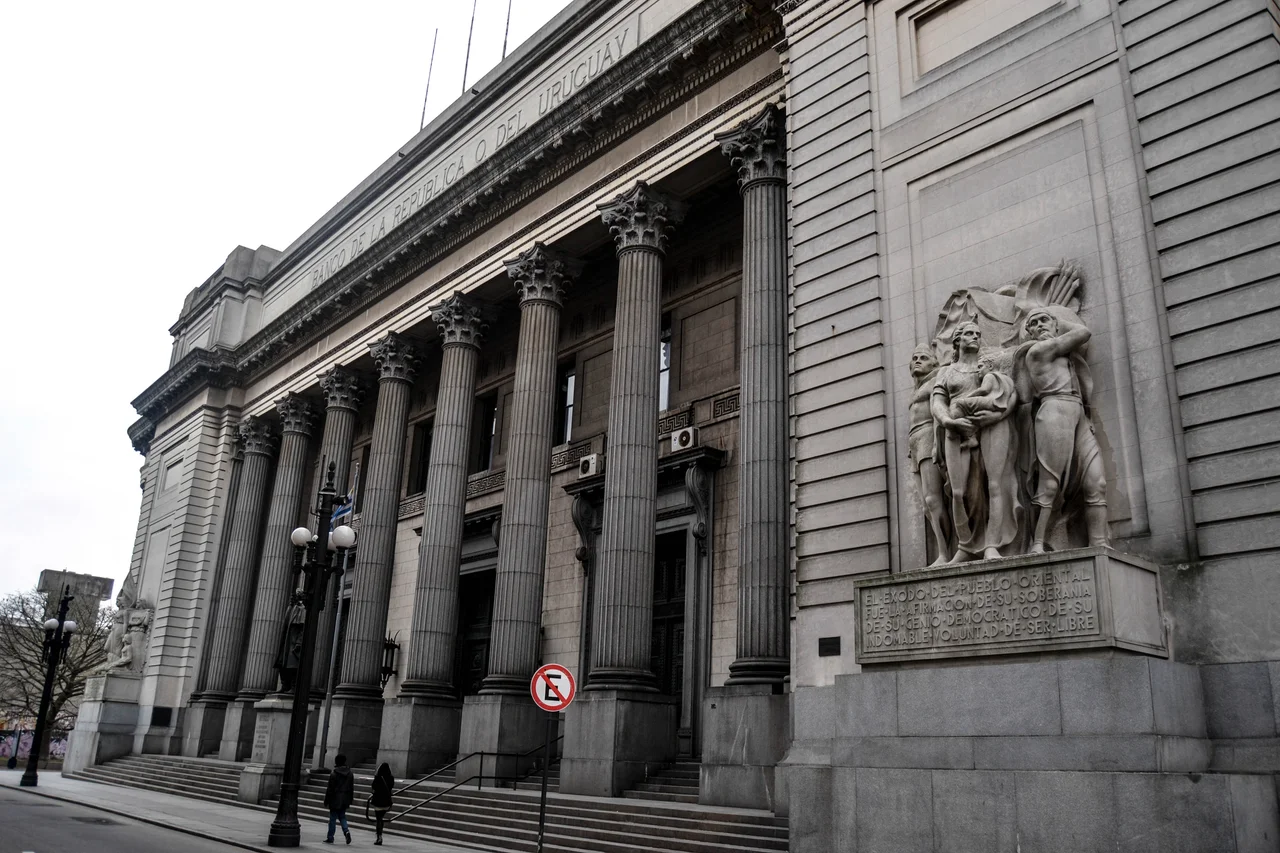
Once Uruguay won independence and the walls fell, the city spilled outward, and the old peninsula filled with ambition rendered in stone. From the late nineteenth century onward, wealthy families raised buildings in the European fashions of the day, Art Nouveau, Art Deco, and Neoclassical facades rising along the narrow streets. Many were grand private homes; over time they became corporate offices, banks, and government agencies. The result is one of the densest concentrations of early twentieth-century architecture in South America, ornate doorways and curving balconies stacked block after block. The Cabildo, begun in 1804 and completed over decades of interrupted construction, anchors the colonial story, while the Solís Theatre, opened in 1856 and considered the oldest opera house in the Americas, anchors the cultural one.
The Port Comes Alive
For decades the old quarter was a place of work, finance, and shipping rather than pleasure, but that changed. In the 1970s the Mercado del Puerto, a wholesale market beside the harbor housed in a soaring nineteenth-century iron structure, was reborn as a temple to Uruguayan cooking. Today its hall fills with smoke and the smell of beef and lamb seared over open coals, the parrilla turned tourist magnet, where vendors fan the embers and the air hangs thick with the scent of grilling meat. The transformation rippled outward through the peninsula. The main street, Sarandí, became a pedestrian walkway, extended in 2005 past Constitution Square, and the steady foot traffic drew design shops, cafes, and renovated artists' lofts into the streets near the port. A quarter that banks had begun to abandon found a second life. The Old Town learned to invite visitors in.
Where Faiths and Façades Meet
Ciudad Vieja wears its layers openly. The Metropolitan Cathedral, seat of the Roman Catholic Church in Uruguay, shares the peninsula with the Anglican cathedral known to locals as the English Temple, a Pallottine church, and a Sephardic Jewish community, the religious map of a port city that took in the world. Cultural institutions cluster just as thickly: the Museo Torres García honoring Uruguay's great modernist painter, the stock exchange, the Central Bank, the Palacio Taranco. Between them run streets where a colonial cabildo, a Belle Époque office block, and a recycled artist's loft might stand within a few steps of one another. The fortress is two centuries gone, but the peninsula it once guarded is more alive than ever.
From the Air
Ciudad Vieja occupies the peninsula at roughly 34.91 degrees south, 56.21 degrees west, jutting into the Bay of Montevideo at the mouth of the Río de la Plata. From the air it is the city's most distinct feature: a compact rectangular grid almost surrounded by water, with the working port on the bay side, the open brown estuary to the south, and the Cerro de Montevideo and its fortress rising across the bay to the west. Carrasco International Airport (ICAO: SUMU) lies about 20 km east along the coast; Ángel S. Adami Airport (ICAO: SUAA) sits inland to the northwest. The flat coastal terrain and wide estuary offer long sightlines, with the cathedral domes and Art Deco rooflines best picked out in clear daytime light.
Nearby Stories
- Piriápolis 24 km away
- Minas 40 km away
- Tronador (rocket) 67 km away
- Nueva Helvecia 69 km away
- La Plata Museum 122 km away
- Battle of Sarandí 126 km away
- Mundo Marino 145 km away
- South Georgia Island 2584 km away