
La Plata Museum
He was fourteen years old, and his bedroom was filling up with bones. Francisco Pascasio Moreno had been hauling fossils, skulls and curiosities home from family excursions for years, and in 1866 he finally arranged them into a display in his parents' Buenos Aires house. He could not have known that this teenage cabinet of wonders was the seed of one of the most important natural history museums on the planet. Today the collection he started fills a 135-meter building in La Plata and holds roughly three million objects, only a sliver of which the public ever sees.
The Explorer Who Became a Museum
Moreno did not stay in his bedroom for long. Between 1873 and 1877 he pushed into Patagonia when much of it was still blank on the map, becoming the first non-indigenous Argentine to stand on the shore of Lake Nahuel Huapi and to reach the vast body of water he named Lago Argentino, fed by the glacier that now carries his honorific: Perito Moreno. He came back with crates of fossils and artifacts, meticulously sorted, and the surveys he conducted helped fix Argentina's first border treaty with Chile in 1881. When the province decided in 1882 to build a brand-new capital, it requisitioned his collection for a grand new building, set in parkland laid out by the French-Argentine landscape architect Charles Thays. The museum opened on November 19, 1888, the sixth anniversary of La Plata's founding, with Moreno as its first director.
A Hall of Vanished Giants
Walk inside and you walk backward through time, exactly as the nineteenth-century scientists intended. The museum's fame rests on its fossil mammals from the Pampas, the strange megafauna that roamed South America before the last ice age ended. There is the Megatherium, a ground sloth the size of an elephant, rearing on its hind legs. There are glyptodonts, armored creatures like armadillos scaled up to the dimensions of a small car, and Toxodon and Macrauchenia, beasts so unfamiliar they baffled Charles Darwin himself when he found their bones. The fanged Smilodon stalks here too. At the center of one hall stands a towering cast of Diplodocus carnegii, a gift in the lineage of the famous replicas Andrew Carnegie sent around the world.
Deeper Than the Dinosaurs
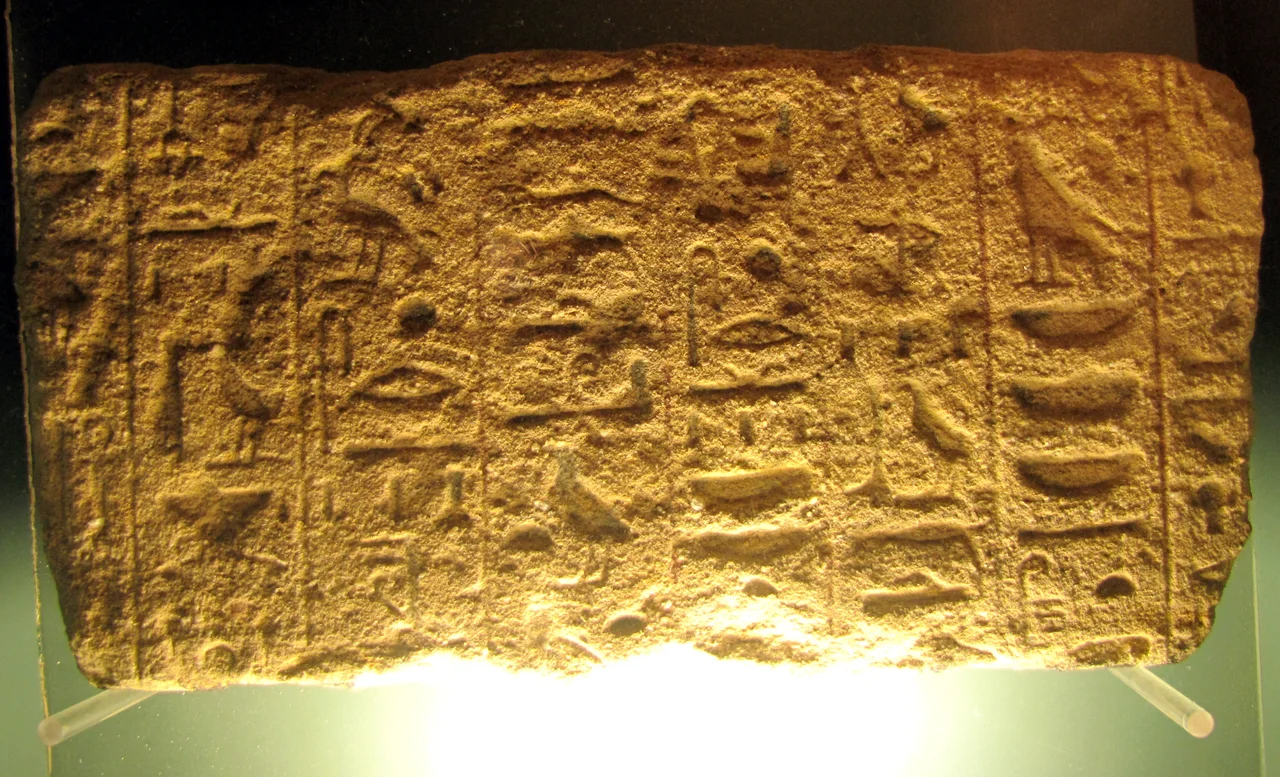
The galleries reach far past the megafauna. Argentine trilobites from the Cambrian and graptolites from the Silurian record life from hundreds of millions of years ago. Upstairs, the archaeological collection traces human cultures of the Americas from the preceramic past all the way to the Inca Empire and the arrival of Europeans. There is even an Egyptian room. When a planned dam threatened to flood the Nubian temple of Aksha, Argentine archaeologists joined the UNESCO rescue campaign of the early 1960s, and in return the museum received some three hundred objects, including pieces of a temple of Ramesses II and ancient mummies in their sarcophagi. It is a museum that began with one boy's curiosity and ended up holding the breadth of deep time.
A Living Institution
Moreno struggled to fund the place he had built. The provincial legislature paid for only nine assistants, and in 1906 he folded the museum into the growing University of La Plata to keep it alive, stepping back as director but never as its devoted caretaker until his death in 1919. The gamble worked. The institution drew naturalists from across the world; one prominent American visitor ranked it among the most important of its kind anywhere. More than a century on, hundreds of thousands of visitors pass through each year, and researchers still bend over its drawers and trays, studying specimens that a teenager once carried home in his arms.
From the Air
The La Plata Museum sits at roughly 34.91 degrees south, 57.94 degrees west, within the Paseo del Bosque park on the north side of La Plata, about 56 km southeast of central Buenos Aires. From the air, look for the green rectangle of the forested park breaking the dense grid of the planned city; the museum is the long oval-fronted building near the lake, zoo and observatory. The nearest field is La Plata Airport (ICAO SADL), a general-aviation strip just south of the city center. Buenos Aires Aeroparque Jorge Newbery (ICAO SABE) lies along the river to the northwest, and Ezeiza's Ministro Pistarini International (ICAO SAEZ) is the major commercial gateway. A recommended sightseeing altitude of 2,500 to 4,000 feet keeps the diagonal street grid and the green parkland clearly in view. Visibility is generally good, though the Rio de la Plata estuary can throw up haze and morning fog.
Nearby Stories
- Lezama Park 1 km away
- Colonia del Sacramento 18 km away
- Ezeiza Massacre 18 km away
- Nueva Helvecia 38 km away
- Tronador (rocket) 42 km away
- Chascomús 49 km away
- Lobos 67 km away
- German cruiser Admiral Graf Spee 92 km away