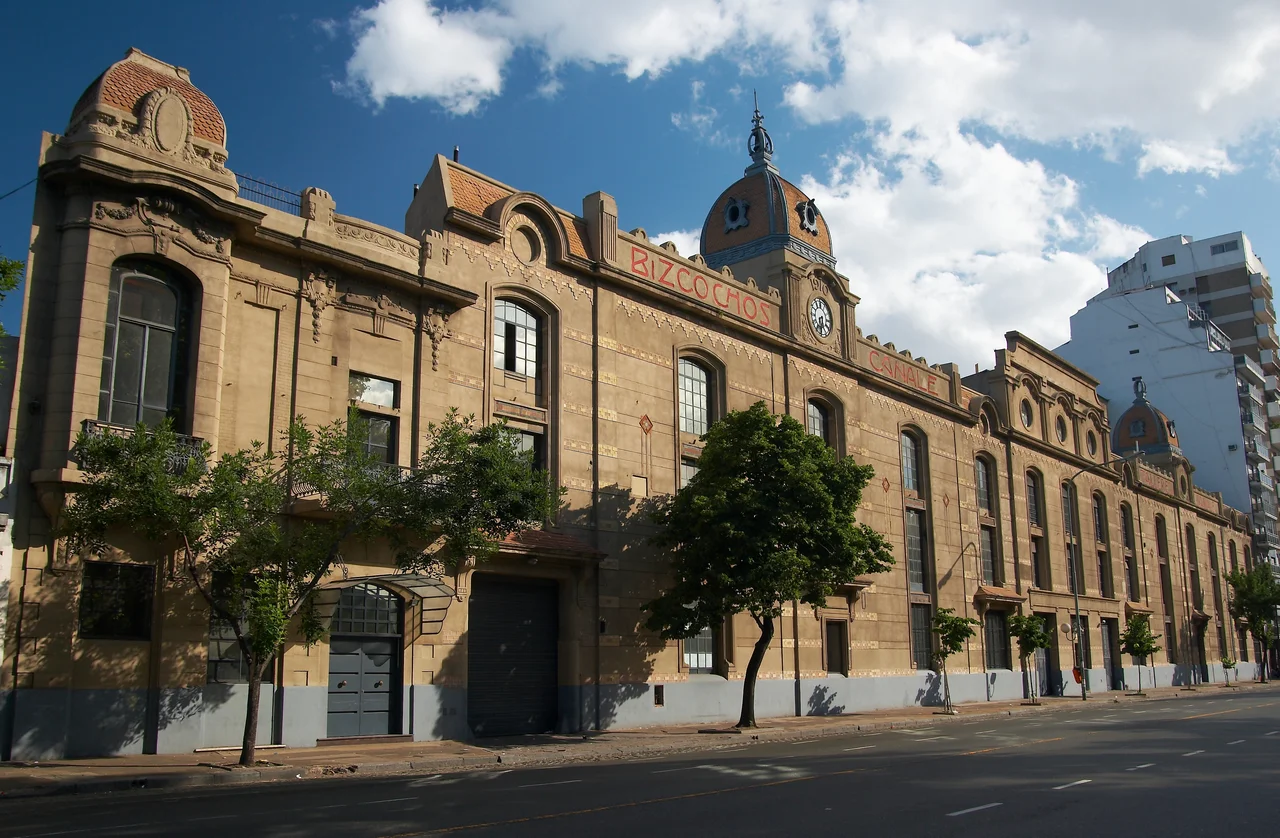

Lezama Park
On a low bluff above what was once the open river, tradition holds that Buenos Aires was born here in 1536, and very nearly died in the same breath. The conquistador Pedro de Mendoza is said to have landed at this barranca on the eastern edge of what is now Lezama Park, planting the first, doomed attempt to settle the city. That first Buenos Aires failed utterly, abandoned within a few years amid hunger and conflict. The city we know was founded again, elsewhere, decades later. But the legend clings to this green slope in San Telmo, marked by a monument to Mendoza at the corner of Defensa and Brasil streets.
The Disputed Cradle
Historians have long pointed to the park's eastern barranca, the natural bluff that once looked out over the Río de la Plata, as the likely site of Mendoza's 1536 landing. It is a tidy origin story, and the city embraced it, raising a monument to the conquistador here in the 1930s. Yet the ground itself has been less cooperative. Archaeological excavations conducted between 1988 and 1990 turned up no metal or ceramic fragments from the early sixteenth century, leaving the cherished claim unproven and the true birthplace of Buenos Aires a genuine mystery. The barranca remains a place where myth and history sit uneasily together, the slope still rising where the river's shore used to be before the city pushed the water back.
From Private Estate to Public Joy
For centuries this was private land. First purchased around 1790, it passed through a succession of English-Argentine owners, the last of whom raised a baroque mansion on its western edge along Defensa Street. After Argentina's brutal strongman Juan Manuel de Rosas was overthrown in 1852, his ally lost the property, and it came into the hands of José Gregorio Lezama. Lezama hired the Belgian landscape designer Charles Veerecke and planted rows of tipa and jacaranda, the very trees that decades later would become emblems of Buenos Aires itself. When Lezama died in 1894, his widow sold the eight-hectare estate to the city for a token sum, on one condition: that it become a public park bearing her late husband's name.
A Garden Composed Like Music
The transformation into a true civic park fell to Carlos Thays, the French-Argentine urbanist who shaped much of green Buenos Aires. In 1904 he remade the grounds with gates, a rose garden, a gazebo, a pergola, a sculpture garden, and an esplanade, composing the space with the care of an arranger. Around its edges, the neighborhood filled in with character: the Russian Orthodox Church of Buenos Aires, with its blue onion domes, was consecrated nearby in 1901, and Second Empire buildings rose along the streets, including the one that houses the Bar Británico, an old English-style pub still cherished by locals. The former Lezama mansion took on its own grand role, becoming the Argentine National Museum of History in 1897.
Where Heroes and Tombs Was Written
Lezama Park belongs as much to Argentine literature as to Argentine history. Ernesto Sábato set much of his haunting novel On Heroes and Tombs in and around these grounds, and an enduring anecdote holds that he wrote parts of it at a table in the Bar Británico across the street. The park has weathered hard decades, its decorative urns and bronzes thinned by theft, restoration plans announced and delayed, street life crowding the paths. And yet on a weekend the barranca still fills with chess players, drum circles, and couples, the jacarandas blooming purple overhead. Whether or not Mendoza truly stepped ashore here, the slope feels like a beginning, a quiet, leafy hinge between the river and the city that grew up behind it.
From the Air
Lezama Park occupies a gentle bluff in the San Telmo district of Buenos Aires at 34.627°S, 58.369°W, between Defensa and Paseo Colón near the boundary with La Boca and Barracas. From the air it appears as a roughly square patch of dense green just inland from the Río de la Plata waterfront, southeast of the downtown core; the blue domes of the Russian Orthodox church on its northern flank make a useful marker. The original riverfront has long since been pushed east by landfill and the port, so the historic barranca now sits a short distance from the modern shoreline. Best viewed at 1,500-3,000 ft; the canopy is most vivid in late spring when the jacarandas bloom. Aeroparque Jorge Newbery (ICAO: SABE) lies about 7 km north along the coast, and Ezeiza international (ICAO: SAEZ) roughly 28 km southwest.
Nearby Stories
- Ezeiza Massacre 1.9 km away
- Luján, Buenos Aires 5.1 km away
- Curutchet House 13 km away
- Colonia del Sacramento 17 km away
- Martín García Island 28 km away
- Atucha Nuclear Power Plant 37 km away
- Lobos 43 km away
- Cry of Asencio 87 km away