.jpg)
Luján, Buenos Aires
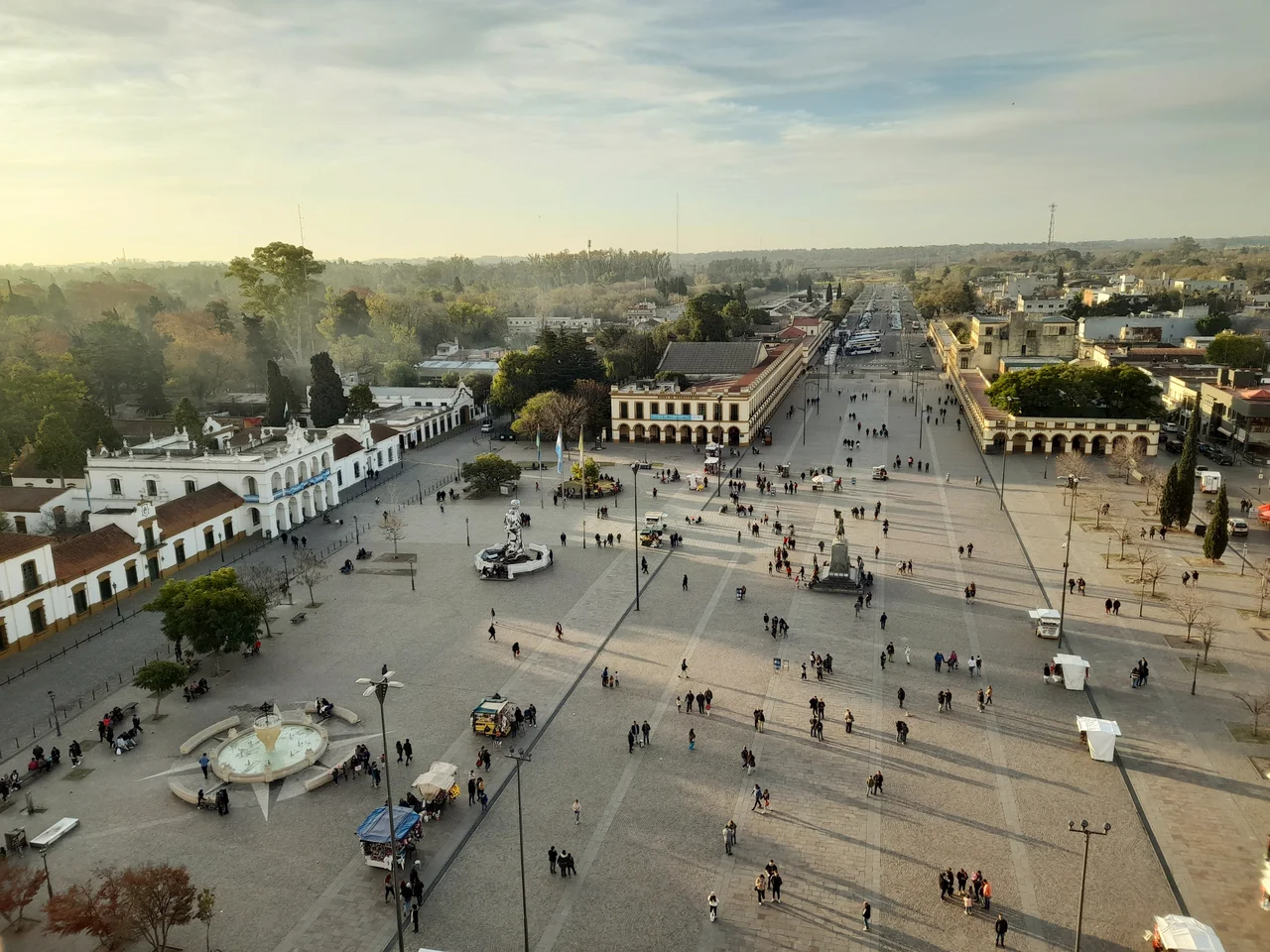
On one Sunday each October, the highways into this city of roughly 107,000 people swell with a million walkers who have come on foot from Buenos Aires, sixty-eight kilometers away. Luján is the place an entire nation goes to keep its promises. Argentines call it La Capital de la Fe - the Capital of the Faith - and more than six million pilgrims pass through every year. But the faithful are not the only ones who come. Luján is also a day-tripper's town of riverside grills and souvenir stalls, and tucked behind its famous towers is a museum holding pieces of Argentine history that have nothing to do with prayer at all.
Founded on the Frontier
Luján was established in 1755, when this was the very edge of the Spanish colonial world - flat, open country where the settled lands gave way to the territory of the Indigenous peoples of the pampas. The Río Luján gave the town its name and its reason to exist, a thread of water and a stopping place on the routes inland. The great neogothic basilica that now defines the skyline came much later, begun in 1889 and finished in the 1930s. Long before those towers rose, Luján was already a destination, drawing pilgrims to the modest shrine of the Virgin that had stood here since the 1600s. The grandeur arrived; the devotion was always the point.
The Capital of the Faith
What sets Luján apart is the sheer scale of belief it gathers. The basilica honors the Virgin of Luján, patron saint of Argentina, and houses her tiny statue beneath a copper roof, behind bronze doors, in a building that towers over the surrounding flatland. In its gallery stands a monumental organ built by the celebrated French firm of Cavaillé-Coll, an instrument that fell into disrepair but has drawn long efforts toward restoration. Around the church, the sacred and the everyday mingle without friction: stalls of religious keepsakes, the smoke of asado grills, families on a day out. Luján has learned to be a holy city and an ordinary one in the same breath, and somehow neither role crowds out the other.
A Museum Full of Surprises
A few steps from the basilica, the Enrique Udaondo museum complex holds the secular treasures of Luján - and they are remarkable. Housed in the colonial residence of the Viceroy and the old town hall, it displays La Porteña, Argentina's very first steam locomotive, and Plus Ultra, the first seaplane to fly from Europe to Argentina. Strangest of all are the preserved prison cells where two utterly opposed figures were once held: Colonel William Carr Beresford, commander of the British forces who invaded Buenos Aires in 1806, and General Cornelio Saavedra, who in 1810 led the first national government of an independent Argentina. A captured invader and a founding father, confined within the same walls - Luján keeps both, without choosing sides.
The Monks on the Edge of Town
Not all of Luján's faith is loud. Since 1987, Benedictine monks of the Cono-Sur Congregation have lived quietly at the Abadía de San Benito on the city's outskirts, supporting themselves through agriculture and publishing and offering retreat to those who need silence rather than crowds. It is a fitting counterpoint to the great pilgrimages: where a million walkers fill the roads one Sunday each October, a handful of monks keep a steadier, quieter rhythm through all the other days of the year. Between the roaring devotion of the pilgrimage and the murmured prayers of the abbey, Luján holds the whole spectrum of belief. Add the captured British colonel and the founding general in their museum cells, the first locomotive and the first transatlantic seaplane parked nearby, and this pampas city by the Río Luján turns out to hold a remarkable amount of Argentina - sacred and secular alike - in one easily reached place.
From the Air
The city of Luján lies at 34.57°S, 59.11°W, about 68 km northwest of the city of Buenos Aires on the open pampas. The unmistakable navigation landmark is the basilica's twin neogothic towers, rising 106 meters above the otherwise flat skyline and visible from far off at altitude; the Río Luján threads through the surrounding farmland. The nearest major airports are Buenos Aires Ezeiza (SAEZ) to the southeast and Aeroparque Jorge Newbery (SABE) on the riverfront. Terrain is uniformly flat agricultural land, offering excellent long-range visibility in clear conditions. On the first Sunday of October, the roads linking Buenos Aires to Luján carry the annual pilgrimage of roughly a million walkers - a striking sight from above.
Nearby Stories
- Battle of Caseros 11 km away
- Ezeiza Massacre 16 km away
- San Antonio de Areco 21 km away
- Martín García Island 44 km away
- Lobos 44 km away
- Battle of Vuelta de Obligado 76 km away
- Los Toldos 118 km away
- Ramallo Massacre 119 km away