.jpg)
Clare Priory
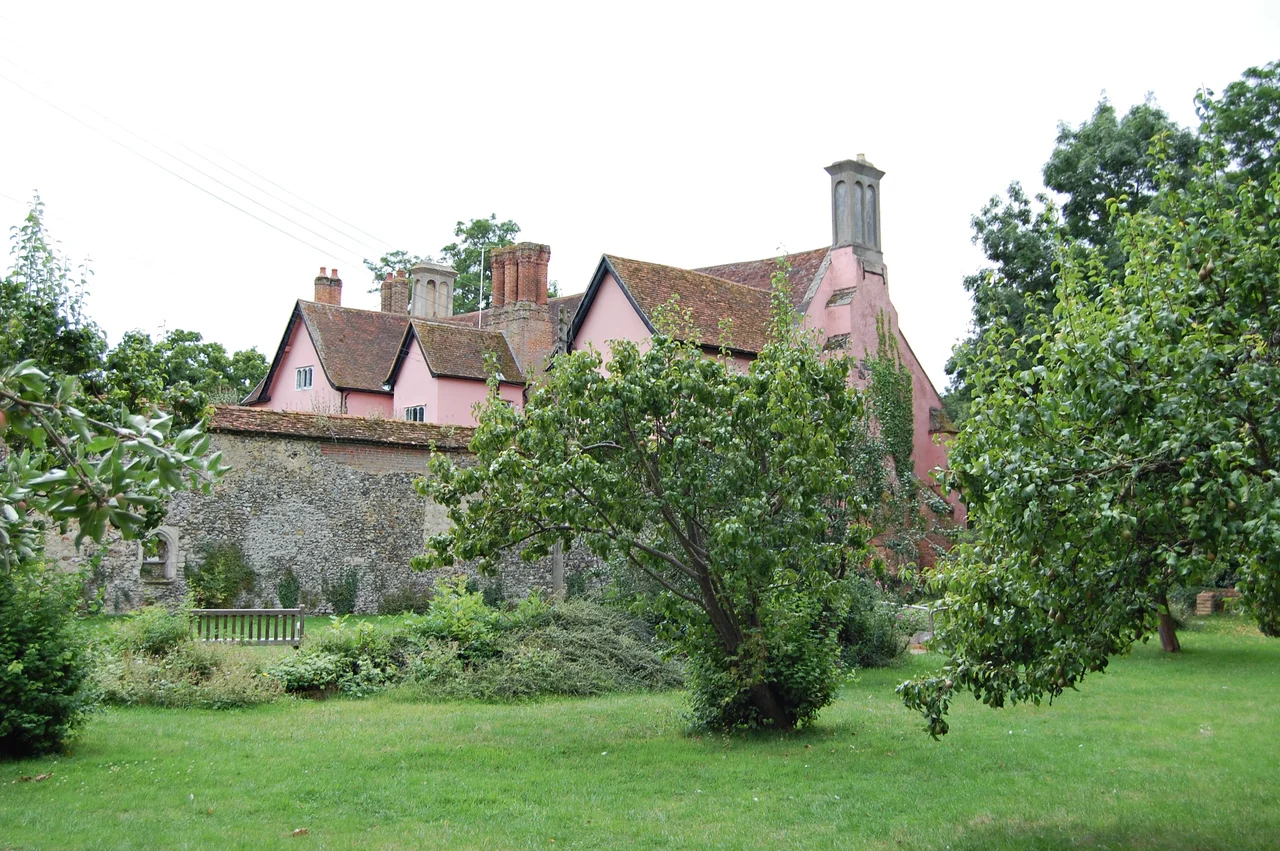
In 1248, Richard de Clare, 6th Earl of Gloucester, gave the Augustinian Friars their first English foothold on the banks of the River Stour in Suffolk. The friars in black habits walked the lanes around Clare village for nearly three centuries before Henry VIII's commissioners arrived in 1538 to close them down. For more than four hundred years after the suppression, the priory passed through private hands - barn, farmhouse, country residence. Then, in 1953, the Augustinians bought it back. The infirmary that had become a barn was restored to become a chapel again. Today, the friars are still in residence, the river still runs through the grounds, and somewhere beneath the chapel floor sleep the bones of medieval English royalty.
First House
Clare Priory was established in 1248 as the first house of the Augustinian Friars - the Hermits of St Augustine - in England, a friary and a cell of Bec Abbey in Normandy. Richard de Clare founded it as both a religious house and a piece of dynastic memory-making: the de Clares were among the richest baronial families in England, and the priory sat directly beneath the family's great castle. In 1326, Edward II reconstituted it as a cell of Westminster Abbey - cutting its tie to Norman Bec and tying it instead to the royal house in London. The friars depended on local people for their daily bread and ministered in turn to the spiritual and welfare needs of the parish, an arrangement that lasted until the Reformation.
Royal Graves
The priory church became, in time, a Plantagenet mausoleum. Joan of Acre, daughter of Edward I and Countess of both Hertford and Gloucester, was buried here in 1307 in the Chapel of St Vincent that she had founded herself. Her funeral was one of the great public events of Clare's history, attended by royalty and nobility including her brother King Edward II. The grave was opened fifty-two years after her burial, and her body was reported to be incorrupt - a miracle in medieval terms. Edward de Monthermer, her youngest son, joined her in 1339. Lionel of Antwerp, Duke of Clarence and son of Edward III, was buried here in 1368 - his heart and bones brought back from Italy at his own request to rest beside his first wife. Edmund Mortimer, 5th Earl of March, died in 1425 and was the last great noble interred here.
Dissolution
In 1538, the priory was suppressed under Henry VIII's dissolution of the monasteries. The friars departed, the church was unroofed, and the buildings began the long slide into ruin that swallowed so many English religious houses. The villagers of Clare did what villagers across England did with their local monasteries: they took the stone, the lead, the worked timber, and put them into their own walls and roofs. The property passed through many private hands across the following centuries - some careful, some indifferent. By the end of the nineteenth century, what survived was a patchwork of medieval ruin and later domestic accretion, with the old infirmary serving as a working barn.
Return
In 1953, the Augustinians purchased Clare Priory back. The choice of date was deliberate - exactly 705 years after the original foundation, and a moment when the post-war Catholic Church in England was confident enough to begin reclaiming its medieval foundations. The barn was restored to become a chapel. A retreat centre opened in the surviving buildings. In recent years the priory has continued to evolve: a contemporary new church, completed in the 2010s, won the Royal Institution of Chartered Surveyors 2015 Building Conservation award and was declared Project of the Year. The annual Clare Priory Craft Fair, held each July, draws ten thousand visitors over two days, with proceeds going to charity. Eight centuries after Richard de Clare put friars on this riverbank, they are still here.
From the Air
Coordinates 52.08 N, 0.58 E, on the south side of the small Suffolk market town of Clare, beside the River Stour. The priory grounds sit at the eastern edge of Clare Castle Country Park, where the motte of the medieval castle is the most prominent feature from the air. Nearest airport is London Stansted (EGSS), about 25 nautical miles south-west; Cambridge (EGSC) lies 23 nm north-west. Best viewed at lower altitudes when the river meanders, the priory grounds, and the castle motte are all visible together against the open Suffolk farmland.
Nearby Stories
- RAF Lakenheath 3.5 km away
- Needham Market 3.6 km away
- St Osyth's Priory 6.4 km away
- Pleshey Castle 9.7 km away
- Bourn Windmill 11 km away
- Welwyn Tunnel rail crash 13 km away
- Norfolk Tank Museum 16 km away
- Connington South Rail Crash 17 km away