.jpg)
RAF Lakenheath
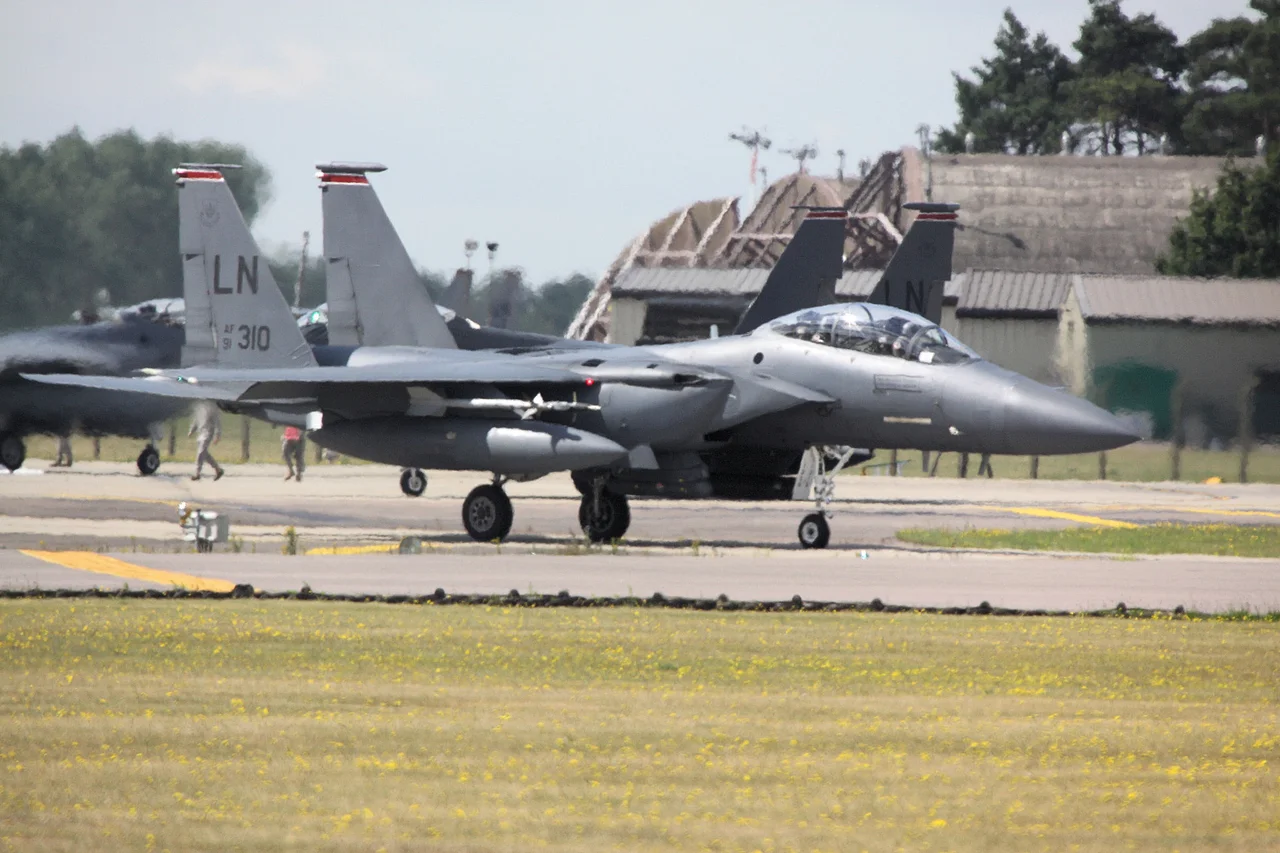
It is called a Royal Air Force station, and the Union Jack still flies above the gate, but every aircraft on the ramp wears American stars. Lakenheath is the strange diplomatic compromise of the Cold War made permanent: British soil, British paperwork, American jets. On any given morning, the Breckland sky over Suffolk fills with the unmistakable double thunder of F-15E Strike Eagles climbing out of the heath, and now, increasingly, with the higher, sharper note of the F-35A Lightning II. This is the 48th Fighter Wing, the Liberty Wing, the largest United States Air Force fighter wing in the United Kingdom.
From Decoy to Heavy Bomber
Lakenheath began as a deception. In 1940, the Air Ministry chose the heath northeast of Mildenhall as a decoy airfield, a place to draw German bombers away from the real targets. Surfaced runways followed in 1941, and within months No. 149 Squadron and its Short Stirling bombers were dispersing here from Mildenhall as conditions allowed. The deception had become real. On the night of 28-29 November 1942, Flight Sergeant Rawdon Middleton flew his damaged Stirling back from a raid on Turin with serious face wounds, brought his crew within reach of England, and ordered them to bail out before the fuel ran dry. He stayed at the controls. The Victoria Cross was awarded posthumously. By 1944, both bomber squadrons had moved out and Lakenheath was being rebuilt as a Very Heavy Bomber airfield, which meant the runways grew long enough for whatever came next.
Liberty Wing Arrives
What came next was American. In January 1960, after Charles de Gaulle demanded that all non-French nuclear-capable forces leave his country, the 48th Tactical Fighter Wing flew its F-100 Super Sabres out of Chaumont-Semoutiers in eastern France and landed at Lakenheath the same afternoon. They never left. The wing cycled through aircraft as the Cold War evolved: Super Sabres gave way to F-4 Phantoms still wearing the wear of Vietnam, then F-111 Aardvarks under Operation Ready Switch in 1977, then F-15E Strike Eagles. The Liberty Wing flew combat missions over Iraq, Bosnia, Kosovo, Afghanistan and Libya. The base also raised quieter histories. Vanessa Baird and Elaine Brown, both born to white British mothers and Black American GIs stationed at Lakenheath in the 1950s, grew up not knowing their fathers; Elaine finally found hers in Washington in 1996, more than four decades after he had been sent home.
The F-35 Campus
In January 2015, the Department of Defense announced that 54 F-35A Lightning IIs would call Lakenheath home, split between two squadrons, alongside the existing F-15Es. The 495th Fighter Squadron reactivated in October 2021, and the first F-35A touched down on 15 December 2021, the first American F-35 stationed in Europe. The infrastructure that arrived with the jets was almost a town in itself: two new six-bay maintenance hangars, a flight simulator building housing six F-35A simulators, a dual-squadron operations facility, a corrosion control hangar with paint and sanding booths, dormitories for 144 personnel, a dining facility, a four-storey hospital, and a high school for around 560 students. The investment ran to $148.4 million from Washington plus a £160 million construction contract awarded to Kier Group and VolkerFitzpatrick. Charlie Apron, where F-15s once parked, was extended to hold up to 42 F-35As under lightweight canopy shelters.
Drones in the Dark
In late November 2024, something strange happened in the night sky over the East Anglian bases. Small unmanned aircraft, varying in size and configuration, were spotted over Lakenheath, Mildenhall and Feltwell between 20 and 22 November. F-15E Strike Eagles were reportedly scrambled. RAF Regiment personnel arrived with the ORCUS counter-drone system after a second wave of sightings on the night of 25 November. No one publicly identified who was flying the drones or why, but the incident landed in headlines from the BBC to the Telegraph because of what Lakenheath had become by then. In July 2025, analysts tracked a C-17 transport plane from Kirtland Air Force Base in New Mexico to Lakenheath — a route consistent with nuclear weapons delivery — which multiple outlets reported as the return of American nuclear weapons to British soil for the first time in roughly two decades, though the UK government neither confirmed nor denied the deployment. The peace camps and CND protests, which have visited this perimeter fence since the 1980s, suddenly had fresh urgency.
What You See From Above
From the air, Lakenheath sprawls across the Breckland heath: long parallel runways, the new Charlie Apron with its rows of pale shelters, hangars 4-1 and 4-2 on the south side, the Wings of Liberty Memorial Park where an F-100D Super Sabre stands gate guard. The villages of Lakenheath, Brandon, and Eriswell ring the perimeter, and the dark blocks of Thetford Forest stretch east. Trains of Strike Eagles and Lightnings come and go from a place that has been at the sharp end of every American military operation in Europe since 1960, and probably will be for a long time yet.
From the Air
RAF Lakenheath sits at 52.41°N, 0.56°E on the Breckland heath of Suffolk, with the village of Lakenheath to the northwest and Brandon hard against the perimeter. ICAO: EGUL. Mildenhall (EGUN) is 4.7 nm southwest, Marham (EGYM) about 18 nm northwest. Expect heavy Strike Eagle and Lightning II activity in the MATZ; controlled airspace and noise abatement procedures apply, and the area is frequently subject to NOTAMs for exercises. From cruising altitude in clear weather the long runways and the new F-35 campus south of the field are unmistakable.
Nearby Stories
- Bourn Windmill 5.6 km away
- Needham Market 6.1 km away
- Castle Rising Castle 7.6 km away
- Norfolk Tank Museum 10 km away
- Spalding War Memorial 11 km away
- Clare, Suffolk 14 km away
- RAF Wyton 15 km away
- RAF Matlaske 17 km away