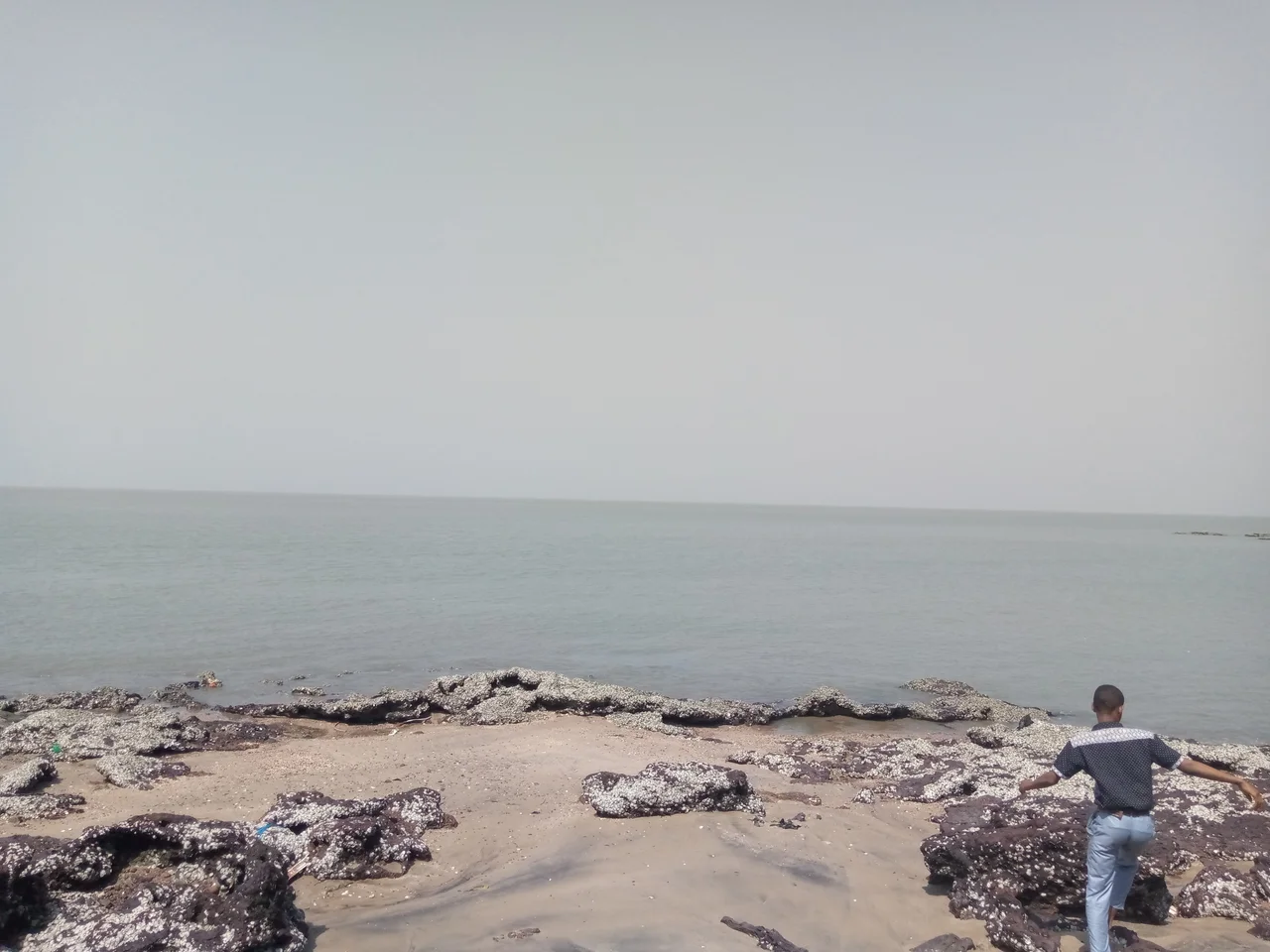

Conakry
Conakry runs out into the Atlantic like a finger pointing west. Guinea's capital is squeezed onto a long, narrow peninsula, which means the city is almost all length and very little width - a place you travel through rather than across. More than two million people live here, and the rhythm of their year is set by water: months of bone-dry harmattan dust, then a wet season so torrential it ranks among the rainiest stretches of coast on the continent. This is a working port city first, a tourist destination a distant second, and all the more rewarding for those who take it on its own terms.
A City the Sea Made
Conakry's life turns on its harbour. The port is the city's economic engine, equipped with modern facilities for handling and storing cargo, and through it flow the two commodities that define Guinea's trade: alumina, refined from the country's vast bauxite reserves, and bananas from the coastal plantations. Around the docks cluster the city's factories, turning out food products, cement, metal goods, and fuel. The old historic centre sits out at the peninsula's very tip, on Tombo Island, where the original colonial town took root. Everything else has grown inland from there, street by street, until the capital filled its narrow spit of land and began straining at the edges.
Rain Like a Season of Its Own
Conakry's climate is a study in extremes. It has a tropical monsoon pattern split sharply between wet and dry, and the gap between them is startling. From December to April the harmattan blows off the Sahara, and the city goes almost rainless - January and February may see barely a millimetre of rain between them. Then the monsoon arrives, and the sky simply opens: July and August each average more than 1,100 millimetres of rainfall, well over forty inches a month, among the heaviest anywhere in West Africa. The dry months bring the brightest skies, March the most sunshine of all; August, by contrast, can vanish for days behind warm grey downpour.
Getting Around a Long, Thin City
Because Conakry is stretched so far along its peninsula, distances add up fast, and taxis are the practical choice for most visitors moving between the inland districts and the old centre on Tombo. Locals have another option with real character: the Conakry Express, a commuter train opened in 2010 to ease the city's chronic traffic. It runs along the first 36 kilometres of an old railway line toward Kankan - track that has otherwise sat idle since the mid-1980s - making two return trips a day on weekdays. It is not built for tourists, but riding it is a genuine slice of daily Conakry life. One quirk rewards the curious: the city numbers its streets with a two-letter district code and a three-digit number, odd for north-south roads and even for east-west, so KA002 marks a northbound street in Kaloum.
Markets, Matches, and Island Escapes
Conakry's pleasures are mostly everyday ones. The city's large markets are the place to feel its commercial pulse, and football is close to a civic religion - the Guinée Championnat National fields fourteen clubs, half of them based in the capital, while the national team, nicknamed the Elephants, fills the 50,000-seat General Lansana Conté Stadium and the Stade du 28 Septembre. Nightlife runs late, rarely getting going much before midnight. And when the city's density and heat become too much, the Atlantic offers a ready exit: the Îles de Los, with their beaches and dense forests, lie a short boat ride offshore, the pirogues setting out from the fish market behind the old Novotel.
Knowing the Ground
Conakry has grown fast, and the growth has outpaced its infrastructure - overwhelming density, strained services, the visible friction of a city expanding faster than it can be built. It has known political turbulence, too: contested elections in 2010 brought protests and clashes between citizens and the military. Travellers are advised to stay aware, particularly outside the capital, where improvised checkpoints have sometimes appeared on the roads. None of this should be read as a reason to stay away - millions live their lives here every day - but as the ordinary due diligence of any visitor. Come prepared, move with local advice, and Conakry opens up: a hard-edged, fast-moving, deeply alive West African capital with the ocean at its feet.
From the Air
Conakry sits at approximately 9.51°N, 13.71°W, on a long narrow peninsula jutting into the Atlantic at the western edge of Guinea. From the air the city's distinctive shape is its best landmark - a thin built-up strip running far out to sea, terminating at Tombo Island and the old centre. Conakry-Gbessia International Airport (ICAO: GUCY) lies in the city's eastern districts. The Îles de Los are clearly visible just southwest, offshore. Recommended viewing altitude 3,000-7,000 ft to take in the full peninsula and the islands. Visibility is best in the December-April dry season; the harmattan can haze the coast, and the July-August monsoon brings very heavy cloud and some of West Africa's heaviest rainfall.
Nearby Stories
- Pongo River (Guinea) 30 km away
- Kindia 60 km away
- Bunce Island 90 km away
- King's Yard 116 km away
- Sierra Leone River 121 km away
- Poilão 182 km away
- João Vieira and Poilão Marine National Park 208 km away
- Rocas Atoll 2601 km away