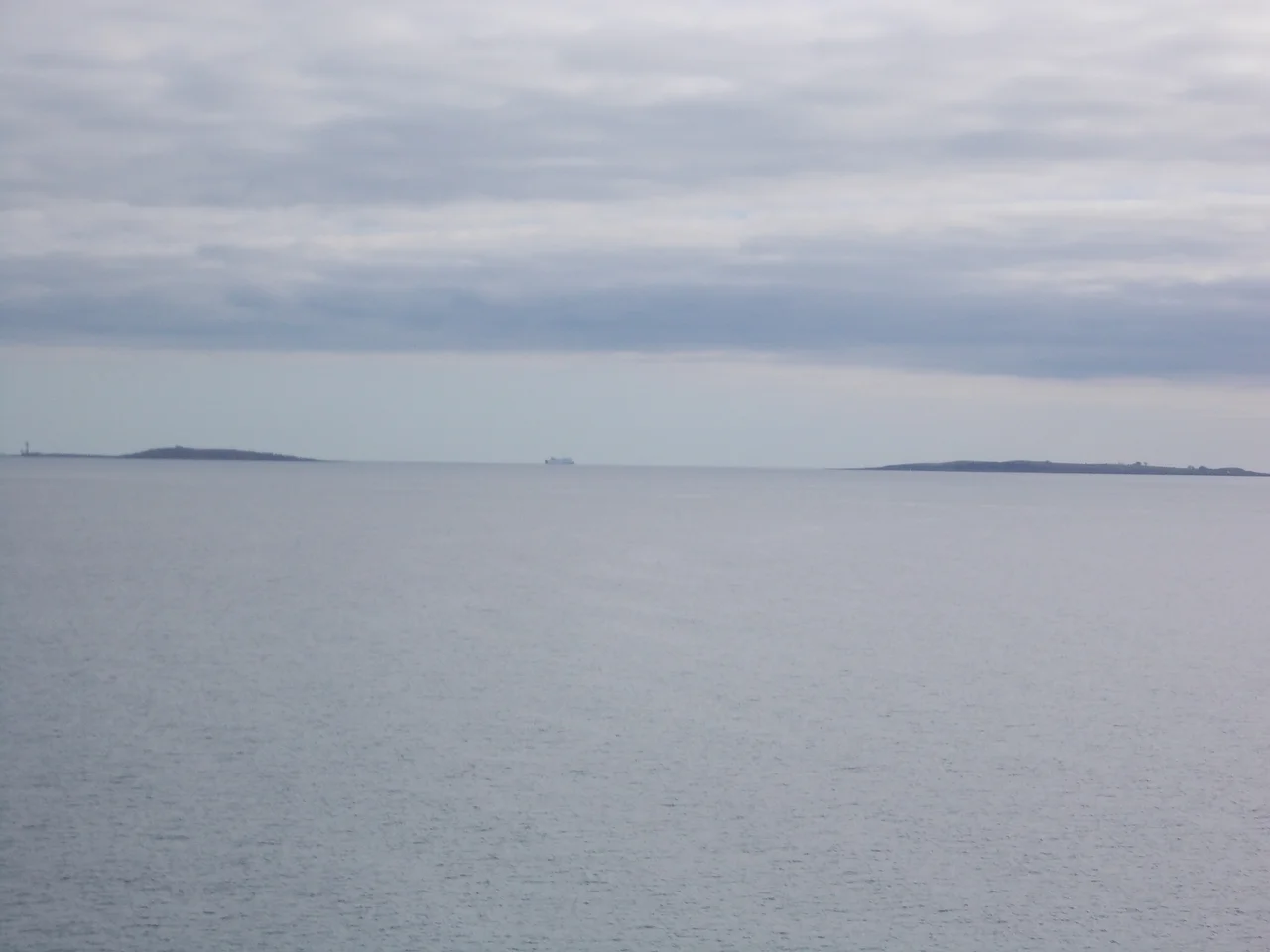

Copeland Islands
When Hans Sloane visited the Copeland Islands in the late seventeenth century, he could barely walk for the seabirds. He wrote later of sea wrens whose eggs lay so thick on the ground that he and his companions had trouble passing along without treading on them, the birds screaming overhead the whole time. Sloane went on to found the British Museum. The islands went on being themselves: three small, low-lying rocks in the Irish Sea, north of Donaghadee, in the place where the Ards Peninsula slips beneath the waves. They are still loud with seabirds. They are still where most of the action happens without any humans involved.
Three Islands, Three Stories
There are three of them, and each has its own name to give and take. Copeland Island, also called Big Island or Great Copeland Island, is the largest. Lighthouse Island, also known as Old Island, used to have a lighthouse but no longer does. Mew Island, the easternmost, does have a lighthouse and it is still working. The whole group probably takes its name from the de Coupland family, Normans who settled around Newtownards on the northern Ards Peninsula in the twelfth century. A century ago, Lighthouse Island carried a population of about 100, including a schoolmaster with 28 pupils. The school is long gone. So is the village. The ruined stump of the 1815 stone tower stands sixteen metres tall and the keeper's house has been rebuilt to shelter the Copeland Bird Observatory, established in 1954 by the Belfast naturalist Arnold Benington. Volunteers still come out for ringing sessions, recording the comings and goings of birds that pay no attention to international borders.
Shearwaters in the Burrows
On dusk evenings between April and September, the Manx shearwater colony on Copeland Islands comes alive. More than four thousand breeding pairs nest here, holding over 1.7 percent of the world's population of this small, ocean-roaming seabird. The shearwaters spend their days far out at sea and return only after dark to avoid predators. They cannot walk well on land; they shuffle on their bellies. They cannot easily lift off from flat ground; they need slopes or burrows. And here is one of the small ironies of nature: the success of the colony depends on rabbits. Rabbits dig the burrows that shearwaters nest in. Rabbits crop the grass short enough for fledglings to launch into the wind. Arctic terns also breed here, along with Mediterranean gulls, common gulls and common eiders. Nineteen butterfly species have been recorded, and a beetle new to Northern Ireland, Diplapion confluens, was found here in 2013. On the ground, Lighthouse Island sits at an unusual ecological crossroads: it is the southern limit in Europe for Scots lovage and the northern limit in Ireland for sea purslane.
Lights and Smugglers
In 1671, James Ross obtained a fee farm grant of the islands, and in 1770 they passed to David Kerr, bought from the 2nd Earl of Clanbrassil. The waters around the Copelands were dangerous to shipping, and around 1715 a coal-burning beacon was lit on Lighthouse Island. It consumed over 400 tons of coal a year. The British and Irish Lighthouse Board took over in 1796, replaced the beacon with oil lamps, and in 1815 built a new tower. In 1884 the keepers moved across to Mew Island Lighthouse, abandoning the Lighthouse Island tower for good. Mew was converted to automatic operation in 1996, the last lighthouse keepers permanently withdrawn. Until the early twentieth century the islands had another commercial use that left no paperwork: smugglers brought tobacco and spirits ashore here and walked the contraband into County Down.
Princess Victoria
On 31 January 1953, a North Atlantic storm of historic violence swept across the Irish Sea. The British Transport Commission car ferry MV Princess Victoria, sailing from Stranraer to Larne, was overwhelmed by enormous waves. Her stern doors gave way and she foundered off the Copeland Islands. One hundred and thirty-five people died. The disaster shocked Britain and Ireland and led to lasting changes in roll-on roll-off ferry design. The Donaghadee lifeboat Sir Samuel Kelly was among the small craft that put to sea in conditions no one should have survived, and the survivors who were pulled aboard owed their lives to volunteer crews working through the dark. The sea around the Copelands is now usually empty of ferries; the Stranraer service was moved further north to Cairnryan in the 1970s. The water still remembers. So do the families who lost husbands and brothers in waves that no boat of that size could have ridden out.
From the Air
The Copeland Islands sit at approximately 54.67 degrees north, 5.53 degrees west, off the northeast tip of the Ards Peninsula about a mile north of Donaghadee. From the air, they form a small triangle of three low, grass-covered islands rising only a few metres above sea level. Mew Island, the easternmost, is identified by its active lighthouse with a distinctive square stone tower. Belfast City Airport (EGAC) lies about 18 miles to the west, and Belfast International (EGAA) about 28 miles west-northwest. The islands lie close to ferry routes between Belfast Lough and the Scottish coast. They are owned by the National Trust and managed for seabird breeding, so low overflights are discouraged during nesting season (April-September).
Nearby Stories
- Ballycarry 3.2 km away
- Drummore 7.6 km away
- Hillsborough Castle 7.9 km away
- Cushendall 8.8 km away
- Castle Upton 9.3 km away
- Girvan 25 km away
- International Institute of Space Commerce 29 km away
- Ballantrae Lifeboat Station 30 km away