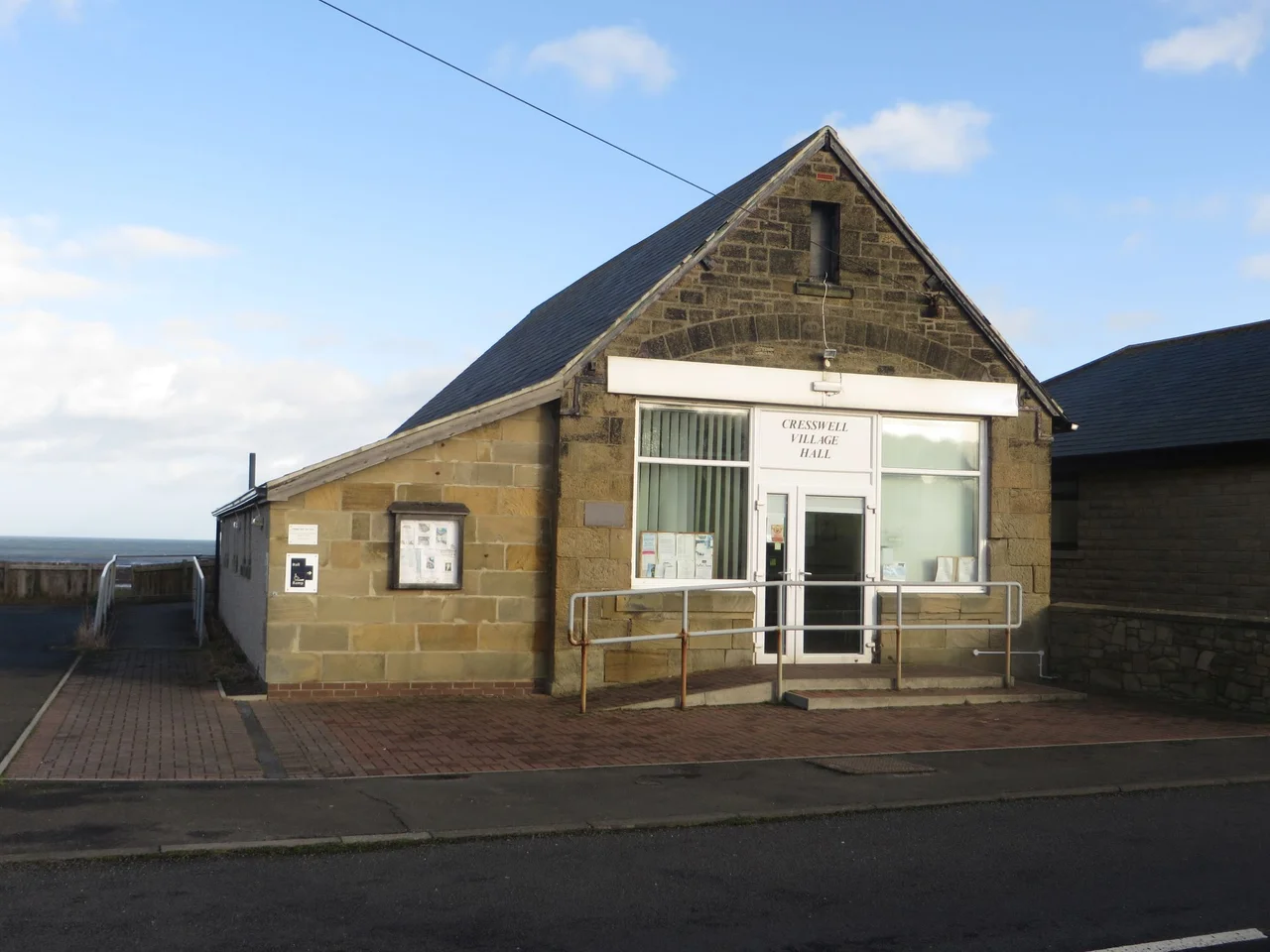

Cresswell Lifeboat Station
In 1874, a man called James Brown and his three sons drowned in sight of the Cresswell shore when their fishing coble overturned. The village had no lifeboat. No rocket-line equipment. Not even a barometer to warn of the weather turning. James's daughter Margaret was a young woman then. Within two years she was helping drag a new lifeboat through gale-force rain to launch it, and within fifty years she had become so identified with the work of the station that the press called her the Second Grace Darling. The Cresswell lifeboat saved a great many lives. It also became, almost incidentally, a story about one family that refused to let the sea win again.
The Browns of Cresswell
Thomas Brown of Cresswell - known locally as Big Tom - was awarded the RNLI Silver Medal in 1861 for rescuing six men from the vessel Julius, aground and breaking up on Broad Sand Rocks. He was thirteen years away from the disaster that would kill his brother James and three of his nephews. After James and the boys drowned, the village pressed for a lifeboat. The landowner Addison John Baker-Cresswell of Cresswell Hall granted the site for a boathouse free of charge, gave the stone, and lent his masons. A philanthropist in London, Thomas Hackwood of Sydenham, paid for the boat. The lifeboat Old Potter was launched on 21 August 1875. Big Tom was its first coxswain. Eight other crew members shared his surname.
Margaret Brown
On a winter night in 1876, the steamship Gustaf was in trouble off the coast. Old Potter had to be dragged a mile north up the beach for a workable launch. Margaret Brown, then a young woman who had already lost her father and brothers to the sea, helped haul the boat. With every man in Cresswell tied up with the launch, Margaret and two younger girls were sent to summon the Newbiggin Rocket Brigade. They ran barefoot four or five miles through swollen rivers and gale-force conditions. Margaret received a silver teapot for her actions. For the next fifty years she answered every maroon. She never missed a quarterly practice or service launch. At seventy, she was still showing up. In 1922 the RNLI awarded her its Gold Brooch and Record of Thanks. She died in 1928 aged 79. A plaque in her memory was placed on the wall of St Bartholomew's Church, Cresswell, by the RNLI in 1981.
Six Decades, Four Coxswains, One Family
When Big Tom retired in 1890, he received a second RNLI Silver Medal - 29 years after his first. His successor Henry Brown served three years. After Henry came Adam Brown, son of Thomas, who had crewed the boat since its launch in 1875 and would stay coxswain until 1908. William Brown - also crewing since 1875 - took over next, earned the Thanks of the Institution on Vellum in 1914, and stayed until his retirement in 1925. Robert Brown held the post briefly that year. Addison Brown finished out the station's working life as coxswain until the station closed in 1944. Four generations. Four coxswains. One family name. It is a degree of community ownership of a public-service institution that is almost impossible to match in any other industry.
What the Sea Took, and Gave Back
The lifeboat Ellen and Eliza arrived at Cresswell on 24 August 1889, funded by an anonymous donor whose £2,000 gift bought three boats. Martha replaced her in 1909, a Dungeness-class boat designed by Felix Rubie and paid for from the legacy of Mrs M. A. Vaughan of Highbury. After 69 years of operation, the station closed in 1944, made redundant by the larger motor-powered lifeboats placed at Amble. The shoreline at Cresswell is quieter now - the boathouse is gone, the launching carriages are gone - but St Bartholomew's still holds Margaret Armstrong's plaque, and the Brown name survives in the village. The cost of all that gallantry was paid in 1874 by the four men whose coble overturned within sight of shore.
From the Air
Located at 55.24°N, 1.54°W on the Northumberland coast about 20 miles north-east of Newcastle. Nearest commercial airport is Newcastle (EGNT) approximately 25 nm south-west. The former station site is in Cresswell village at the south end of Druridge Bay. The seven-mile sweep of Druridge Bay extends north toward Amble. RAF Boulmer is 13 nm north for SAR coordination. Best viewed VFR at 1,500-2,500 ft along the coast with the long beach unmistakable from height.
Nearby Stories
- Beadnell 3.5 km away
- Great North Museum: Hancock 4.8 km away
- Battle of Otterburn 7.5 km away
- Battle of Flodden 10 km away
- Housesteads Roman Fort 14 km away
- Saltburn Pier 49 km away
- German submarine U-2367 74 km away
- Alexander L. Kielland (Platform) 278 km away