
Dan-Air Flight 1903
They were going on holiday. The 112 people aboard Dan-Air Flight 1903 had booked an all-inclusive package to the Spanish coast, boarded a chartered airliner at Manchester on a July afternoon in 1970, and settled in for the short hop to Barcelona and the sun. Among them were couples and families, ordinary people from the north of England. They never arrived. In the late afternoon of 3 July, in cloud over the wooded ridges of the Montseny north of Barcelona, the aircraft flew into a mountainside near the village of Arbúcies. Everyone on board was killed. It was the deadliest aviation accident anywhere that year, and it remains the worst ever to involve the graceful, ill-fated de Havilland Comet.
A Comet, and a Company on the Rise
The 1960s had put foreign holidays within reach of ordinary British families, and companies like Clarksons Holidays sold them by the planeload: fly out, a week in the sun, fly home, all for one price. To move the crowds, tour operators chartered aircraft from carriers such as Dan-Air, and on this route the airline flew a de Havilland Comet 4, a later model of Britain's pioneering jet airliner. Business was booming. Just two days before the crash, a rival operator, Global Holidays, had awarded Dan-Air a four-year contract worth £2.5 million to fly all its charters out of Birmingham from the following spring. The disaster fell across that moment of confidence like a shadow, a reminder of how thin the margins of early package-holiday aviation could be.
The Flight
Flight 1903 lifted off from Manchester Airport at 16:08 that afternoon and headed south across France. Over the Paris area it ran into air traffic control delays, and its route was changed. As it approached Spain, the crew made radio contact with the Barcelona Area Control Centre at 17:53, and controllers cleared the Comet to descend from 22,000 feet toward 9,000. Six minutes later, the flight was handed to Barcelona approach control for the final phase into the airport. Charter crews flew these Mediterranean runs constantly through the summer season, often several sectors in a single day, and this descent was one more among thousands. To the passengers dozing or watching the coast slide by, everything would have felt entirely routine. Somewhere in those minutes, though, a small confusion about exactly where the aircraft was had begun to take hold, unnoticed by anyone in a position to correct it.
A Fatal Misunderstanding
The investigation traced the crash to a tragic tangle of errors rather than any single failure. The crew reported passing a navigation beacon near Sabadell at the very moment a radar return from a different aircraft happened to be crossing that same point. To the controller, the blip seemed to confirm the crew's position; to the crew, the controller's instructions seemed to confirm their navigation. In fact both were mistaken, working from the same false picture. The aircraft was not where everyone believed it to be. By the time the controller grasped that his guidance rested on a mutual misunderstanding, there was no longer time to undo it. The Comet, descending through cloud, struck the forested slopes of the Montseny in what investigators classed as controlled flight into terrain, an intact aircraft flown into the ground by a crew who never saw it coming.
The Mountain Remembers
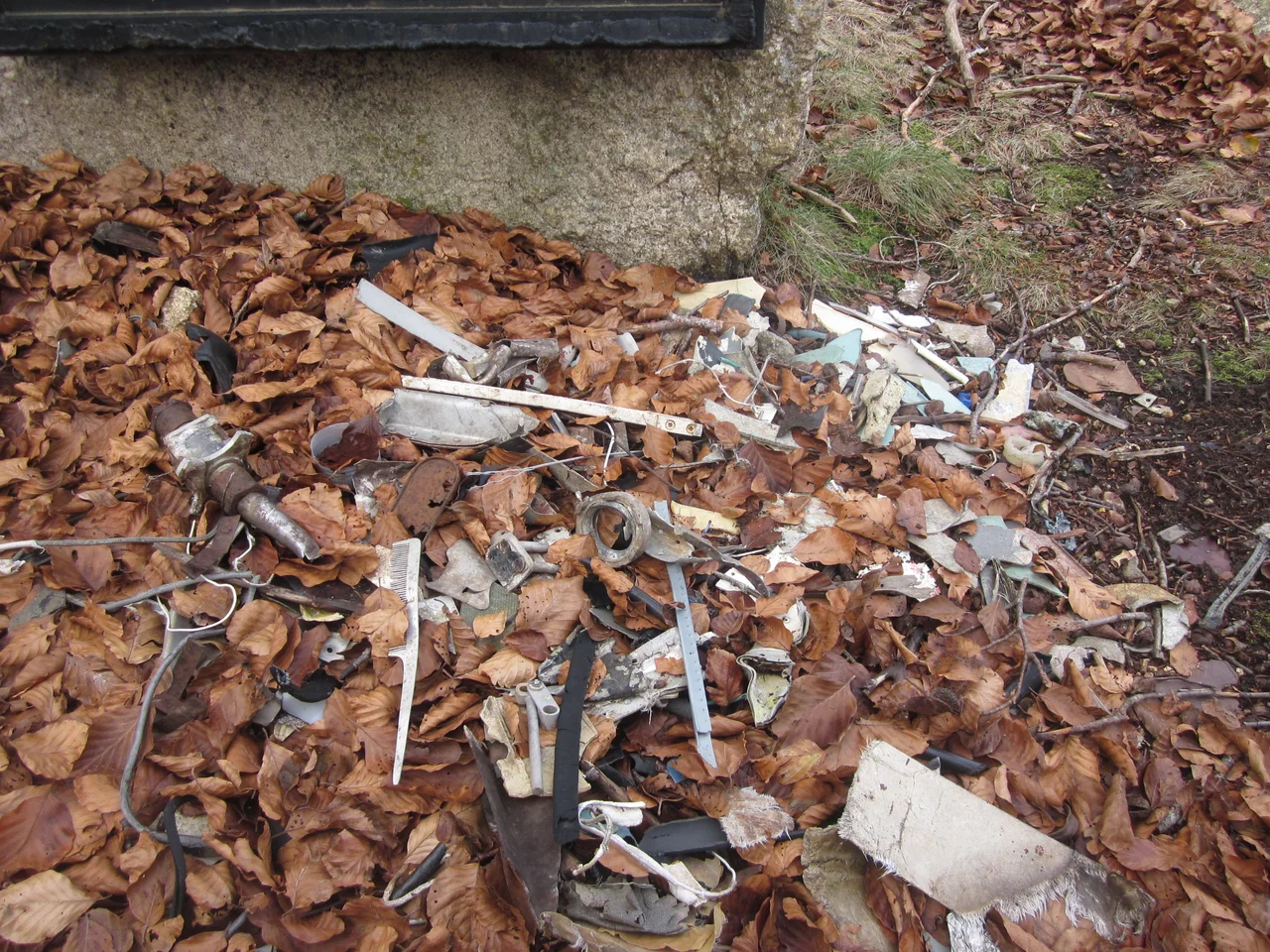
The wreckage came to rest on the wooded flanks of the Serralada del Montseny, near Arbúcies in the province of Girona, a place of quiet beauty that became, for a day, a scene of horror. All 112 people aboard died, most of them British holidaymakers who had set out that morning expecting a week beside the Mediterranean. For decades the tragedy faded from wider memory, remembered mainly by the mountain communities who helped recover the dead and by the families who never stopped grieving. A 2021 Catalan documentary, titled in translation the buried tragedy, finally brought the story back into the open, insisting that the people lost on the Montseny should not be forgotten. The forest has long since grown back over the scar, but the mountain keeps its share of the memory.
From the Air
The crash site lies at 41.7994°N, 2.4581°E, on the wooded slopes of the Montseny massif near Arbúcies, about 55 km north-northeast of Barcelona. The terrain itself is the hazard the flight failed to clear: Montseny's forested ridges rise above 1,700 m and often vanish into cloud, exactly the conditions of that July afternoon. Any aircraft approaching Barcelona from the north must reckon with this high ground. Best surveyed from a safe 6,000+ ft. Girona (LEGE) lies about 30 km northeast, Sabadell (LELL) some 35 km southwest, and Barcelona-El Prat (LEBL) roughly 55 km south on the coast. The Sabadell NDB figured in the accident; treat mountain weather and low cloud on the massif with real caution.
Nearby Stories
- Hipercor Bombing 10 km away
- Castellers de Vilafranca 16 km away
- Castle of Cardona 19 km away
- Fageda d'en Jordà 24 km away
- Tremp Formation 58 km away
- Argelers concentration camp 64 km away
- Palace of the Kings of Majorca 105 km away
- Cap de Formentor 173 km away