
Derby Silk Mill
On an island in the River Derwent, on the ground where the first true factory in the world once stood, a flooded museum reopened to the public in January 2024. Storm Babet had put two feet of water through the lower galleries of the Derby Silk Mill three months earlier. The Museum of Making, as it is now known, had been open less than three years when the storm hit, and the speed of the recovery was a kind of validation for the way the redevelopers had designed it: exhibits on the upper floors, mechanical systems above the flood line, a building that expected the river. The river, after all, is why the original Silk Mill is here in the first place.
Southern Anchor
The Derby Silk Mill is the southernmost site of the Derwent Valley Mills, a fifteen-mile stretch of river that UNESCO inscribed as a World Heritage Site in 2001. The inscription recognized the Derwent valley as the place where the modern factory system was invented, where the building, the workforce, the power source, and the daily discipline of industrial production were all worked out for the first time. From south to north the heritage stretch runs from Derby through Darley Abbey, Milford, Belper, and Cromford, then on to Matlock Bath. The Silk Mill anchors the southern end because Lombe's Mill, the building that historically stood on this site between 1721 and 1910, was the first of all of them, the prototype the others copied and improved. Almost none of the original Lombe building survives today, but the silhouette of the place, an island, a weir, a long mill block with a single soaring stair tower, has been continuously rebuilt and adapted ever since.
From Industrial Museum to Museum of Making
The site reopened to the public as Derby's Industrial Museum on 29 November 1974, after the demolition of a power station that had hidden the old mill from view for decades. For forty years it was a quiet, slightly dusty city museum showcasing Rolls-Royce aero engines, Royal Crown Derby porcelain, and Derbyshire mining and railway history. Derby City Council closed it on 3 April 2015 to free up money for a redevelopment described by the Strategic Director of Neighbourhoods as the loss of 8.6 full-time jobs in exchange for 197,000 pounds a year in saved costs. Few people expected what came back. In October 2016 a 17 million pound redevelopment programme started, reimagining the building around the principles of Science, Technology, Engineering, Art, and Mathematics, the STEAM framework. The Museum of Making opened on 21 May 2021. It is now a working maker space as much as a museum, with public workshops, classrooms, a Civic Hall salvaged from older fabric, and exhibits that visitors are invited to touch, operate, and use.
Building Without Blame
The redevelopment is also a quiet experiment in construction management. The project was delivered under an Integrated Project Insurance contract, a relatively rare procurement model in which the architect, the contractor, the engineers, the museum, and the insurers all sign a single alliance contract that pools risk rather than passing it down a chain of subcontracts. The idea was to defuse the blame-and-claim culture that drags out most large public projects. By the metrics involved, time, budget, the survival of suppliers, and quality of the finished building, it largely worked. The project finished on time and on budget despite the COVID-19 pandemic and the collapse of several suppliers along the way. The museum was Highly Commended in 2021 at the Museum and Heritage Awards for sustainability, won Project of the Year Under 25 million pounds at the Construction News Awards, and was shortlisted for the 2022 Art Fund Museum of the Year. Museum awards are not the usual currency of construction industry conversation, and that is partly the point: the project blurred the boundary.
Living With the River
Storm Babet arrived in October 2023. The Derwent rose, the island flooded, and the lower workshop areas of the museum took on serious damage. The building closed for three months. When it reopened on 25 January 2024 the curators noted that the layout had partly saved the collection: the main exhibits had been deliberately placed on upper floors precisely because flood-resilience was assumed from the start. In August 2025 the museum applied for planning permission to fit its workshop area with permanent flood protection, an acknowledgement that storms like Babet are no longer rare events on this part of the Derwent. The island that powered the world's first factory, with its weir and its leats and its old race lines, is still negotiating with the river in 2026 the way it has been negotiating since 1721.
What the Mill Now Makes
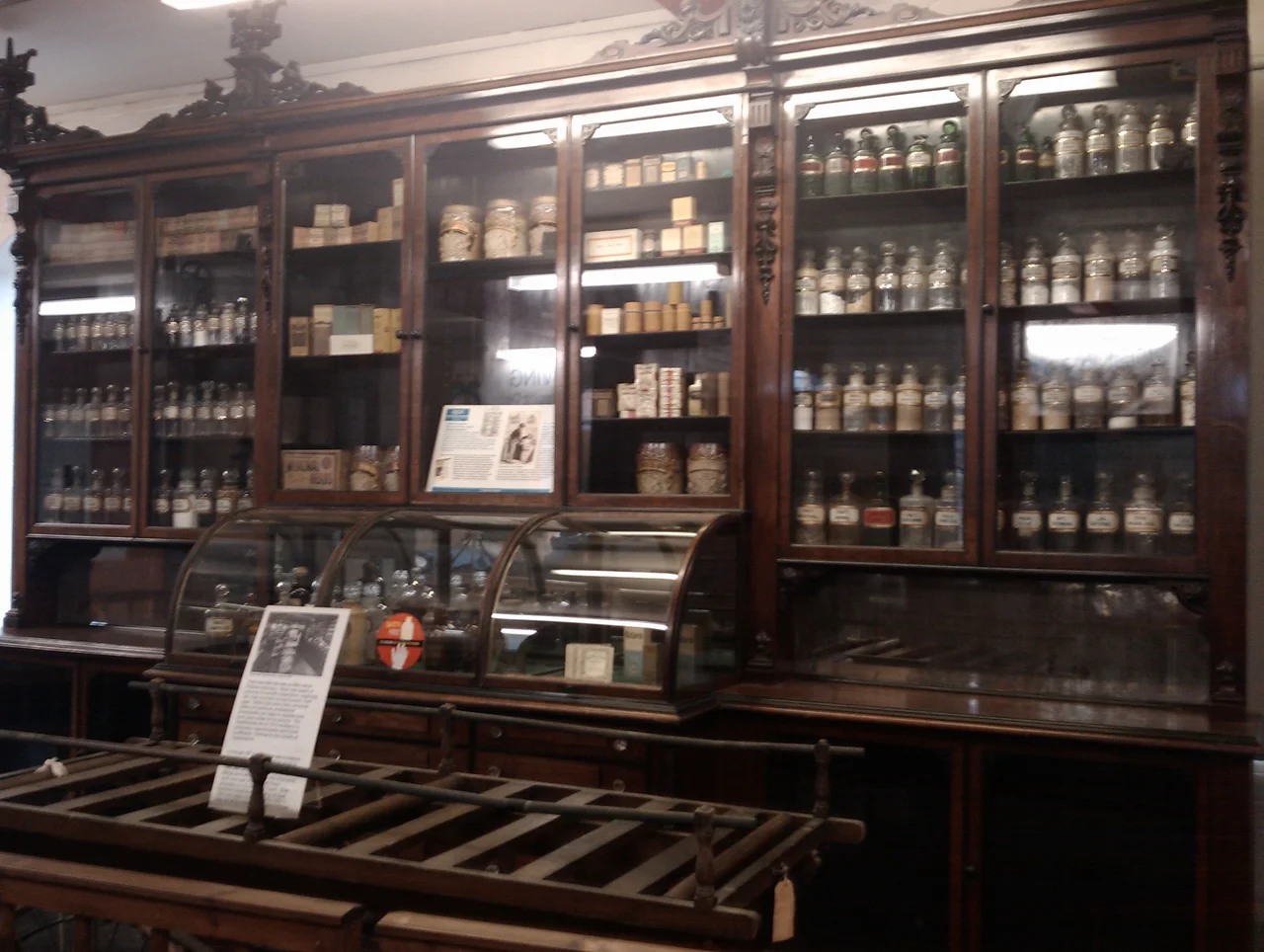
Walk into the Museum of Making today and the most striking thing is not what is displayed but what is being done. People are making things. There are 3D printers and lathes, a fully equipped wood workshop, a textiles area, and dedicated programmes for schools and community groups. The collection on the upper floors threads through railway engineering, Rolls-Royce aero engines designed only a few miles from here, Royal Crown Derby porcelain, and the strange archaeology of Lombe's silk throwing machines. Outside on the island, sculptures and interpretive panels read the river, the weir, and the foundations of the original mill in the surrounding paving. Two centuries of Derbyshire industry are not so much exhibited as continued. The factory that started here is, in a strange and very specific sense, still running.
From the Air
The Derby Silk Mill stands at 52.93°N, 1.48°W on an island in the River Derwent at the northern edge of Derby city centre. From the air the island is sharply defined by the river on the east and the old mill leat on the west, with the modern Derwent crossing immediately to the south. The cathedral tower is just upstream a few hundred yards. East Midlands Airport (EGNX) lies 9 nautical miles to the southeast. Birmingham (EGBB) is roughly 32 nm to the southwest. Recommended viewing altitude is 1,500 to 3,000 feet to read the island, the weir line, and the mill's relationship to the river and the cathedral.
Nearby Stories
- Prestbury, Cheshire 4.2 km away
- Stoke-on-Trent 5 km away
- Bingham, Nottinghamshire 8.6 km away
- Beauchief Abbey 9.6 km away
- Shot at Dawn Memorial 9.6 km away
- White Ladies Priory 13 km away
- Oakham 23 km away
- Battle of Gainsborough 24 km away