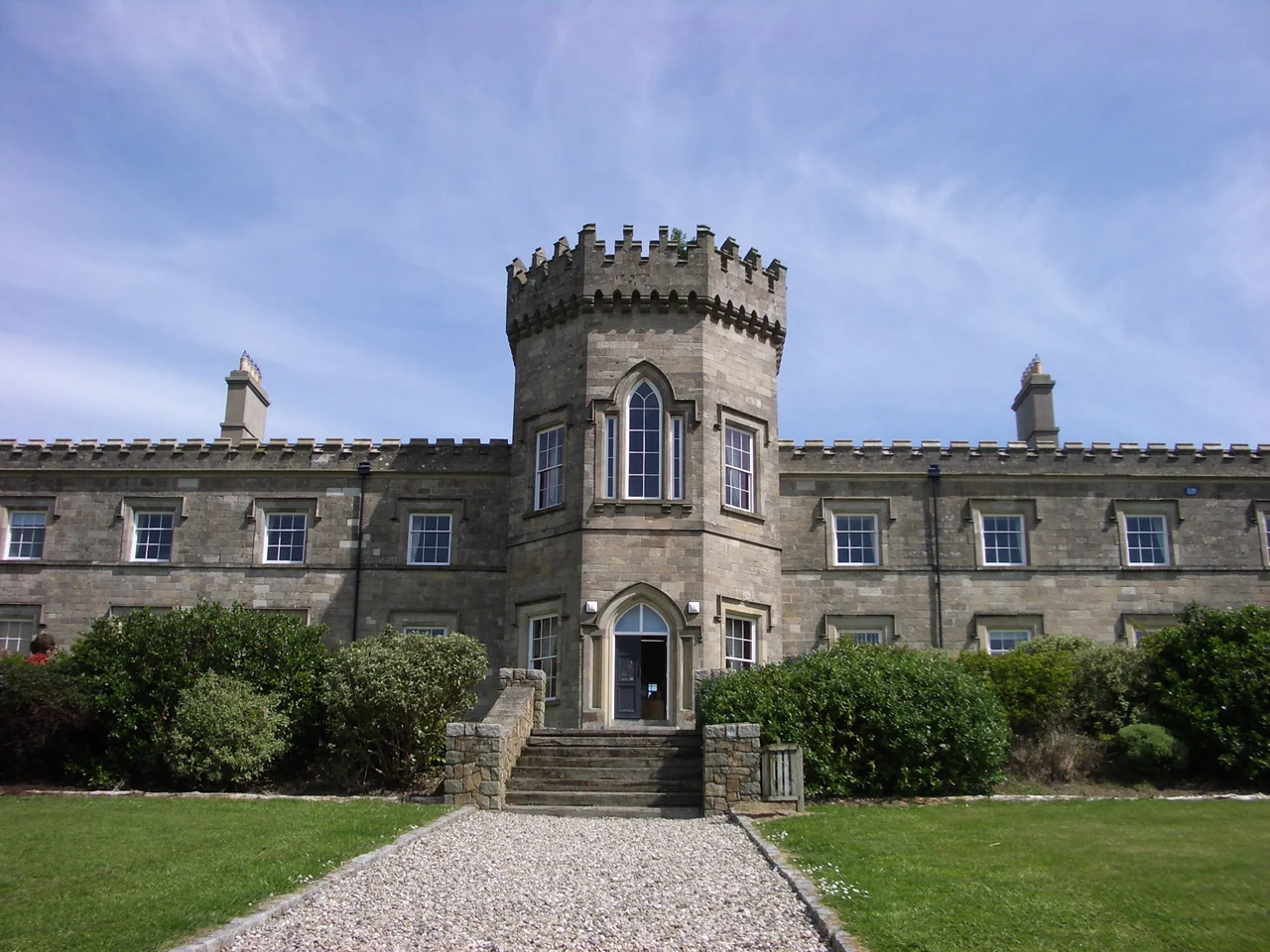

Dungiven Castle
Tom Jones once played here. So did Joe Dolan and The Dubliners. The Castle Ballroom extension, added to a 19th-century manor house in the 1950s, became one of the top showband venues in all of Ireland - a place where farm workers and shopgirls from across County Londonderry came to dance until two in the morning. Before that, the US Army used it as a base during the Second World War. Before that, the Skinners' Company of London leased it from the seventeenth century onwards. And today, Dungiven Castle houses Gaelcholáiste Doire - the second Irish-language secondary school in Northern Ireland, and the first outside Belfast. Few buildings in Ulster have changed costume so often and survived to take a bow.
The Skinners' Lot
In 1610 James I ordered the twelve Great Livery Companies of London to undertake the plantation of the Ulster counties of Londonderry and Tyrone. The lands were divided by lot. The Worshipful Company of Skinners - one of London's medieval fur-trading guilds - drew lot number twelve. Their estate became known as the Manor of Pellipar (from pellis, Latin for skin). In 1616 they leased it to Sir Edward Doddington, who built the first castle in Dungiven - 22 feet broad, four storeys high, slated and finished. When Sir Edward died in 1618, the lease passed to his widow, then by marriage to Sir Francis Cooke, then on her death to her grand-nephew Captain Edward Carey, whose family lived in the property from 1696 onwards.
The Castle You See Today
In 1794 Robert Ogilby, a lessee of the Skinners Company's estates, bought the Dungiven lease from the Careys. Fire had damaged Carey's old castle badly, and Ogilby chose to rebuild rather than repair. He built the structure that stands today on top of the older foundations - a fashionable Regency castle with castellated parapets and arched windows, finished externally by his death in 1839. The interior was never completed. His nephew inherited it but had no interest in the project. The Skinners Company eventually resumed direct control and drew up plans to restore the building, but never advanced them. By the early twentieth century the unfinished castle was already showing its age.
The American Years
MAGNET was the codename for the wartime movement of American troops to Northern Ireland - three infantry divisions, one armoured division, supporting service troops, and air units totalling approximately 158,700 men. The Americans needed buildings to occupy. Dungiven Castle, with its acres of grounds at the foot of Benbradagh mountain, became one such base. The US Army installed dormitories where Ogilby had once planned drawing rooms. For three years, GIs from Iowa and California and Texas drilled on the lawns, posted sentries at the gatehouse, and explored the strange green country around the River Roe. Some married locally and stayed. Most went back across the Atlantic in 1945.
The Dance Floor
After the Americans left, the castle found an unexpected second life. A new Castle Ballroom extension was added in the 1950s, and the venue began attracting the great showbands - tightly-rehearsed dance bands that dominated Irish popular music for two decades. Joe Dolan, who would later become one of Ireland's biggest-selling male artists, played here. So did Tom Jones, just as his career was breaking. The Dubliners came through. The dance hall years gave the castle a new mythology entirely. Older residents of Dungiven still remember the queues stretching down the driveway on Saturday nights, and the long walks home after the last bus had gone. In 1971, briefly, the castle hosted something more political - the Assembly of the Northern Irish People held its inaugural meeting here on 26 October, in protest at the Stormont government.
The Irish-Language School
By the 1980s the castle had fallen into disrepair again. The National Trust considered buying it but declined when restoration was estimated at half a million pounds. Glenshane Community Development Limited eventually took it on, trying two hotelier tenants before finding the building's current calling. In conversations with Irish-language activists, the plan emerged for the castle to house Gaelcholáiste Doire - the second Gaelcholáiste in Northern Ireland (the first outside Belfast) and one of a growing network of all-Irish secondary schools across the island. The school welcomed its first intake of students in September 2015. The pupils now study mathematics and history in a language that the Plantation was originally designed to suppress, in the building that the Plantation built. Few historical reversals are quite so complete.
From the Air
Located at 54.92°N, 6.92°W in the village of Dungiven, County Londonderry, at the foot of Benbradagh mountain (1,525 feet). The castle sits in grounds along the main A6 between Belfast and Derry. Nearest airports: City of Derry (EGAE) 20 nm west-north-west; Belfast International (EGAA) 30 nm east-south-east. From cruising altitude, the Sperrin Mountains rise immediately to the south and the Glenshane Pass cuts through them. The River Roe flows past the castle on its way north to Limavady and Lough Foyle.
Nearby Stories
- Ballycastle, County Antrim 5 km away
- Greencastle Lifeboat Station 6.2 km away
- Clonmany 7.7 km away
- County Antrim 8 km away
- Strabane Canal 8.2 km away
- Crumlin, County Antrim 8.3 km away
- Northern Ireland 13 km away
- Kesh Ambush 27 km away