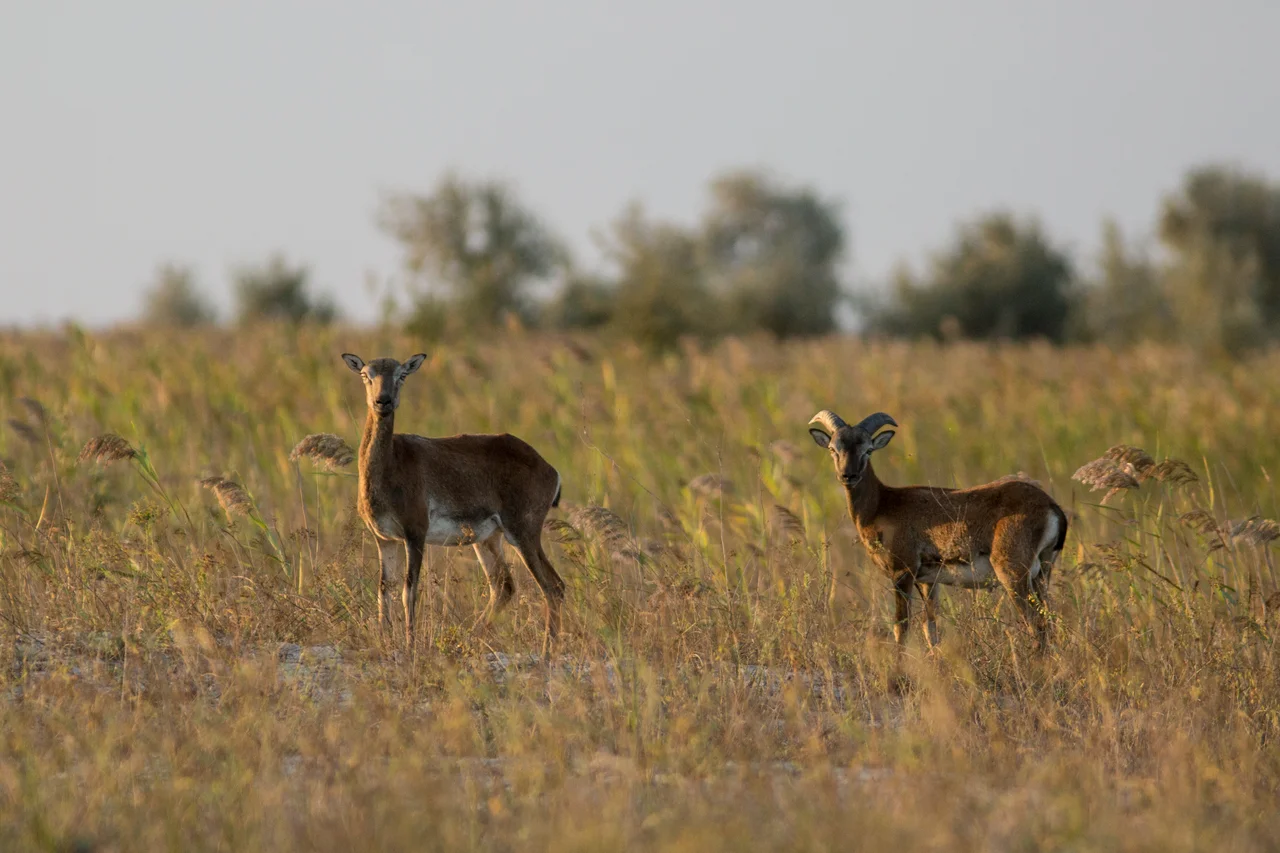

Dzharylhach National Nature Park
For almost a century, this thin ribbon of sand was left mostly to the birds. Dzharylhach Island stretches across the shallow bay off Ukraine's Kherson coast, the largest island in the entire Black Sea, its dunes and mineral springs and small salt lakes protected as a nature reserve since before most of the surrounding towns had electricity. A national park eventually grew up around it, opening its clean beaches to visitors while guarding the fragile habitats behind them. Few of the sunbathers wading its warm, ankle-deep waters could have imagined how quickly it would all be lost.
A Line of Sand in Shallow Water
The geography here is almost impossibly delicate. Dzharylhach Island is a long, thin line of sand and shoals running west to east through the bay, with the Crimean Peninsula to the south and the mainland to the north. When the water drops low enough, the shoals rise to the surface and briefly stitch the island to the shore as a spit before the sea reclaims them. The surrounding waters are barely there at all, typically less than a meter deep, a warm shallow shelf that earned the place its nickname as a kind of homegrown Maldives. It is a landscape built by water and wind, held together by nothing sturdier than sand, and it survived intact for generations precisely because so few things disturbed it.
The Rarest Goose
What the park protected, above all, was life on the move. This corner of the northern Black Sea coast is a globally significant stopover for waterfowl, a resting station on the migratory highways that thread across continents. Among the birds that depend on it is the red-breasted goose, a small, strikingly patterned species listed as vulnerable, for which this region is a critical wintering ground. Park rangers ran education programs for schoolchildren, led ecological tours, and balanced public access to the beaches against the need to shield the most sensitive zones. The whole enterprise rested on a simple bargain: let people enjoy the place, but keep it whole for the creatures that could not survive anywhere else.
Ash and Silence
The bargain broke in the spring of 2022, when the region fell under military occupation. By the following year, a land bridge had been thrown across to the island, and the protected ground was reclassified as a training area and even opened to commercial hunting. In early August a fire born of military activity swept the island, consuming most of it. On the sixth of November 2023, Ukraine's environmental ministry reported that the park had been completely destroyed. A landscape that had endured almost a hundred years of careful stewardship, that had sheltered rare geese and welcomed generations of visitors to its pale beaches, was gone in the span of a single fighting season, its silence now the silence of loss.
From the Air
Dzharylhach National Nature Park centers on 46.02°N, 32.93°E, spanning the sandbar island and the adjacent Karkinit Bay. From altitude the island reads as a slender bright line of sand dividing the deeper sea from the pale shallows of the bay. The port town of Skadovsk sits on the mainland just to the north; Kherson (ICAO UKOH) lies farther inland to the north-northwest.
Nearby Stories
- Swan Islands Nature Reserve 15 km away
- Zaliznyi Port 18 km away
- Kalos Limen 24 km away
- Lake Lemuria 26 km away
- Adziogol Lighthouse 30 km away
- Saky 65 km away
- Black Sea Biosphere Reserve 74 km away
- Danube Delta 229 km away