2.JPG)
Saky
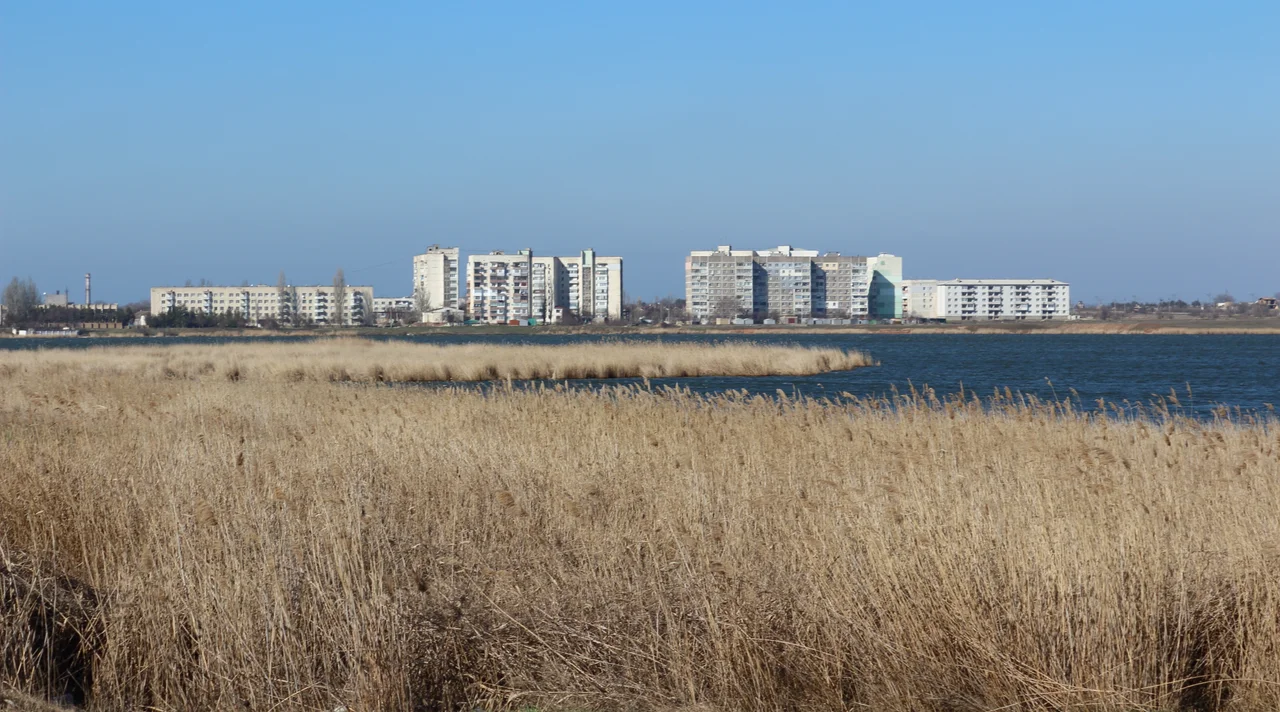
The cure came from the mud. Along the shores of a shallow, salt-thick lake on Crimea's western coast, the black silt at the bottom holds minerals that people have smeared over their aching bodies for generations, convinced it could ease what medicine could not. Around that lake grew the town of Saky. In 1827 someone built the first bathhouse at the water's edge, and a decade later the military hospital in nearby Simferopol opened an office here, formalizing what the lake had already promised: that this unremarkable patch of steppe was, somehow, a place people came to be healed.
Fewer Than Four Hundred Souls
The origins of Saky are lost. Under the Crimean Khanate it was only a small village, and as late as 1805 it counted fewer than four hundred residents, more than ninety-five percent of them Crimean Tatars, the peninsula's Turkic-speaking Muslim people who had lived here for centuries. It was a quiet place with a strange asset in its lake. The bathhouse and the hospital office followed, and slowly a resort economy began to take shape around the mud that the Tatar villagers had known about long before any doctor arrived to write about it. That fragile beginning, though, sat directly in the path of an oncoming war.
Destroyed by the Guns
In 1854 the Crimean War arrived on Saky's doorstep. Allied forces came ashore near the town, landing between Saky Lake and Kyzyl-Yar Lake before marching on to besiege the great naval fortress of Sevastopol. Early in February 1855, the troops of General Stepan Khroulev massed at Saky before assaulting the enemy positions at Yevpatoria. The village did not survive the campaign; it was completely destroyed by bombardment. When the war ended, the Tatar population, caught in a second wave of emigration that emptied so many Crimean villages, abandoned the ruins. Migrants from the Poltava region resettled the site, joined a little later by Greeks from Constantinople (now Istanbul), so that the rebuilt Saky rose from its ashes with an entirely different face than the one it had worn before.
The Lake That Endures
History kept passing through. In February 1945 the British and American delegations bound for the Yalta Conference landed at Saky's airfield just up the coast, bringing the town within earshot of one of the twentieth century's pivotal meetings. Through all of it, the lake remained the constant. The mud that drew the sick in the 1820s still draws them, and the seaside resorts that line the beaches carry on the vocation Saky discovered almost by accident. Alongside the sanatoriums grew a harder industry, chemical plants extracting bromine, iodine, and other compounds from the mineral-rich waters. A town born from healing mud learned, over two centuries, to survive on both cures and chemistry.
From the Air
Saky lies at 45.13°N, 33.58°E on Crimea's western coast, its town grid pressed between the Black Sea and the pale, curving expanse of Saky Lake just inland. From about 5,000 feet the salt lake is the easiest landmark, a shimmering shallow basin beside the sea. The Saky air base (ICAO UKFI) sits just southwest of town; Simferopol (UKFF) is roughly 18 nautical miles east.
Nearby Stories
- Soviet Destroyer Otvazhny 11 km away
- Marble Cave 14 km away
- Kebir Mosque 16 km away
- Brotherhood Cemetery 21 km away
- KaZantip 23 km away
- Tarkhankut Peninsula 31 km away
- Swan Islands Nature Reserve 58 km away
- Arabat Spit 80 km away