
Edenton National Fish Hatchery
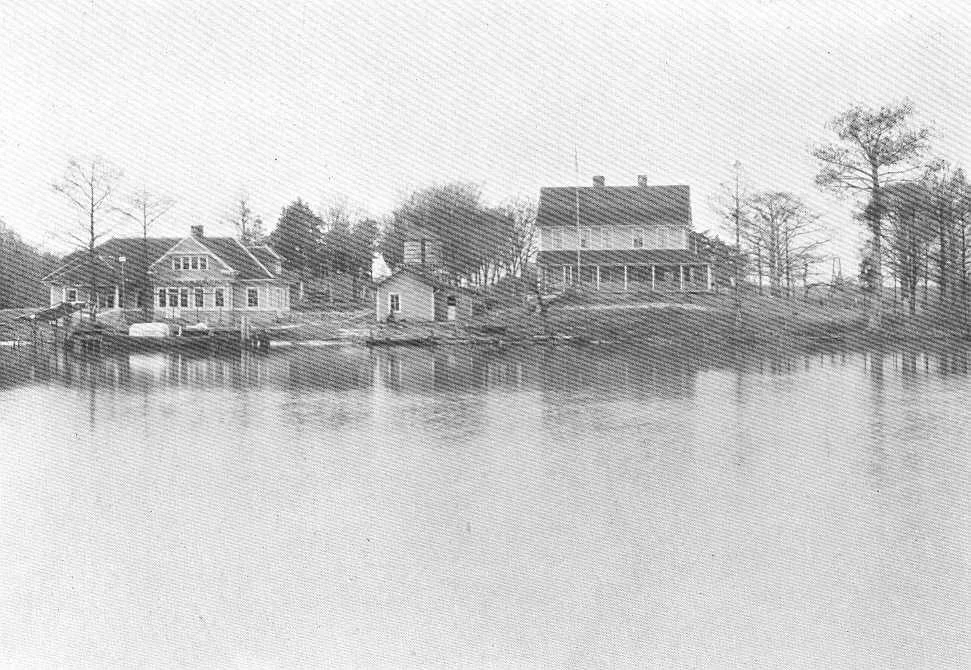
On February 18, 1899, the United States government bought 14.85 acres on a quiet peninsula at the mouth of Pembroke Creek, just west of Edenton, for the specific purpose of fixing a problem. American shad - the silver fish that had once boiled up Atlantic rivers in spring runs thick enough to feed a colony - had been hammered by a century of overfishing. The numbers were collapsing. Edenton Station opened in 1900 as the 35th facility in the National Fish Hatchery System and the only one on the southeastern coast. A hundred and twenty-five years later, it is the largest producer of striped bass in the entire system, and it shelters one of the rarest minnows in the country.
Built for Shad
The first six buildings went up in 1899. The superintendent's house, the most ambitious of them, was finished in 1900 along with the hatchery's earliest ponds. American shad, Alosa sapidissima, was the founding mission - one of only four national fish hatcheries in the country raising the species in the first decades of the twentieth century. Striped bass came soon after. Then bluegill and largemouth bass in 1906, the first fish ponds dug into the Pembroke Creek peninsula to hold them. White perch arrived in 1913, when staff released 3,270,000 fry into Albemarle Sound. Blueback herring egg collections peaked in the mid-1920s with hauls of 313 million, 124 million, and 223 million in three consecutive years. By 1919 the hatchery had started consulting with private landowners on stocking farm ponds, and by 1921 was raising black bass, crappie, redear sunfish, and topminnows on demand.
Trucks, Hurricanes, and the Depression
The opening of U.S. Route 17 through the area in 1926, and a paved driveway to the hatchery two years later, changed everything. Boats and railroads had been the way fish moved; trucks were cheaper and safer, and the hatchery pivoted. In 1929, a 27-foot cylindrical steel water tank holding 6,000 gallons was installed to feed the expanded pond system. Then the Great Depression hit. Budgets shrank, staff was cut, deliveries to private ponds halted - pond owners had to come pick up their fish. The 1933 Outer Banks hurricane on September 16 smashed the wharf; the Public Works Administration funded repairs the following year. Despite the wreckage, in fiscal 1935 the hatchery shipped a million white perch to Georgia. It was the kind of operation that just kept working.
Closed, Reopened, Endangered
By 1939, when the agency changed hands from Commerce to Interior and the facility was renamed the Edenton National Fish Hatchery, the place was distributing fish to 29 counties in eastern North Carolina and four in southeastern Virginia. But the original site had problems. The 1938-39 ponds leaked. Eleven earthen ponds totaling only 7.7 acres could not meet production goals. A postwar housing development to the west blocked expansion. In 1954 the original hatchery closed. The 24.15-acre site sat abandoned until 1961, when the government sold it into private hands. It was later preserved as a National Historic District. A new site about a mile west, 63.6 acres, was purchased in 1958. The new Edenton National Fish Hatchery reopened in 1960 with proper modern ponds, and the work resumed. Today the facility raises the endangered Cape Fear shiner - a small striped minnow native only to the Cape Fear River basin - bringing adults in to spawn and returning them with their young to their home waters.
Boardwalks and Sturgeon
The current 70-acre site is open year-round for self-guided tours. Walk among the 36 striped bass production ponds and follow the trail to the 200-foot boardwalk along Pembroke Creek. The public aquarium displays striped bass, lake sturgeon, white shiners, and two resident American alligators. From June to September, the holding house contains thousands of juvenile lake sturgeon, and children are allowed to hold them - an experience that is somewhere between magical and mildly alarming, depending on the child. Gopher frogs appear from May to July. Cape Fear shiners are on display through spring and summer. The Kids Fishing Derby during National Fishing and Boating Week pulls families from across the Albemarle region. Few federal facilities of any kind work this hard to be touched.
From the Air
Coordinates 36.06 N, 76.64 W. Tucked into the western edge of Edenton on Pembroke Creek, with Albemarle Sound just south. Recommended viewing altitude 1,500-3,000 feet to pick out the rectangular grid of production ponds. Nearest airfield is Edenton Northeastern Regional (KEDE), 3 nm east. Plymouth Municipal (KPMZ) 18 nm southwest, Elizabeth City CGAS (KECG) 25 nm northeast. The hatchery is best viewed in late afternoon when low sun catches the water surfaces of the ponds.
Nearby Stories
- Hope Plantation 6.5 km away
- Chowan University 11 km away
- Pocosin Lakes National Wildlife Refuge 13 km away
- Dismal Swamp Canal 20 km away
- Wash Woods, Virginia 22 km away
- Kitty Hawk: Where Humans First Flew 27 km away
- Bodie Island Lighthouse 34 km away
- Washington, North Carolina 34 km away