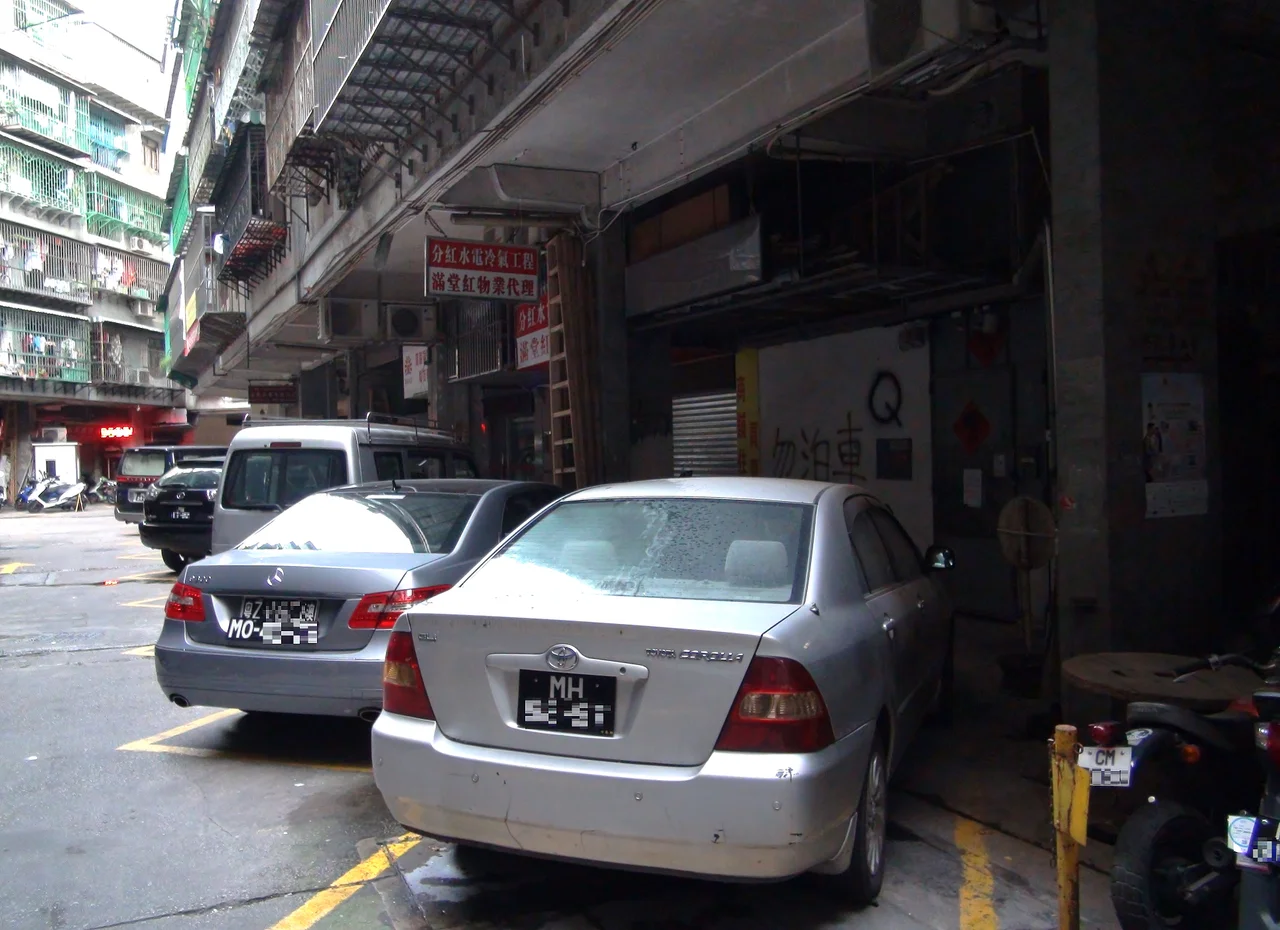

Eight Immortals Restaurant murders
Zheng Lin had built something modest and real. A former street hawker, he had turned a food stand in Macau's Nossa Senhora de Fátima parish into a functioning family restaurant — the Eight Immortals — connected to a small hotel, staffed by his children and relatives. By the summer of 1985, the restaurant was a financial success. Ten members of his family worked and lived within its walls. On the night of 4 August 1985, all ten of them were killed there. The tragedy left a wound on Macau that four decades have not entirely healed.
A Family Built From Nothing
Zheng Lin arrived at his success the hard way. He had moved from hawking food on the street to owning a proper establishment, expanding until the Eight Immortals Restaurant occupied a real address in the colony's urban fabric. His wife and children worked alongside him; the restaurant was, in the truest sense, a family enterprise. They were known in the neighborhood. They had regulars. The last person who saw any of them alive was a delivery man who called in the afternoon of 4 August. Nothing in what he described — ordinary business, an ordinary afternoon — suggested that by nightfall the family would be gone.
The Man Who Came at Closing Time
Huang Zhiheng had arrived in Macau through a long, crooked path. Born in mainland China as Chen Ziliang, he had committed a murder in Hong Kong's Quarry Bay in 1973 over a debt, then fled to Guangzhou, where he mutilated his own hand to obscure his fingerprints. He eventually made his way to Macau with a new wife, and became enmeshed in the colony's gambling culture. The Zheng family owed him a debt — 600,000 patacas, according to later accounts — and when Zheng Lin refused to sign over the restaurant as payment, the confrontation turned lethal. Huang killed ten people that night, using strangulation and a broken bottle. He then disposed of the victims' remains in the ocean and in dumpsters around the city.
Investigation and Reckoning
The disappearance of the entire Zheng family drew attention quickly. Macau authorities investigated, and human remains found in the harbor eventually led investigators to Huang. He was arrested, tried, and convicted in Macau's courts. Because Macau was then still a Portuguese colony — the handover to China would not come until 1999 — the case was handled under Portuguese law, which did not include the death penalty. Huang died by suicide in prison in December 1986, only weeks after sentencing began. The restaurant itself no longer exists. The site in the Nossa Senhora de Fátima parish passed into other uses, leaving no visible marker of what happened there.
Memory, Shadow, and the Weight of Gambling
The Eight Immortals case resonated so deeply in part because of what it revealed about the underside of a gambling economy. Macau in 1985 was thoroughly defined by the casino industry, and with it came the pressures, debts, and desperation that gambling produces in those caught within it. The Zheng family were not innocent of gambling themselves — they were known to be players — but they were first and foremost people: a father who built a business from a street stall, a mother, children and relatives who helped run it. The case generated sensationalized coverage and a fictionalized film, but behind those accounts were ten real lives cut short on a summer night. What deserves to be remembered is not the crime's grotesque details but the people who were lost.
From the Air
The site of the Eight Immortals Restaurant lies within Macau's densely built Nossa Senhora de Fátima parish, at approximately 22.2096°N, 113.5489°E. The parish sits in the northern portion of the Macau Peninsula, a compact urban area easily identifiable from the air by its tight street grid just north of the historic core. Nearby airports: VMMC (Macau International Airport) is approximately 7 km to the southeast on the Taipa island reclamation. Approach from the southwest at 1,500–3,000 feet for a clear view of the peninsula's urban fabric. The Grand Lisboa tower and the ruins of St. Paul's serve as orientation anchors to the south and central areas respectively.
Nearby Stories
- 2024 Shenzhen Stabbing 0.8 km away
- Lantau Peak 1.5 km away
- Kweilin Incident 2.4 km away
- Taishan City 7 km away
- Wanshan Archipelago Campaign 38 km away
- Hong Kong 12 68 km away
- Battle of Nanpeng Island 82 km away
- Erhai Lake 1335 km away