
Ellisland Farm
An oat-cake broke over Jean Armour's head as she crossed the threshold in June 1789, a servant-maid named Elizabeth Smith leading the procession with a bowl of salt resting on the family bible. Friends and neighbours had gathered for the house warming. There would be dancing, drinking, and toasts to the success of the new home. Robert Burns had finally moved his family into the farmhouse he had built with his own arrangements on the gravelly bank above the River Nith. Within thirty months he would abandon it as a failure. Within those same thirty months he would write some of the greatest songs in the English-speaking tradition.
A Lease of Hope and Stones
Burns visited Ellisland on 27 February 1788 with James Tennant of Glenconner, a friend of his late father. Patrick Miller of Dalswinton, who owned the land, offered Burns a seventy-six-year lease divided into four nineteen-year periods. The rent began at £50 a year for the first three years, rising to £70 thereafter. Miller also provided £300 to build the farmhouse and byre and to stock the fields. Burns took the lease at Whitsun, 25 May 1788. The 69 hectares he gained were poetic on the banks of the Nith and brutal under the plough. The land was, in the unsentimental words of later historians, neglected, stony, infertile, poorly dressed and badly drained. He brought in 9 or 10 cows, including three fine Ayrshire dairy stock, four horses, and some pet sheep, and tried to make oats grow in soil that resented them.
The House on the Gravelly Bank
Alexander Crombie laid the stone; Thomas Boyd designed the plans. The house had one storey with garrets for the servants, a 'company' room at the west end, a sitting-room at the east with a gable window over the surroundings, and a kitchen and bedroom between. The work dragged so long that Burns did not settle the builder's account until two months before he left the farm forever. Into the kitchen hearth, masons carved apotropaic marks designed to keep the Devil from sliding down the chimney, and a small window at the fireplace would send him straight back out if he tried. Mrs Dunlop of Dunlop House sent the couple a four-poster bed. Ayrshire carpenters provided the rest. A spring on the slope toward the river supplied the family with fresh water.
Tam o' Shanter on the Nith
Captain Francis Grose came visiting at neighbouring Friars' Carse, an antiquary collecting material for his Scottish Antiquities. Burns offered a trade: include Kirk Alloway, where Burns's father was buried, and Burns would write a poem to match. The poem was Tam o' Shanter, which Burns called his self-avowed masterpiece. He sent it to Grose on 1 December 1790. It appeared in The Edinburgh Magazine in March 1791 and in Grose's second volume of Antiquities a month later. Auld Lang Syne was written at Ellisland too, the first version sent to Mrs Dunlop on 17 December 1788. In just three years at the farm, Burns produced more than 130 songs and poems, roughly a quarter of his entire literary output. He also wrote about 230 letters from these rooms.
The Hermitage and the Whistle
Captain Robert Riddell of Glenriddell, Burns's neighbour to the north, had built a small summer house called the Hermitage in a secluded corner of his Friars' Carse estate. He gave Burns the key. The poet often wrote there, and the two friends shared a great many drinking sessions besides. On 16 October 1789 at Friars' Carse, Burns witnessed a famous contest in which the participants tried to determine who could be the last man still able to blow a whistle. The winner consumed five bottles of claret. Burns immortalised the contest in his poem The Whistle. On 14 October 1788 he watched another spectacle nearby: the trial of Patrick Miller's paddle-driven steamboat on Dalswinton Loch. It was the first time engine power had moved human beings on water in Britain, and Burns stood among the witnesses on the bank.
The Excise Wins
Burns had taken his Excise commission on 14 July 1788, just weeks into the lease. For two years he worked both jobs, riding the Nithsdale roads checking taxes by day and farming by light of his own conscience. Eventually the Excise career looked more profitable than the stony fields, and on 25 August 1791 he auctioned the crops, getting a guinea an acre. About thirty people attended, and the drinking ran so deep that Burns recorded, 'Such a scene of drunkenness was hardly ever seen in this country.' At Martinmas, 11 November 1791, the family left Ellisland for the town of Dumfries six miles south. Patrick Miller sold the farm outright for £1,900 to John Morin of Laggan. Robert sent his brother-in-law Adam Armour back the same month to smash every window Burns had ever inscribed with verse. He felt cheated over the price of a manure heap. No record of the broken verses has survived.
From the Air
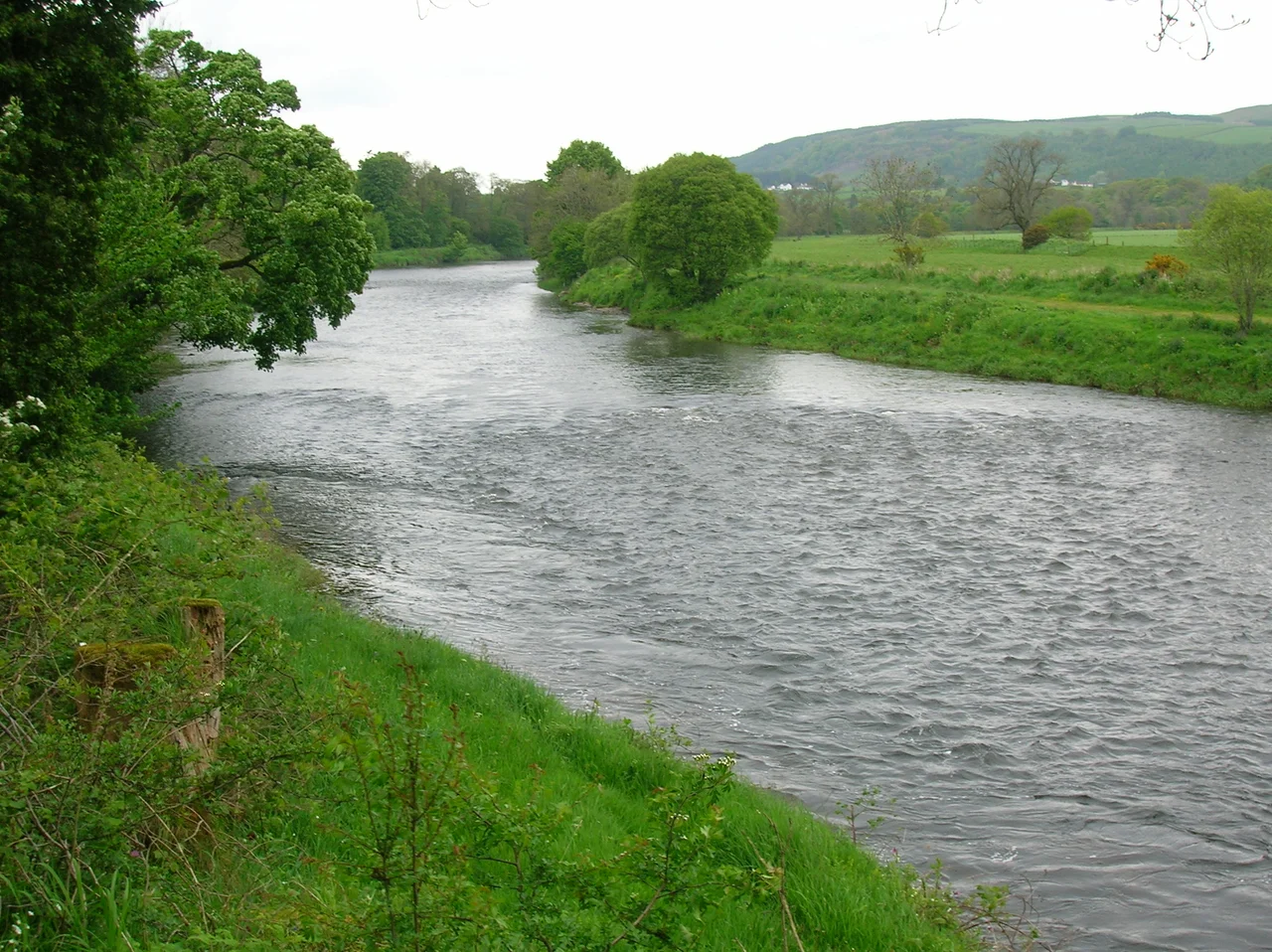
Ellisland Farm sits at 55.14 degrees north, 3.68 degrees west, in the Nith Valley about 6.5 miles northwest of Dumfries near the village of Auldgirth. The River Nith flows immediately to the south and west, with Friars' Carse just to the north. Cruise at 2,500 to 3,500 feet for the best views of the river bend, the gravelly bank where Burns built his house, and the riverside walks said to have inspired his most productive years. Dumfries Aerodrome (EGCO) lies about 8 miles south. Carlisle Lake District Airport (EGNC) is roughly 30 miles southeast; Glasgow Prestwick (EGPK) sits 45 miles northwest. The A76 runs north-south past the farm following the Nith Valley.
Nearby Stories
- Cumnock 9.5 km away
- Solway Firth 11 km away
- Garlieston 11 km away
- Battle of Arkinholm 12 km away
- Crawford Castle 12 km away
- Caldbeck 15 km away
- Battle of Glen Trool 17 km away
- Hawick 25 km away