
Cumnock
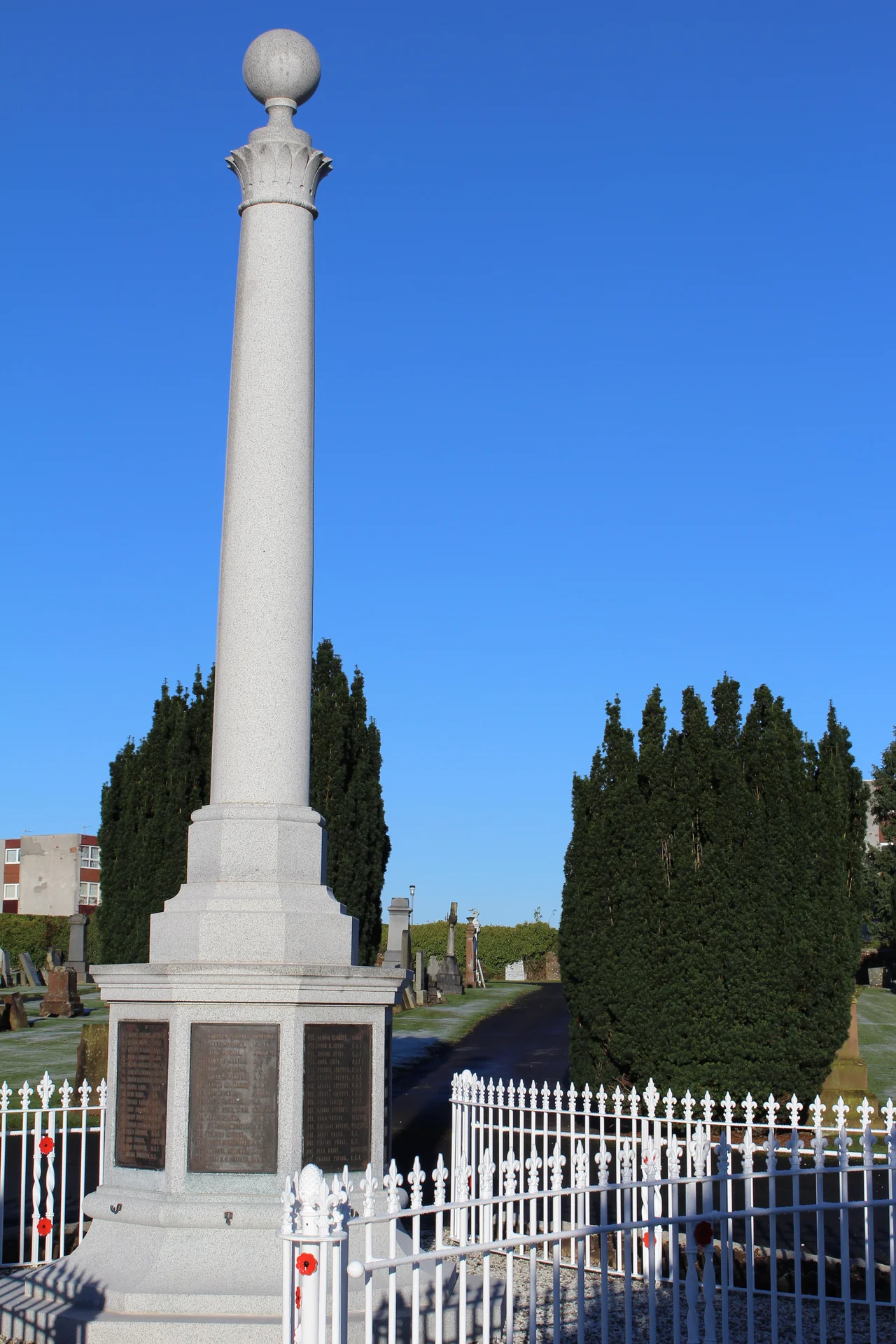
A statue of James Keir Hardie stands outside Cumnock Town Hall. He was born in a two-roomed cottage near Holytown in 1856, went down a coal mine at the age of ten, taught himself to read, helped found what became the Labour Party, and lived in Cumnock for much of his adult life. The statue is not the largest monument in town, nor the most visited. But for many people who grew up in Cumnock, it is the one that matters most - a quiet reminder that the political tradition of this corner of Ayrshire was built not in London but here, in a mining town at the confluence of the Glaisnock and Lugar Waters, by men and women who believed that ordinary work deserved ordinary dignity.
Hollow of the Hills
Cumnock sits in East Ayrshire where the Glaisnock Water flows into the Lugar Water, ringed by gentle hills that have been inhabited for over five thousand years. The town's name has been argued over for centuries. Possible derivations include com-cnoc - hollow of the hills - and com-oich, meeting of the waters; both descriptions fit the geography. The patron saint of Cumnock is Saint Conval, and a place of worship is believed to have stood on the town's Square for more than eleven hundred years, though documentary records do not begin until about 1275. James IV created the Burgh of Cumnock. Three medieval castles once stood in the parish of Old Cumnock - Borland, Terringzean, and Lefnories (also called Lochnorris) - of which Lefnories was the largest. Its below-ground foundations were excavated in the late nineteenth century by the Marquess of Bute, and Dumfries House was built nearby on essentially the same ground.
Bruce and the Bloodhound
William Wallace, according to the late-medieval poem The Wallace by Blind Harry, spent three months in 1296 at the seat of Patrick Dunbar in this area, then called Cumno. Roughly a decade later, in 1307, Robert the Bruce was being pursued through Ayrshire by two of King Edward I's men - Aymer de Valence, 2nd Earl of Pembroke, and John MacDougall of Lorn. MacDougall had Bruce's own bloodhound, which had been captured earlier and now tracked him through the moorland. Bruce, the story goes, escaped by wading into a stream, and the bloodhound lost the scent in the running water. It is the kind of legend that sits comfortably between history and folktale, and Sir Walter Scott eventually wove the place name into the opening of his novel Castle Dangerous. The medieval town that watched these events was built around its kirk on the Square. The kirk has been rebuilt several times. The Square is still there.
Coal, Hardie, Labour
The nineteenth century turned Cumnock into a coal town. The seams beneath this stretch of East Ayrshire pulled in workers from across Scotland and Ireland, and the politics that grew out of the pits were as defining as the work itself. Keir Hardie - the founder, more than anyone else, of independent working-class political representation in Britain - lived in Cumnock for much of his life. The left-wing politician Emrys Hughes, who served as local MP in the mid-twentieth century, also made his home here. The town's Roman Catholic church of St John the Evangelist, designed by William Burges for the third Marquess of Bute and built 1878-1880, sits as a small but exquisite Gothic Revival witness to that era of mining-town wealth. Most of the pits are gone now. The mining decline has been hard on Cumnock as it has been on most of East Ayrshire, and the 2011 census recorded above-average unemployment and significant local authority housing - figures that reflect a community working through the long aftermath of an industrial economy.
The Prince's Investment
In 2007 Prince Charles bought the estate of Dumfries House on the edge of Cumnock, saving its eighteenth-century mansion and its priceless collection of Chippendale furniture from sale and dispersal. He established an educational programme there offering training in STEM subjects, textiles, hospitality, horticulture, and outdoor resilience - work intended to give young people in this part of Ayrshire skills that might lead somewhere. The Knockroon development on adjacent land, granted planning permission in December 2009 with backing from The Prince's Foundation, was envisioned as a model green town built on traditional principles. By February 2019 only thirty-one of a planned seven hundred and seventy homes had been completed - a sobering pace, though construction has continued. Cumnock now houses the Robert Burns Academy, the largest educational campus in Scotland, formed by merging Cumnock Academy and Auchinleck Academy with two primary schools and an early childhood centre. Emergency One, one of the UK's largest fire engine manufacturers, employs many locals. Coal is gone; the future Cumnock is making is being built around different work, in the same hollow of the hills.
From the Air
Cumnock sits at 55.45 N, 4.26 W in East Ayrshire, at the confluence of the Glaisnock Water and Lugar Water. The town occupies a broad bowl between gently rolling hills - the geography that gave it its name. Recommended viewing altitude: 2,500-4,500 ft AGL. Visual landmarks include the Town Hall and Square in the town centre, Dumfries House and its restored estate to the south, the smaller town of Auchinleck about 3 miles north, and the A76 road from Kilmarnock to Dumfries running through. The town's surrounding former coalfield landscape is now largely agricultural and woodland. Nearest airfield: Glasgow Prestwick (EGPK) approximately 18 miles west.
Nearby Stories
- HMS Ulysses (1917) 7.3 km away
- Greenbank Garden 9 km away
- Ballantrae Lifeboat Station 12 km away
- Shotts 12 km away
- Douglas Castle 12 km away
- Battle of Glen Trool 13 km away
- Ellisland Farm 14 km away
- Rothesay Castle 15 km away