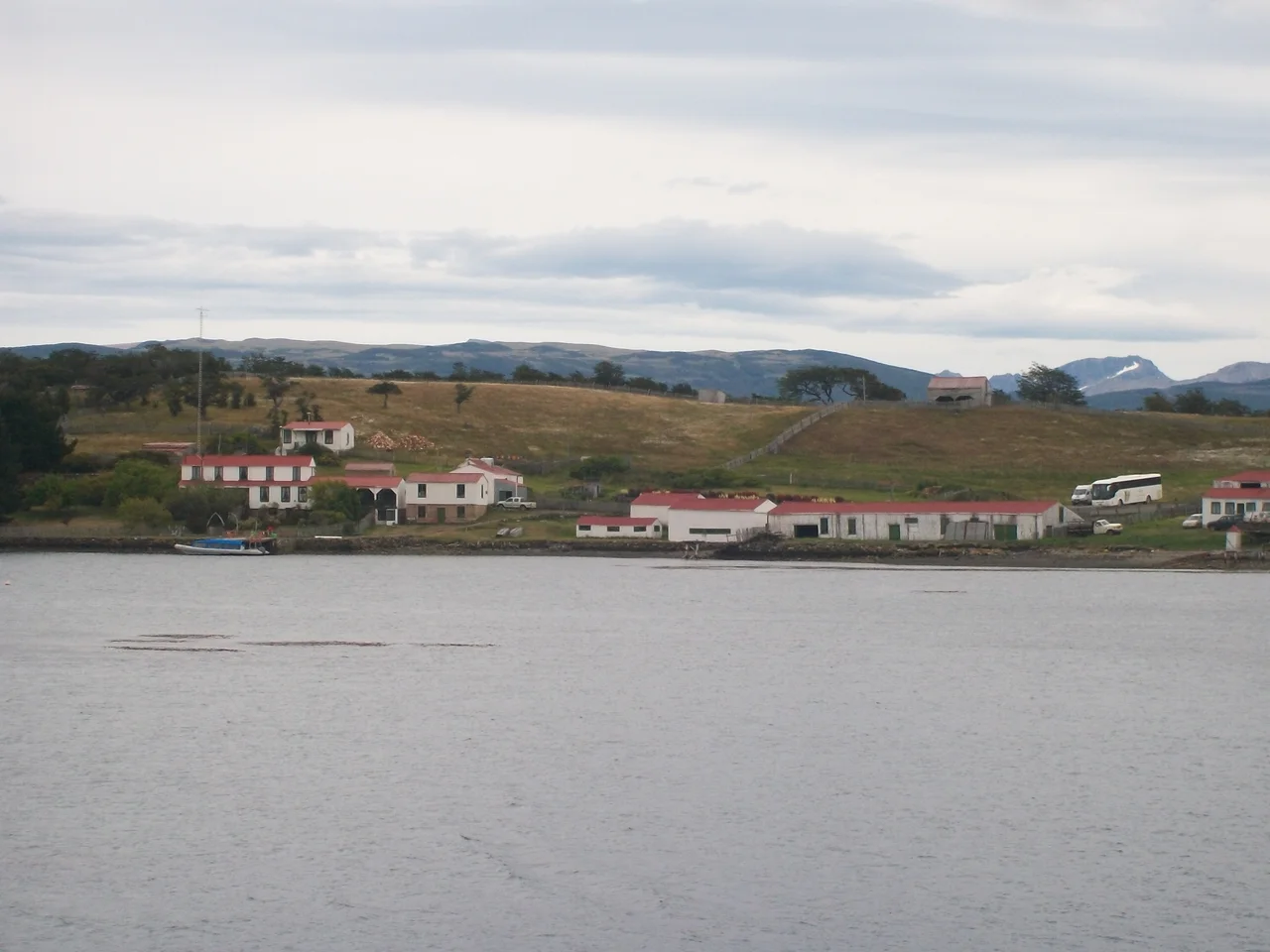

Estancia Harberton
An orphan boy was found abandoned under a bridge in England, and so they named him Thomas Bridges. He could not have known that the name would one day belong to the oldest farm in Tierra del Fuego, on a peninsula jutting into the Beagle Channel where the wind never quite stops. As a teenager, Bridges sailed to the far South Atlantic with his adoptive father's Anglican mission. His playmates were Yámana children, and almost without trying, he learned their language. That accident of friendship would shape the rest of his life.
The Farm at the End of Everything
In 1886, Thomas Bridges resigned from the Anglican mission at Ushuaia and built a home of his own. He called it Harberton, after the Devon village where his wife, Mary Ann Varder, had grown up. It is Patagonia's oldest estancia, and it has never left the family. The Bridges surname eventually daughtered out, but a tradition held: there is a Thomas in every generation. The present manager and part-owner, Tommy Goodall, born in 1933, is Thomas Bridges's great-great-grandson. For decades he ran the place with his wife, the American marine biologist Rae Natalie Prosser de Goodall, until her death in 2015. White-walled and red-roofed against the grey water, the buildings look less like a frontier outpost than a transplanted corner of England that simply refused to dissolve.
A Dictionary No One Else Could Write
Bridges did something almost no colonizer of his era attempted: he listened. Over years among the Yámana, he compiled a dictionary of their language, a tongue spoken by people who navigated these freezing channels in bark canoes, kept fires burning even at sea, and read the water the way others read maps. The fire-keeping is why an earlier generation of European sailors had called this whole region Tierra del Fuego, the land of fire. The Yámana way of life was already being torn apart by introduced disease and settlement, and the language was slipping toward silence even as Bridges wrote it down. His manuscript became one of the fullest records ever made of how the Yámana named their world, a vocabulary far larger than outsiders had imagined a so-called primitive people could possess. His son Lucas later wrote The Uttermost Part of the Earth, a memoir of growing up among the Yámana and the Selk'nam and of the strange odyssey of getting his father's dictionary safely published in Europe, where the manuscript was nearly lost more than once.
What the Land Holds Now
Today the estancia survives on tourism rather than sheep. Visitors walk the gardens, the old outbuildings, the family cemetery where generations of Bridges and Goodalls lie under Fuegian sky. A botanical garden displays replica Yámana huts, a quiet acknowledgment of who was here first. Nearby stands the Museo Acatushún, where Natalie Goodall's decades of work on the region's marine mammals and birds are preserved in thousands of specimens. Just offshore, the penguin rookeries of Isla Martillo draw boatloads of travelers each summer. The season runs from October to April, when the days stretch long and the channel turns, on its better afternoons, an almost impossible blue.
The Weight of a Name
There is something disarming about a place that has stayed in one family for nearly a century and a half, at the literal end of the inhabited Americas. The Bridges family did not conquer this coast so much as marry into it, learn from it, and stay. Their legacy is double-edged and worth sitting with: they were missionaries, part of a wave that helped unravel the world they admired, yet they also left behind the most careful record of the Yámana voice that exists. Harberton is where that contradiction still breathes the salt air, eighty-five kilometres east of Ushuaia along gravel roads that the wind keeps trying to reclaim.
From the Air
Estancia Harberton sits at 54.88°S, 67.33°W on a peninsula along the north shore of the Beagle Channel, roughly 85 km east of Ushuaia. The nearest airport is Ushuaia – Malvinas Argentinas International (SAWH), with Río Grande (SAWE) farther north on the Atlantic coast. From the air the estancia reads as a cluster of white buildings with red roofs against the dark fjord-cut coastline; the penguin island of Isla Martillo lies just to the southwest. Recommended viewing altitude is 1,500–3,000 ft for the coastline; expect strong, gusty westerly winds and rapidly shifting visibility typical of the Fuegian channels. Clear, calm mornings offer the best light over the water.
Nearby Stories
- Beagle Channel 19 km away
- Tierra del Fuego 29 km away
- Cabo de Hornos National Park 63 km away
- Tierra del Fuego National Park 76 km away
- Isla de los Estados 164 km away
- Sinking of ARA General Belgrano 334 km away
- New Island 491 km away
- West Antarctica 2899 km away