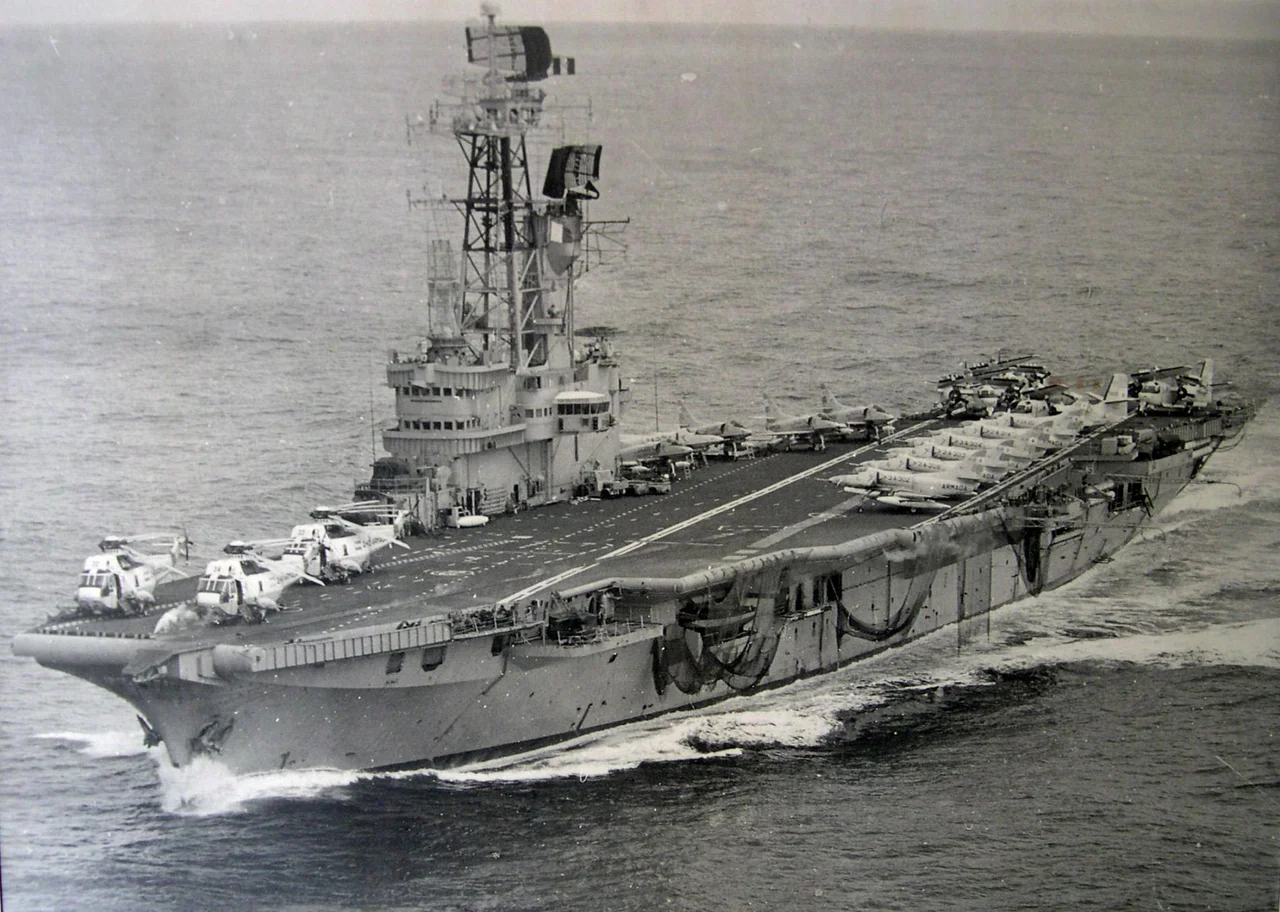

Sinking of ARA General Belgrano
The ship had survived Pearl Harbor. Forty-one years before the Falklands, when she was an American cruiser called USS Phoenix, she rode out the Japanese attack of December 1941 undamaged and went on to earn nine battle stars. Sold to Argentina, renamed, made the flagship of a navy, she finally met her end far to the south, on the afternoon of 2 May 1982. Two torpedoes from a British submarine struck a vessel that had cheated death in one war only to find it in another. Three hundred and twenty-three of her crew did not survive. It remains the single deadliest event of the Falklands War, and one of its most contested.
The Men Aboard
She carried 1,093 people. Most were young, many were conscripts, and that May they were sailing in the cold seas southwest of the Falklands under Captain Héctor Bonzo. It is easy, decades on, to reduce them to a casualty figure, but they were sons and brothers and fathers, sailors doing the job their country had given them. When the British nuclear submarine HMS Conqueror fired a spread of three torpedoes early that afternoon, two found their mark. One tore roughly fifteen metres off the bow, outside the protection of the ship's armour. The blasts ruptured power and communications almost instantly. In the chaos and the rising water, hundreds of men died in minutes; many more now faced the sea itself.
The Order to Abandon Ship
Bonzo held on as long as he could. At 4:23 in the afternoon, with the cruiser heeled over at twenty degrees and clearly lost, he gave the order to abandon ship. What followed was a grim improvisation against the Southern Ocean. Lifeboats were maneuvered clear of the hull; one was crushed by the falling anchor chain, another holed by twisted metal, sending its occupants swimming for the rest. Then came the night. Rafts were lashed together so radar might find them, but the waves wrenched the moorings loose and scattered them. Wind tore open the canvas doors, and the water poured in. The temperature inside dropped brutally. The storm peaked around nine o'clock, with waves nearly ten metres high, and drove the survivors southeast toward the Antarctic cold.
The Search
Two Argentine destroyers nearby never grasped what had happened. The first torpedo had killed the Belgrano's radio, poor visibility hid her lights, and as the Conqueror slipped away the destroyers turned toward the mainland, unaware they were leaving hundreds of men in the water behind them. Not until the following day did the rescue truly begin. A Neptune aircraft spotted a vast oil slick at nine in the morning of 3 May, but no rafts. It was early afternoon when a petty officer named Ramón Leiva finally saw them: a scatter of life rafts strung across two kilometres of ocean, a hundred kilometres from where the ship went down. In the end, 772 men were pulled from the sea. For those crowded into the fuller rafts, shared body heat had meant survival; even so, flooding and cold left many with frostbite, and the legs of survivors bore the marks of those nights for the rest of their lives.
A Wound That Would Not Close
The Belgrano had been sailing outside the Total Exclusion Zone the British had declared around the islands, and that single fact ignited years of argument. In Britain, a tabloid greeted the news with the single jeering word "Gotcha," a headline that has haunted the national memory ever since; the editor pulled it from later editions, but the damage was done. Critics, including the MP Tam Dalyell, charged that the attack was meant to wreck a peace plan then in motion. Defenders answered that the cruiser was a genuine threat and that her captain himself later confirmed she had been maneuvering, not fleeing. The withdrawal of the Argentine navy after her loss handed Britain control of the sea, and, as one American diplomat put it, that virtually ended the war. Argentina recognized the sinking as a legitimate act of war in 1994; later voices called it a crime. The argument has never been fully settled.
Remembering Them
What is not in dispute is the grief. Commander Bonzo wrote a memoir of his lost ship and helped found an association that, for decades, has kept the crew's memory alive. The site of the sinking, roughly a hundred nautical miles east of Tierra del Fuego where the wreck lies some 4,200 metres down, is a national historic site and a war grave; expeditions sent to find the ship have come home empty-handed, beaten back by the same savage seas that took her. The dead are woven into Argentine life in quieter ways too. Schools carry the crew's names. And on the rugged, unnamed capes and ridges of nearby Isla de los Estados, surveyors went out and gave each headland the surname of a man who died that night, so that the map at the bottom of the world would carry them forever.
From the Air
The Belgrano sank at approximately 55.40°S, 61.53°W, in the open South Atlantic roughly 100 nautical miles east of Tierra del Fuego and southwest of the Falkland Islands; the wreck lies at about 4,200 m depth. There are no landmarks here, only ocean. The nearest land and airfields are on Tierra del Fuego: Río Grande (SAWE) and Ushuaia – Malvinas Argentinas (SAWH) to the west, with Mount Pleasant (EGYP/MPN) on the Falklands to the northeast. This is among the most unforgiving stretches of sea on Earth, swept year-round by gale-force westerlies, heavy swell, and frequent storms; clear conditions are rare. The position is best understood not as a place to view from the air but as a war grave to be passed over with respect.
Nearby Stories
- Isla de los Estados 137 km away
- Picton, Lennox and Nueva 303 km away
- Cape Horn 317 km away
- Sea Lion Island 336 km away
- Cabo de Hornos National Park 358 km away
- Estancia Harberton 360 km away
- HMS Sheffield (D80) 383 km away
- Fumarole Bay 806 km away