
Fingal
The name is Norse. Fingal comes from Fine Gall - tribe of foreigners - the medieval Gaelic term for the Vikings who settled the coast north of Dublin starting in 841 AD. The locals here once spoke their own hybrid tongue, called Fingallian: a creole of Old English, Middle English, Old Norse, and Leinster Irish that survived in pockets until the mid-19th century. The county itself is much younger than its name; the modern Fingal was created on 1 January 1994, when the old County Dublin was broken up into three successor counties. But the territory has a continuous identity going back more than a thousand years. The coat of arms shows a Viking longboat above the motto Lan Mara is Tire - Abundance of Land and Sea.
The Foreigners' Coast
The Vikings reached Dublin in 841 AD, abandoned the settlement in 902, then returned in 917 to build the city that would become the seat of the Norse Kingdom of Dublin. At its peak that kingdom stretched along the Irish Sea from Drogheda to Arklow, with its westernmost point at Leixlip - whose name comes from the Norse lax-hlaup, salmon-leap. After Brian Boru beat the Vikings at Clontarf in 1014, the Norse-Irish kingdom kept going under the Kings of Leinster. The Hiberno-Norse settlers married into the Gaelic population, kept their language and trade networks, and farmed the rich coastal plain that became known as Fine Gall - the territory of the foreigners. The Gaels of the interior never lost that name for them. When the Anglo-Normans arrived in 1169 and laid the foundations of the medieval Pale, Fingal was already a place with its own distinct identity.
King John's Grant
In 1208 King John of England granted Walter de Lacy the Lordship of Fingal in perpetuity. The grant - recorded in the Rotuli Chartarum, the chancery rolls of King John's reign - made Fingal a palatine lordship under the same terms as the larger Lordship of Meath, with the king reserving only certain pleas of the Crown. Walter de Lacy was to hold his Fingal fees by the service of seven knights. Two years later, in 1210, John established County Dublin as one of the first twelve counties of the lordship of Ireland, and Fingal was absorbed into it. For the next eight centuries Fingal would be a subdivision rather than a county in its own right. The medieval Earldom of Fingall was created in 1628 for the Plunket family, but their estates were mostly in Meath; the title went extinct in 1984.
The Language That Disappeared
Until the mid-19th century, people in pockets of north Dublin spoke a unique hybrid language called Fingallian, sometimes called Fingalian. It blended Old and Middle English with Old Norse and Leinster Irish, retaining medieval grammatical features long after standard English had moved on. The vocabulary preserved Norse loanwords for fishing, farming, and weather that had vanished elsewhere; the syntax retained Irish patterns of word order. By the late 18th century Fingallian was spoken mainly by older fishing families on the coast around Skerries and Lusk. The last fluent speakers died around 1850. The language was never properly recorded - there are scattered word-lists, a handful of folk poems collected by the antiquarians of the 19th century, and some grammatical observations - but no comprehensive grammar or substantial corpus exists. It is one of the great lost dialects of these islands.
The Modern County
On 1 January 1994 the old County Dublin was abolished and replaced by three successor counties: Fingal to the north, South Dublin to the southwest, and Dun Laoghaire-Rathdown to the southeast. The 1991 local election had already used the new electoral areas. Fingal's county hall is in Swords, with a major office in Blanchardstown. The county council has 40 elected members. The population in 2022 was 330,506, making Fingal the third most populous county in the state. The character of the place varies dramatically: dense suburbs at Blanchardstown, Castleknock, and Swords; ancient fishing harbours at Howth and Skerries; the resort villages of Malahide and Portmarnock; and remote farmland villages like Garristown, Naul, and Ballyboughal in the north and west.
Vegetables, Airports, and Pipes
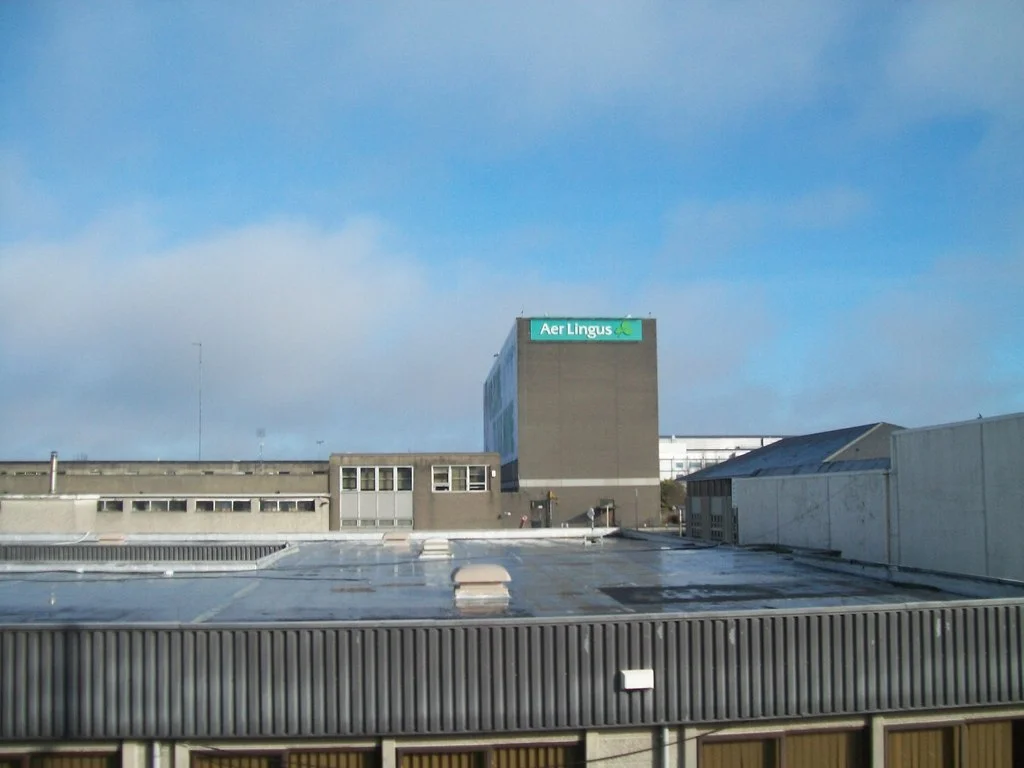
Fingal is Ireland's primary horticultural region. The county produces 50 percent of the national vegetable output and 75 percent of all glasshouse crops grown in Ireland. The rich soils between Lusk and Rush still grow the strawberries, leeks, and salad crops that supply much of the Dublin region. The fishing harbour at Howth is the biggest on the east coast and the fifth largest in Ireland. Dublin Airport sits in the south of the county, along with the head offices of Aer Lingus and Ryanair - the two airlines that turn Fingal into one of the busiest aviation corridors in Europe. ASL Airlines and CityJet are headquartered in Swords. In 2006 Fingal County Council became the first local authority in Ireland to introduce mandatory sustainable building requirements: reduce energy use by 60 percent over national standards, and source at least 30 percent of heat from renewable sources. The county that took its name from Norse seafarers is now setting Irish standards for what comes next.
From the Air
Fingal covers the northern part of County Dublin, roughly 53.4 N to 53.6 N and 6.0 W to 6.5 W, on Ireland's east coast. From the air the county is bounded by County Meath to the north, Kildare to the west, Dublin city to the south, and the Irish Sea to the east. Dublin Airport (EIDW) sits squarely inside Fingal at 53.43 N, 6.25 W - by far the most useful navigation reference. Howth Head, a distinctive rocky promontory, marks the southeast corner, and the M1 and M2 motorways radiate north from Dublin through the county. Belfast (EGAA) is about 120 km north. The agricultural heartland between Swords and Balbriggan shows from cruising altitude as a patchwork of small green fields, with the urban edge of Dublin pressing up from the south.
Nearby Stories
- Carrickmines Castle 1.8 km away
- Trim Castle 8 km away
- Irish Military Intelligence Service 12 km away
- Cabra Castle 15 km away
- Athclare Castle 16 km away
- German submarine U-1051 21 km away
- Irish Sea Bridge 51 km away
- Ardglass 52 km away