.jpg)
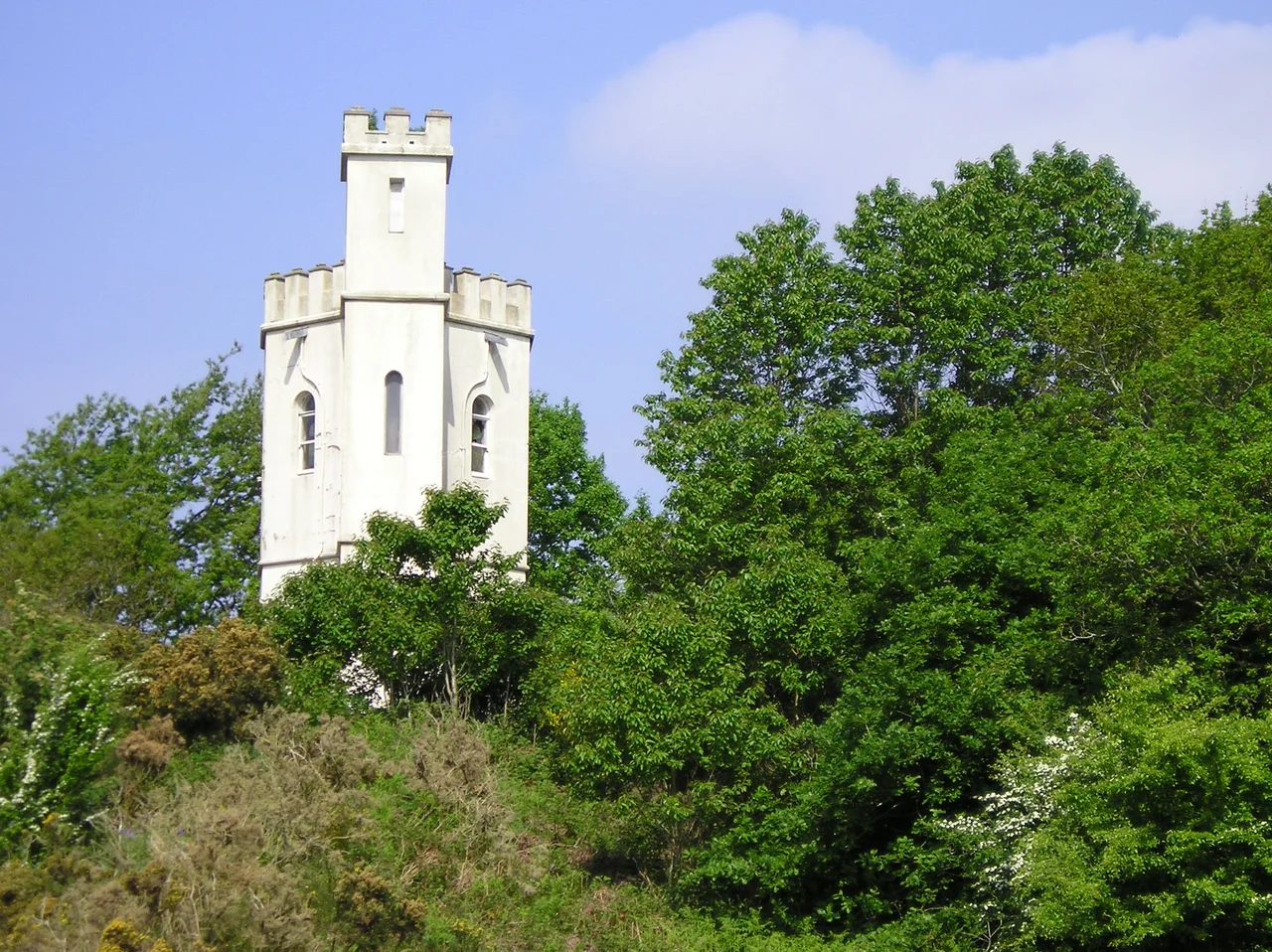
Fort Williamsburg
Lord Newborough was, by the polite phrase of the time, 'a notable eccentric'. The Welsh peer Thomas Wynn loved soldiering more than he loved any of the other things a wealthy eighteenth-century landowner was supposed to enjoy, and his estate at Glynllifon - some thousands of acres on the coast plain south of Caernarfon - became the stage for one of the more peculiar military fantasies in British history. He raised the Carnarvon Militia at his own expense. He built two forts on his estate to house and train them. One of those forts, Fort Belan, actually guarded a coastline. The other, Fort Williamsburg, stood three miles inland in a country park, where no invading army could plausibly have reached even on the worst possible day.
The Eccentric Baron
Thomas Wynn (1736-1807), 1st Baron Newborough, inherited Glynllifon through his grandfather's marriage to Frances Glynn in 1700. The Wynns had been one of the great Welsh landed families for centuries, and Thomas pursued the standard career path - Member of Parliament for Carnarvonshire from 1761, Lord Lieutenant of the county from the same year, Constable of Caernarfon Castle. What set him apart from his peers was where he put his money. Many eighteenth-century baronets spent their fortunes on follies, garden temples, ornamental hermitages. Wynn spent his on soldiers. He raised the Carnarvon Militia largely from his own pocket, equipped them, drilled them, and built them a fort to live in. Then he built them another one.
Fear of the French
Construction of Fort Williamsburg began in 1761, in the closing years of the Seven Years' War, when a French invasion of Britain was a genuine military fear. The Royal Navy held command of the seas, but plans for French landings in Wales and Scotland had been drawn up and partially attempted. Wynn's logic for Fort Belan, on the coast at the southern entrance to the Menai Strait, made tactical sense - a battery there could fire on any French ship trying to land troops in the Foryd. Fort Williamsburg, three miles inland on the parkland of his country house, had no comparable rationale. It was a place to house the militia in barracks, drill them on the parade ground, and have them visible from the lawns of Plas Glynllifon, where Lord Newborough could review his men in person.
A Second War, A Second Justification
What kept the Carnarvon Militia in being - and what gave Wynn a renewed reason to drill them - was the long American war that began in 1775. The militia, which had been raised against the French in the Seven Years' War, was now repurposed against the possibility of a French or American expedition striking at the British coast. Neither threat ever materialised on the Welsh shoreline. Fort Belan never fired a shot in anger. Fort Williamsburg never saw an enemy. But the militia paraded, drilled, fired ceremonial volleys, and gave Lord Newborough what he most wanted: a private army to command on his own ground.
Bijou and Listed
Seven of the structures within the Fort Williamsburg complex are now Grade II* listed, an unusual concentration of higher-grade protection for what was essentially a parade-ground curiosity. The buildings include barrack blocks, officers' quarters, gate piers, and a small parade square - all of them done in the same restrained Georgian style as the main mansion at Glynllifon, all of them built to look more military than they functionally were. The Welsh archaeology council Hebed described the fort in 2021 as 'bijou' - a polite word that captures exactly the right tone of admiration and amusement. It is too small to take seriously as a fortification, but too carefully built to dismiss as a folly. It sits in a category mostly of its own.
Uncertain Future
The Glynllifon estate has had a hard century. The mansion became an agricultural college in the twentieth century, then was sold off, then changed hands repeatedly. Numerous attempts at redevelopment have failed. In 2021 the house was owned by a Manchester-based property developer and the future of the buildings on the estate, Fort Williamsburg included, was unresolved. Hebed described the fort in that year as 'in poor condition and closed [with] an uncertain future'. Lord Newborough spent thirty thousand pounds on Fort Belan alone - an enormous fortune in the 1770s - and the cumulative cost of his military hobby was crippling even for a Welsh baron of his income. Two and a half centuries later, his bijou inland fort still stands. The militia is long gone. The parade square waits for whatever comes next.
From the Air
53.07°N, 4.30°W within the Glynllifon estate park near Llandwrog, south of Caernarfon. Best viewed at 1,500-2,500 ft to make out the small square fort complex in the parkland three miles inland from Fort Belan on the coast. EGCK (Caernarfon) is the nearest active airport, 3 nm north-east.
Nearby Stories
- GeoMôn 1.9 km away
- Battle of the Conwy 3.2 km away
- Irish Sea Bridge 5.2 km away
- Ysbyty Ifan 10 km away
- Machynlleth 16 km away
- Barmouth Lifeboat Station 23 km away
- Irish Sea 27 km away
- HMS Tyler 32 km away