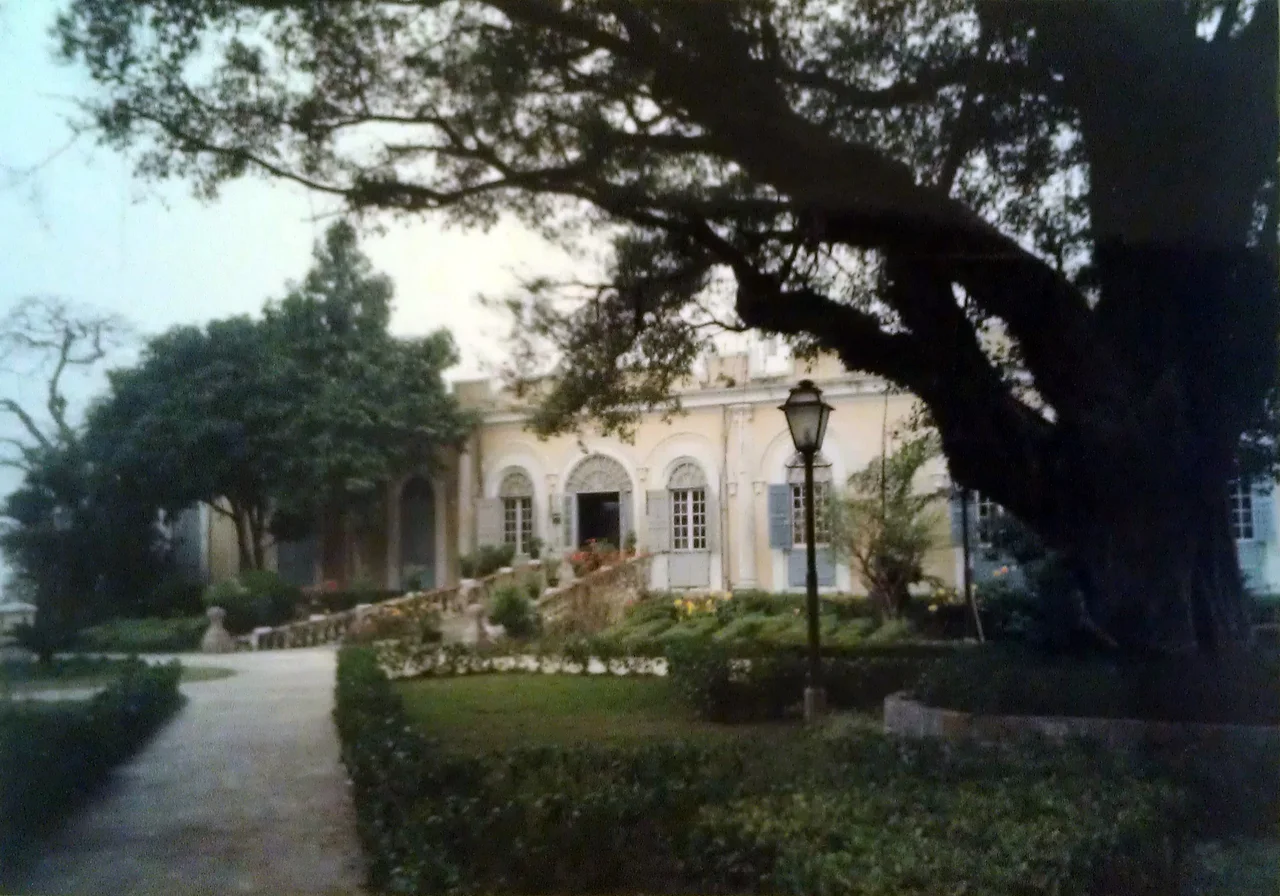

Fortaleza do Monte
For nearly four centuries, the Fortaleza do Monte has looked out over Macau from the 52-metre summit of Mount Hill. It fired its cannon in anger exactly once — in 1622, when a Dutch fleet attempted to seize the Portuguese colony — and it won. A single lucky shot from the fort's walls struck a Dutch powder magazine and ended the invasion. That one moment of decisive military action was enough to cement the fort's reputation. After 1622, the guns were never needed again, and the Fortaleza do Monte became something else entirely: a residence, a police barracks, a weather station, and finally a museum. It is now a UNESCO World Heritage Site.
Built by Jesuits, Taken by Governors
The Fortaleza do Monte was not built by the colonial government. Construction began in 1617 under the Society of Jesus, the Jesuit order whose Portuguese missionaries had established a significant presence in Macau since the sixteenth century. The Jesuits wanted to protect their properties from pirates, and the hilltop location — directly east of what would become the Ruins of Saint Paul's — gave them commanding sightlines in every direction. The fort was completed in 1626. It did not remain Jesuit property for long: Francisco Mascarenhas, the first governor of Macau, recognized the fort's strategic value and took it over as his official residence. Governors would live within its walls until 1749.
The Battle That Justified Everything
The Dutch East India Company had long coveted Macau as a trading base, and in 1622 they sent a fleet to take it. The attack was serious — well-organized and well-armed. The Portuguese defenders were outnumbered and outgunned in many respects. What turned the battle was a shot from the Fortaleza do Monte's cannon. It struck a powder magazine on one of the Dutch vessels, triggering an explosion that broke the assault. The Dutch retreated. The fort had proved its worth in the only engagement it would ever fight. Thirty-two muzzle-loading cannon lined the fort's walls after that, and two watchtowers anchored the southeastern corners — a garrison posture maintained for the next three centuries, even as the actual threat steadily receded.
The Long Peace and Many Purposes
After the Dutch assault, the Fortaleza do Monte settled into the long administrative life of a colonial institution that outlasted its original purpose. Governors lived here until 1749. From 1810 to 1841, two companies of the Portuguese Prince Regent Battalion used it as a base to function as a police force. When that era ended, the fort sat as a restricted military area until 1965, when the barracks were converted into a weather observatory and the grounds were opened to the public for the first time. The Meteorological Department operated there for thirty years. In 1996 the observatory moved to Taipa; by 1998 the Museum of Macau had opened inside the old military buildings, giving the fort its current identity.
A Park on Top of History
Today the Fortaleza do Monte is both a serious historical monument and a genuinely pleasant place to spend an afternoon. The tree-covered park at the summit offers panoramic views across the Macau Peninsula — the Grand Lisboa tower visible to the south, the dense urban grid of the older parishes spreading in every direction, and beyond them the Pearl River Delta and the hills of Guangdong. Replica cannon from 1860 line the walls, close enough in form to the originals to give a sense of how the fort once bristled with armament. The reflecting pool near the Museum of Macau lends the inner courtyard a surprising tranquility. The fort is part of the Historic Centre of Macau, inscribed as a UNESCO World Heritage Site, and surrounded by the ruins of Saint Paul's and the network of old lanes and churches that make up one of the most distinctive colonial streetscapes in Asia.
From the Air
Fortaleza do Monte sits at 22.1969°N, 113.5422°E on the 52-metre Mount Hill in the heart of the Macau Peninsula, directly east of the famous Ruins of Saint Paul's facade. From the air, the fortification is one of the most recognizable features of the peninsula — a square walled compound on a hilltop, flanked by the dramatic stone façade to its west. The Grand Lisboa tower (261 m) provides a prominent orientation landmark 600 metres to the south. Macau International Airport (VMMC) is approximately 5 km to the southeast on Taipa. Approach from the east or south at 2,000–3,500 feet for a clear view of the fort's ramparts and the surrounding historic quarter.
Nearby Stories
- 2024 Shenzhen Stabbing 0.8 km away
- Lantau Peak 1.5 km away
- Kweilin Incident 2.4 km away
- Taishan City 7 km away
- Wanshan Archipelago Campaign 38 km away
- Hong Kong 12 68 km away
- Battle of Nanpeng Island 82 km away
- Erhai Lake 1335 km away