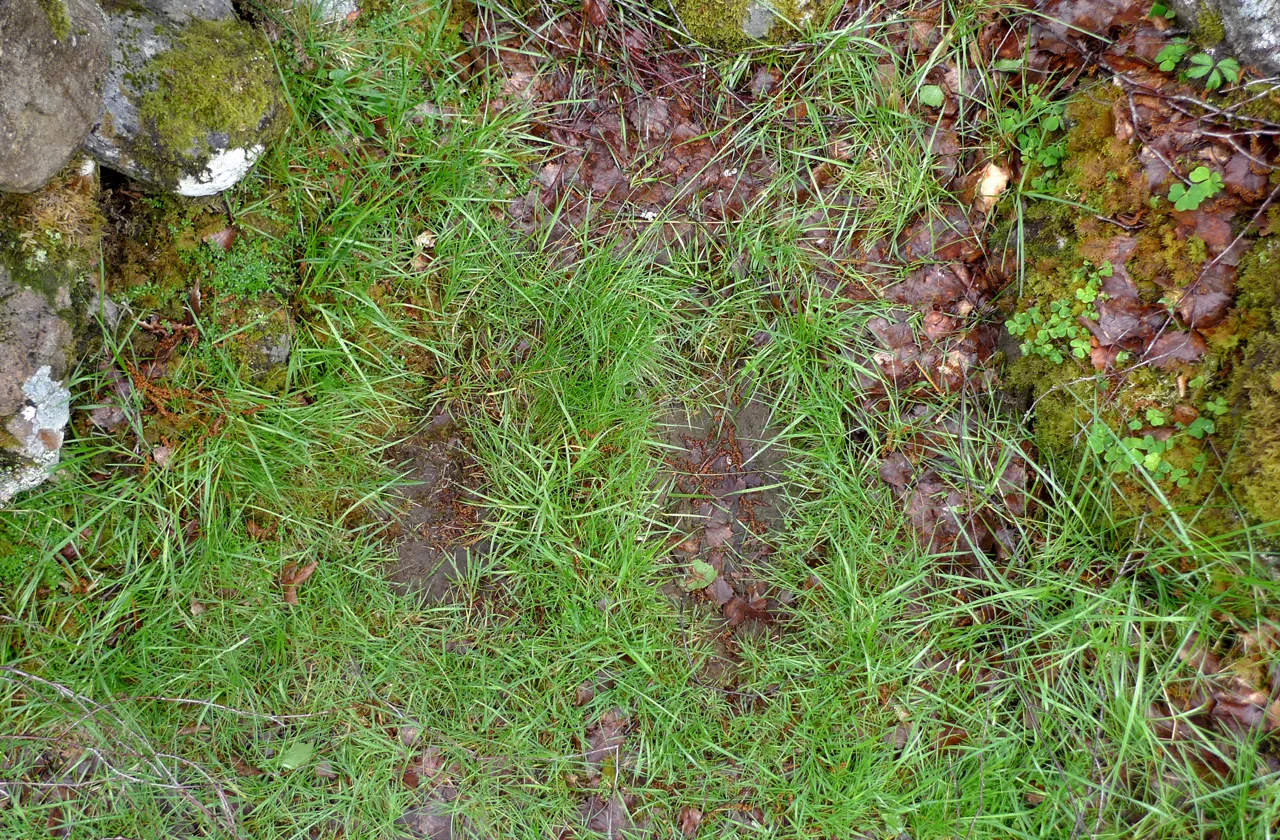

Glenmoriston
Quarter of a mile east of Torgoyle Bridge, just off the verge of the A887, two bare patches of earth lie behind a stone cairn. They are roughly the size and shape of footprints. Local tradition says they are the footprints of Finlay Munro, the Highland Evangelist, who preached in Glenmoriston in 1827. When Catholic hecklers from neighbouring Glengarry called him a cheat and a liar, Munro is supposed to have closed his Bible and declared that the ground beneath him would bear witness to the truth until the Day of Judgement. The marks have not grown over since. Glenmoriston is full of small stories like that, and a few large ones.
The River of Waterfalls
Glenmoriston runs west from Loch Ness, at the village of Invermoriston, up into the hills past Loch Cluanie, where it meets Glen Shiel and the road continues toward Skye. The River Moriston dominates the glen, and the Gaelic name is sometimes interpreted as river of the waterfalls. The river drops over its final falls at Invermoriston into Loch Ness, passing under an original Thomas Telford bridge built in 1813, one of dozens that Telford raised across the Highlands in the early 19th century. Ospreys and eagles fish the river. Anglers gather where the salmon do. The A887 follows the glen east, the A87 climbs west out of it, and traffic for Skye flows past most of what makes Glenmoriston quietly remarkable.
Dragon Haugh and the Boar's Return
Five miles up the glen lies Loch Dundreggan, whose Gaelic name means Dragon Haugh. A hydroelectric dam taps the river here, and on Tuesdays water is released into the river below in a controlled surge that draws kayakers and white-water rafters from across the Highlands. In November 2009 the conservation charity Trees for Life carried out the first British reintroduction of wild boar into a large fenced enclosure on the Dundreggan Estate, following a feasibility study in nearby Glen Affric. The animals had been extinct in Britain for several centuries; the project aimed to test whether their rooting could help regenerate the kind of Caledonian pinewood that once covered the area. Dundreggan is now a rewilding centre with public visitor access.
A Cave for the Prince
After the disaster at Culloden in April 1746, Bonnie Prince Charlie fled west and then south through some of the most difficult country in Scotland, with a price of thirty thousand pounds on his head. In 2016 money, that reward was around 4.2 million pounds or six million US dollars. For about a week in August 1746, Charles took refuge in a cave high in the hills of Glenmoriston, where the River Doe flows down into the main glen. He was protected by a small group of Highlanders later remembered as the Seven Men of Glenmoriston. They knew the reward. None of them claimed it. The cave is still there, accessible only by a hard hill walk.
The Man Who Died for the Prince
Beside the road through Glenmoriston stands a cairn to Roderick Mackenzie, a young merchant from Edinburgh who closely resembled Bonnie Prince Charlie. After Culloden, Mackenzie attached himself to the Prince's flight and, when government troops cornered him in Glenmoriston, deliberately allowed them to believe they had caught their quarry. As they shot him down he is said to have cried something close to, You have killed your prince. The deception bought Charles time to escape further west to the coast and eventually onto a French ship. Mackenzie's body was sent south to London for identification. The cairn beside the modern road marks where a man chose to be mistaken for a king.
A Small Place That Holds Big History
Saint Irchard, a Celtic missionary, is said to have founded an early church in Glenmoriston at a place where his bell rang of its own accord for the third time. The bell was kept at the site for centuries; after the church was ruined in the 17th century, the bell stayed in the churchyard. The 2001 census put the population of the Glenmoriston-Invermoriston postcode district at 264, with the highest proportion of English-born residents in the Highlands, the highest proportion of retired people, and the second-highest proportion of homes used as second or holiday properties. The land here grows footprints that will not heal, hides princes, raises wild boar, and quietly empties of full-time inhabitants. The mountains do not seem to mind.
From the Air
Glenmoriston lies at 57.17 N, 4.81 W, running roughly east-west from Loch Ness near Invermoriston up to Loch Cluanie. The A887 and A87 roads traverse the glen, with the A87 continuing west toward Skye via Glen Shiel. Inverness Airport (EGPE) is the nearest ICAO field, about 50 km northeast. From the air the glen appears as a tight valley with the Moriston river flashing white at intervals; Loch Dundreggan and its hydroelectric dam are visible roughly halfway along. The terrain rises sharply to over 1,000 m on either flank, so VFR routes typically follow the valley floor. Mountain wave is common in strong westerlies.
Nearby Stories
- Culloden 5.1 km away
- Battle of Glen Shiel 5.9 km away
- Battle of Mulroy 7.9 km away
- Conon Hydro Scheme 12 km away
- Battle of Bun Garbhain 12 km away
- Cape Wrath Trail 14 km away
- Monadhliath Mountains 14 km away
- Falls of Bruar 26 km away