.jpg)
Guia Fortress
At the top of Guia Hill, the highest point on the Macau Peninsula, three structures have kept watch over the Pearl River Delta for centuries: a military fortress, a chapel, and a lighthouse. Each was built in a different era and for a different purpose, yet all three have survived together — Portuguese stonework, whitewashed walls, and the slow turning of a lighthouse beacon — as the city below transformed almost beyond recognition.
A Fort Built for an Uncertain World
The Portuguese colonial administration built the Guia Fortress in the early 17th century, a period when European powers were contesting sea routes and defending their trading posts wherever they held them. The hilltop position was strategic: from Guia Hill, watchers could see vessels approaching through the Pearl River Delta long before they reached the harbor. The chapel of Our Lady of Guia was completed within the fortress walls in 1638, making it one of the oldest Western-style structures in China. Its interior preserves some of the earliest Christian frescoes found in China, blending Portuguese baroque style with Chinese artistic elements — a visual record of the cultural negotiation that defined Macau for centuries.
The Lighthouse That Guided Asia's Shipping
Two and a half centuries after the fortress was built, a lighthouse rose from its highest point. Completed in 1865, the Guia Lighthouse was the first modern lighthouse on the Chinese coast, built at a time when Macau was still a significant port and the approaches to the Pearl River Delta were busy with merchant shipping. The lighthouse's signal, visible far out to sea on clear nights, guided vessels navigating one of Asia's most commercially active waterways. That same tower stands today — a slender white column rising from the old fortifications, still operational, its lamp cycling through the dark above the casino towers that now crowd the hillside below.
UNESCO Recognition and a Battle Over Sightlines
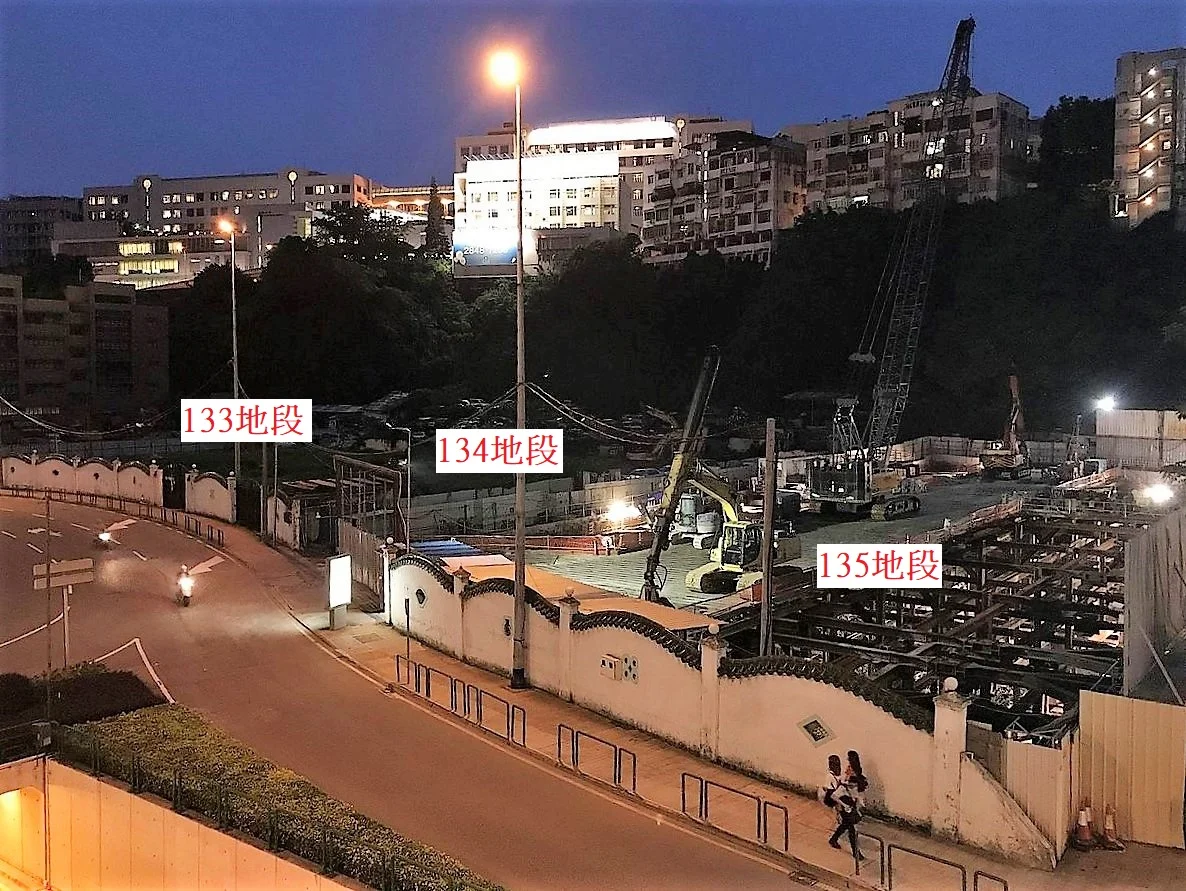
The Guia Fortress became part of the UNESCO World Heritage Site Historic Centre of Macau when the city's historic core was inscribed in 2005. The designation was both recognition and protection — in theory. In practice, the relationship between heritage conservation and rapid urban development in Macau has been contentious. Since 2010, the view of the fortress and its lighthouse from the surrounding city has been substantially blocked by the Liaison Office of the Central People's Government, a large government building constructed in the sightlines below the hill. Local citizens and heritage scholars have criticized the obstruction, arguing that it reflects a broader pattern of prioritizing development over the preservation of the urban landscape around a World Heritage Site. In 2016, the Macau government approved a construction height limit for a nearby residential project that critics said still violated regulations designed to protect views of the lighthouse.
Walking the Hill
Guia Hill is now a public park, and the path to the fortress winds through dense subtropical vegetation — a green surprise within a city otherwise defined by reclaimed land, gambling resorts, and dense towers. On foot, the climb takes about 20 minutes from the base. At the top, the courtyard opens between the chapel and the lighthouse, and on clear days the view extends across the inner and outer harbors, toward the Zhuhai shoreline and the islands of the Pearl River Delta. The chapel interior is open to visitors; the lighthouse beam sweeps overhead at night. Three structures, four centuries apart, sharing a hilltop — and, for now at least, still standing.
From the Air
Guia Fortress sits atop Guia Hill at 22.1965°N, 113.55°E, the highest natural point on the Macau Peninsula at approximately 90 meters above sea level. The white lighthouse tower is the most visible landmark from the air — look for it northeast of the Guia Circuit's main straight. Approaching from the east at 2,000–2,500 feet, the hilltop complex is clearly distinguishable from surrounding development. Nearest airport is Macau International (VMMC) on Taipa island, approximately 3.5 km to the south-southeast. Hong Kong International (VHHH) lies roughly 60 km northeast across the Pearl River Delta.
Nearby Stories
- 2024 Shenzhen Stabbing 0.8 km away
- Lantau Peak 1.5 km away
- Kweilin Incident 2.4 km away
- Taishan City 7 km away
- Wanshan Archipelago Campaign 38 km away
- Hong Kong 12 68 km away
- Battle of Nanpeng Island 82 km away
- Erhai Lake 1335 km away