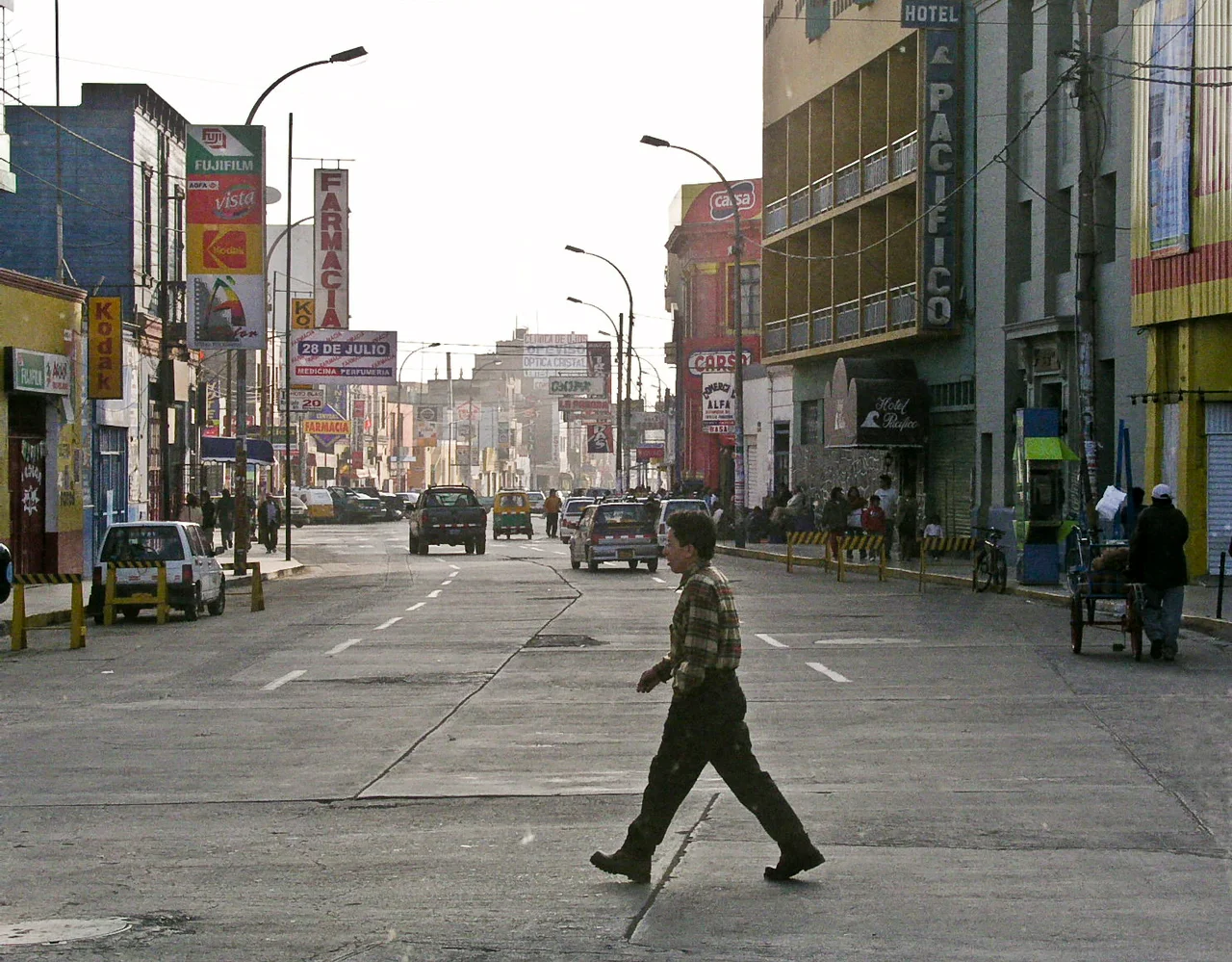

Huacho
Every August, a Peruvian coastal town dresses its guinea pigs in tiny costumes and parades them through the streets. The Guinea Pig Festival in Huacho is played for laughs in foreign media, but in the Andean culinary tradition, cuy - guinea pig - is an honored protein dating back thousands of years, and the festival celebrates the animal's place in both kitchens and living rooms. Huacho itself sits 148 kilometers north of Lima on the Pan-American Highway, wrapped around a wide bay, 68 meters above the sea. The name has been here since 1571, when the viceroy Francisco de Toledo forcibly grouped indigenous ayllus into a reduction called San Bartolomé de Guachu. Four and a half centuries later, the city has outgrown its colonial origins and become the capital of the Lima Region.
First After the Capital
In 1892, Huacho installed an animal-drawn tram system - what locals called a tranvía de sangre, a blood tram, because mules or horses pulled it along the tracks. The service ran through Huacho and extended to nearby Huaura. In 1920, the line was electrified. That date matters: Huacho became the first city in Peru after Lima itself to operate its own electric tram system. The distinction points to something genuine about Huacho's history - for most of the nineteenth and early twentieth centuries, this was a technologically ambitious port, enriched by coastal trade, ready to spend on infrastructure that smaller cities could not justify. In 1911, Huacho became the main hub of the Ferrocarril Noroeste del Perú, the Northwestern Railway, connecting the city with Ancón, Sayán, and Barranca. The trains stopped decades ago. The tram tracks came up. But the sense of Huacho as a city that once ran ahead of its neighbors still lingers in old photographs.
Where Independence Passed Through
On November 26, 1820, José de San Martín was in Huaura, just north of Huacho, where he delivered what Peruvian schoolchildren still learn as the Grito libertador en el balcón de Huaura - the liberator's cry from the balcony of Huaura. Huacho and Huaura together hosted San Martín's liberation expedition, feeding and sheltering his army. On February 12, 1821, Huacho was elevated to district status in the department of Lima. Seven years later, the Peruvian Congress granted Huacho the title of Fidelísima Villa - Most Faithful Town - under the presidency of José de La Mar. Administrative reorganizations followed: Huacho became capital of Chancay in 1866, capital of the newly created Huaura Province in 1874, and eventually capital of the full Lima Region. Each change corresponded to a period when the coastal north was growing in population and commercial weight, pulling administrative functions with it.
Bandurria and Deep Time
South of the city lies Bandurria, an archaeological site whose history reaches back to about 4,000 BCE - contemporary with the early development of agriculture along the Peruvian coast. Bandurria is part of what some archaeologists consider the Norte Chico civilization, a cluster of early urban sites in this stretch of the coast that includes Caral, a few hours inland. Norte Chico is notable because its cities seem to have developed large-scale architecture and public works without ceramics and without significant evidence of warfare - unusual features that have led scholars to rethink assumptions about how complex societies develop. Huacho's modern existence rides atop a much older pattern of coastal settlement, where seafood, irrigation agriculture, and long-distance trade sustained dense populations millennia before the Incas existed.
Huachana and Lomas
The local cuisine has a signature product: salchicha huachana, a bright orange fresh sausage seasoned with annatto, garlic, cumin, and vinegar. It is sold crumbled and fried with scrambled eggs for breakfast, stuffed into sandwiches, folded into rice. Every Peruvian seems to know where it comes from. Just outside Huacho, Lachay National Reserve protects one of the coastal desert's most distinctive ecosystems: lomas, fog-fed hillsides that explode into green during the winter months of June through October when coastal mist condenses on the slopes. Plants and animals that have adapted specifically to this pattern - purple flowering amancaes, foxes, a handful of endemic bird species - emerge during the wet season and then effectively disappear when the mist lifts in summer. The reserve covers about 5,070 hectares and offers walking trails that transform utterly between seasons.
Eight Cities, One Name
Huacho maintains sister city relationships with an unusually cosmopolitan list: Wellington in New Zealand, Tokyo in Japan, Madrid and Barcelona in Spain, Valparaíso in Chile, El Cairo in Colombia, plus Lima and San Isidro in Peru itself. Few coastal Peruvian cities of comparable size claim such a spread. The notable people associated with Huacho reflect the city's range across centuries: Mercedes Indacochea (1889-1959) was an educator whose reforms shaped Peruvian schools; José de Orejón y Aparicio (approximately 1706-1765) was one of colonial Peru's most accomplished composers and organists; Jorge Koechlin, born in 1950, became a racing driver. The Pan-American Highway still slices through the bay at Huacho, carrying trucks north and south along the coast. Huacho watches them pass, feeds them salchicha huachana, dresses up its guinea pigs in August, and goes about its business as a working port and regional capital - quieter than Lima, and for many people who live there, better for it.
From the Air
Located at 11.11°S, 77.61°W on Peru's central coast, 148 km north of Lima. Recommended viewing altitude 2,000-5,000 feet (600-1,500 m) for coastal approach. No commercial airport at Huacho; nearest is Jorge Chávez International (SPJC) in Lima. Look for the wide bay and the Pan-American Highway curving along the coastline, with the Lachay hills rising inland. The bay's broad, shallow shape distinguishes Huacho from smaller coastal inlets to the north and south.
Nearby Stories
- Barranca 31 km away
- Raura Mountain Range 53 km away
- Ancon (archaeological site) 54 km away
- Klaus Barbie 66 km away
- Mantaro River 82 km away
- Las Haldas 135 km away
- Casma–Sechin culture 190 km away
- Easter Island: The Mystery of Rise and Collapse 3703 km away