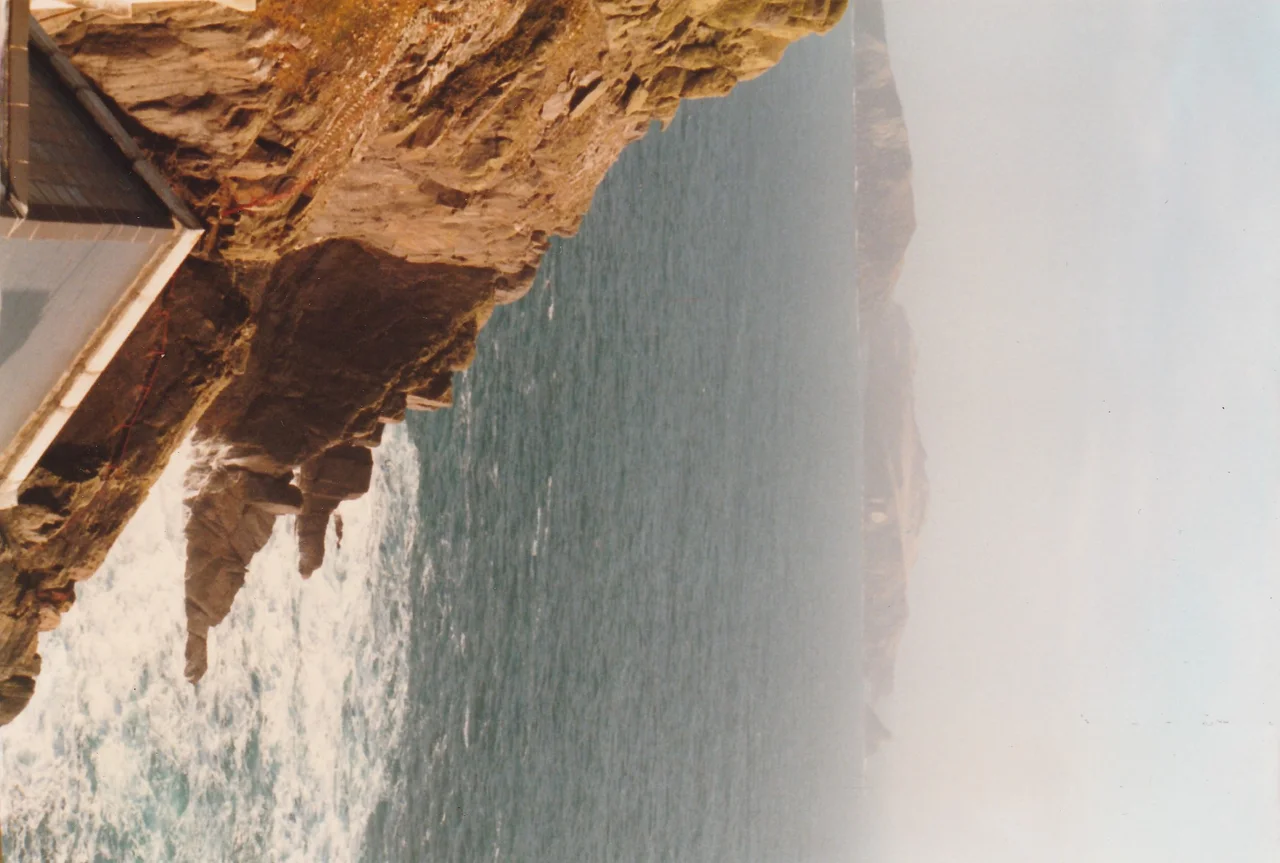

Inishvickillane
There is an island in the Blaskets that the islanders called simply The Inis - The Island - as if the others did not need a name. Inishvickillane is the second-westernmost lump of land in the archipelago, more or less the last green hectare before the Atlantic empties for two thousand miles. Some called it the last parish before America. Then, in 1974, an Irish politician in disgrace bought it for cash and turned it into a private retreat where the President of France would later sip whiskey, a herd of red deer would learn to graze on Atlantic salt grass, and the Irish Naval Service would draw up contingency plans for extracting a Taoiseach by helicopter.
The Inis
Inishvickillane - or Inishvickillaun, depending on the spelling - takes its name from the Irish Inis Mhic Uileain, meaning the island of the son of Killane, or Mac Killane's island. The Blasket islanders themselves rarely used the full name. They called it The Inis. It was the closest of the smaller Blaskets to Great Blasket itself, and in the nineteenth and early twentieth centuries one or two families lived intermittently in stone cabins on its eastern slope, growing what they could and grazing sheep that crossed the narrow sound from Inishnabro. The soil, Robin Flower noted, was too rich for potatoes but good for cabbage and onions, and there was a persistent local claim that tobacco had once been raised here - improbable but charming.
The Stone with the Prayer
Before the politicians, before the deer, before the helicopters, there were monks. At the south-east end of the island lie the remains of an early monastic settlement: the foundations of a dry-stone oratory, a small graveyard, a leacht with a stone cross, a possible beehive hut, and a holy well dedicated to Saint Brendan the Navigator - the Kerry-born monk who, sixth-century tradition claims, sailed west across the Atlantic in a hide boat in search of paradise. The oratory's south wall once held an Ogham stone inscribed with the formula OR DO MAC RUED U DALAC - A prayer for Mac-Ruaid, grandson of Dalach. In 1902 several local newspapers reported the stone's apparent theft as an act of vandalism. The truth was less dramatic: it had been removed for study to Trinity College Dublin, where it still resides.
Charles Haughey Buys an Island
In 1974, Charles J. Haughey - a former Irish senior government minister who had been sacked over the Arms Crisis and was lingering on the backbenches of Fianna Fail - bought Inishvickillane from the descendants of the O Dalaigh family of Dunquin, who had pulled up their roots about seventy years earlier. The original cabin still stood: a stone house with lattice windows, the only built thing on the island. Newspapers reported that the deserted island had been sold for an undisclosed sum and that Mr Haughey intended to use it as a family summer home, building a new bungalow and undertaking to preserve the unspoiled charm of the place. The purchase generated immediate gossip. Where had the money come from? Haughey's personal finances would remain a question for the rest of his political career - and well after - but the island purchase put the question on the front pages.
A President and a Helicopter Plan
Haughey would go on to serve three times as Taoiseach between 1979 and 1992, and across those years Inishvickillane functioned as a working retreat. He hosted prominent visitors including French President Francois Mitterrand. He commissioned a small private chapel. He stocked the island with red deer - introduced in 1980, a herd that peaked around 100 animals in 2005 - and arranged for their numbers to be managed by private cullers. The 1989 state papers, released decades later, revealed that the Irish Naval Service and Irish Air Corps maintained an elaborate plan for retrieving Haughey from the remote island in the event of a government emergency. In 1989, also while Taoiseach, he introduced the Blasket Island National Historic Park Act, which would have allowed compulsory purchase of the entire archipelago. The High Court ruled the Act unconstitutional in 1998, in a judgment delivered by Mr Justice Declan Budd.
Birds, Deer, and the West Wind
Politics aside, Inishvickillane is a serious natural site. It holds important breeding colonies of northern fulmars, European storm-petrels, and Atlantic puffins, the same species that animate the rest of the archipelago. The introduced red deer - controversial when Haughey brought them, more controversial as their population grew - have shaped the vegetation in ways biologists are still measuring. The Haughey family still owns the property. Visitors are not generally welcomed. From the air the island looks like a slightly larger comma than Inishnabro: a curve of green ending in cliffs that the Atlantic has been polishing for an unhurried number of millennia. The wind here usually blows from the west. Sometimes it brings rain. Sometimes it brings nothing but distance, the same distance the monks once contemplated from their oratory, the same distance Charles Haughey would survey from his bungalow with a glass of Burgundy and the calm assurance that the helicopter knew where to find him.
From the Air
Located at 52.044 degrees north, 10.608 degrees west, in the southern half of the Blasket archipelago, just east of Inishnabro and a narrow sound away. Private property; no landings without permission. Kerry Airport (EIKY) lies about 35 nautical miles east-northeast. Recommended observation altitude 2,500 to 4,000 feet AGL in clear weather. The island sits in exposed Atlantic airspace with frequent strong westerlies. Look for the small built structures on the eastern slope and the lighter colour of grazed grassland where the red deer herd ranges. Be aware that low-flying surveillance over private property may be unwelcome - treat this as an observation-from-distance flight.
Nearby Stories
- Lispole 3.3 km away
- Butler Arms Hotel 3.5 km away
- Skellig Michael 16 km away
- Ballyheigue Castle 25 km away
- Kilkee 80 km away
- The Laki Eruption: The Volcano That Changed World History 1360 km away
- The Northern Lights: The Sky Show That Vikings Thought Was Bridge to the Gods 1460 km away
- Sao Miguel 1919 km away