.jpg)
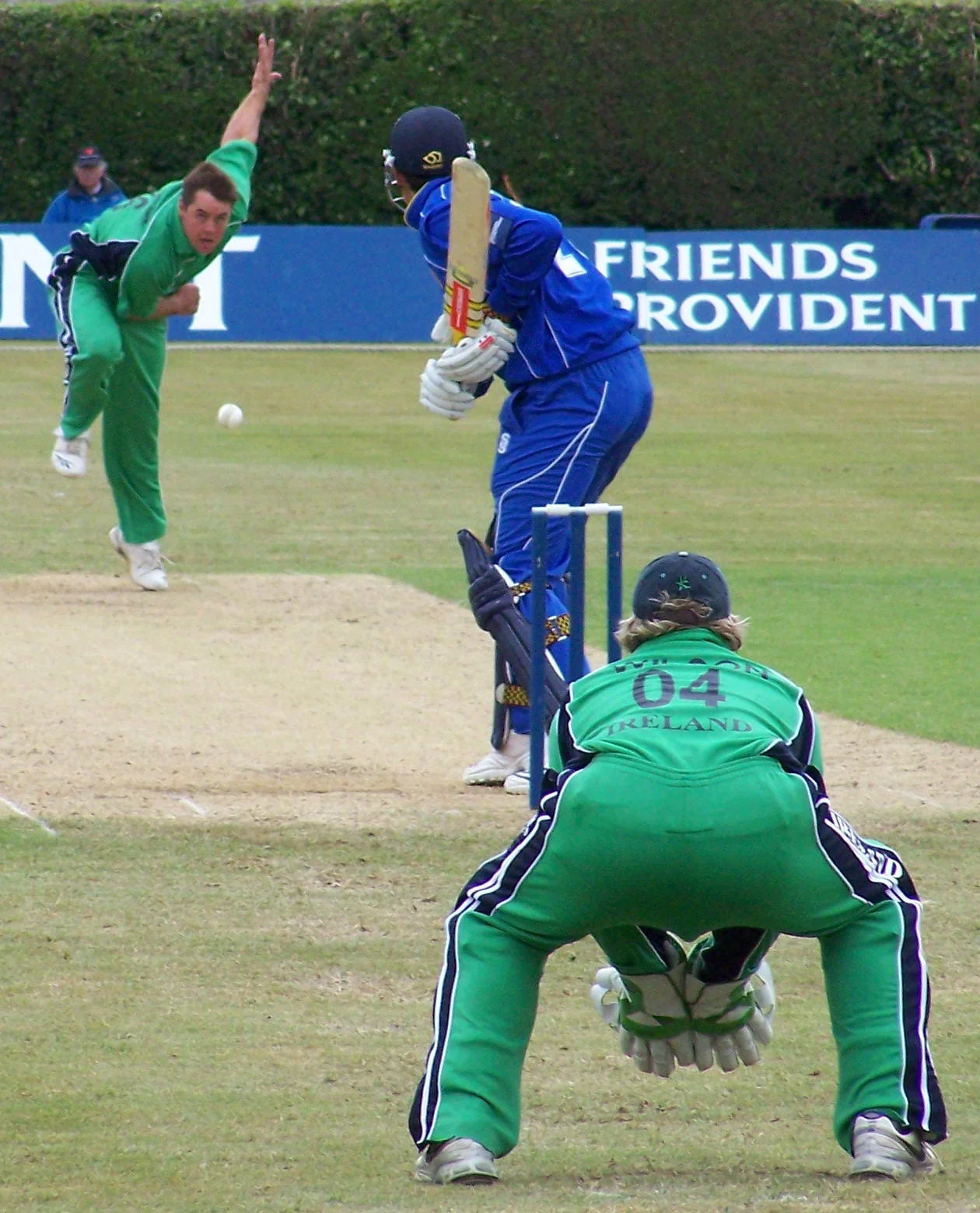
Ireland Cricket Team
On 17 March 2007, in Sabina Park, Jamaica, Pakistan needed 133 runs to beat Ireland in the Cricket World Cup. They were ranked fourth in the world. Ireland had been Associate members of the International Cricket Council for fourteen years and had never played a real Test nation in a World Cup. By the end of the match Pakistan were out of the tournament, their coach Bob Woolmer found dead in his hotel room the following morning under circumstances still debated, and Ireland - Ireland - had won by three wickets on Saint Patrick's Day. It was the kind of result that does not happen in cricket, except it had just happened, and the celebrations in Kingston went on for hours.
Banned for Seventy Years
Cricket reached Ireland early. The Military of Ireland and the Gentlemen of Ireland played each other in Phoenix Park, Dublin, in 1731, and the club founded there is still going - one of the oldest in the world. The first Ireland national team played England's Gentlemen in 1855. But the game had a problem. In 1902 the Gaelic Athletic Association, the body governing hurling and Gaelic football, introduced Rule 27, banning its members from playing 'foreign' games. Cricket counted. So did soccer and rugby. Anyone who turned out for an Irish cricket team risked being thrown out of the GAA - and in much of rural Ireland, the GAA was social life. The ban lasted until 1970. For nearly seven decades cricket survived in Ireland mostly in Protestant schools, Anglo-Irish estates, and unionist communities, treated by much of the country as a 'garrison game' of the departed British Army. The Northwest, around Derry and the border counties, kept the game alive in its clubs - Bready, Strabane, Limavady - long enough for the modern team to be built on those foundations.
The Day at Sabina Park
The 2007 World Cup was Ireland's first. Their match against Zimbabwe ended in a tie - Jeremy Bray scoring Ireland's first World Cup century, Trent Johnston and Andre Botha bowling out the closing overs with miser-like economy. Then came Pakistan on St Patrick's Day. Wicketkeeper Niall O'Brien played the innings of his life, scoring 72 from 107 balls as Ireland chased a small target across a slow pitch. Boyd Rankin and Johnston had taken three wickets each in the morning to keep Pakistan to 132. When Ireland won, the Caribbean and most of Ireland went briefly mad. Pakistan, ranked fourth, were eliminated. Ireland advanced to the Super 8s, where they also beat Bangladesh by 74 runs - a second Test nation knocked over in the same tournament. They flew home to a heroes' welcome in Dublin. Cricket Ireland introduced player contracts in 2009 and a fully professional system shortly after. The amateur era was finished.
Kevin O'Brien's Fifty Balls
Four years later, in the 2011 World Cup, Ireland needed 328 to beat England in Bangalore. They were 111 for 5. Kevin O'Brien - red-haired, hard-hitting, slightly chaotic - walked out and played one of the most extraordinary innings in cricket. He reached his century in 50 balls, the fastest in World Cup history. Ireland won with three wickets and five balls to spare, beating their old colonial cousins in a chase nobody had thought possible. In 2015 they did it again to the West Indies, chasing 304 with 25 balls to spare. Three of the only five successful 300-plus run chases in World Cup history belong to Ireland. The Northwest's club cricketers had grown up into a team that could embarrass anyone.
Test Status
On 22 June 2017, at an ICC meeting in London, Ireland and Afghanistan were both granted Full Member status - the eleventh and twelfth Test-playing nations. Ireland's first Test was played at The Village in Malahide, near Dublin, against Pakistan on 11 to 15 May 2018. Kevin O'Brien made 118, the first Test century by an Irishman, in a losing cause. They would lose their first seven Tests. On 1 March 2024, in Abu Dhabi, they finally won one - beating Afghanistan by six wickets in their eighth match. Four months later, at Stormont in Belfast, Ireland beat Zimbabwe by four wickets for their first Test victory on home soil. The team trains across grounds at Malahide in Dublin, Stormont in Belfast, Clontarf, and Bready in the Northwest, with a new ground planned for the National Sports Campus at Abbotstown in 2030. Ireland remains, as of 2025, the only Test nation whose women's team played Test cricket before its men's did - the women received their first Test cap in 2000, seventeen years before the men. The garrison game became something else along the way: an Irish team that wins on its own terms.
From the Air
Ireland's cricket team plays across the island, but its northwestern grounds cluster near Derry. Bready Cricket Club near Strabane is at about 54.85 N, 7.42 W. The coordinates assigned to this article (54.94 N, 7.38 W) place it in the border region between County Tyrone and County Donegal. City of Derry Airport (EGAE) is the closest major airfield; Belfast International (EGAA) lies sixty miles east. National team home matches more often happen at Malahide near Dublin Airport (EIDW) or Stormont near Belfast.
Nearby Stories
- Portrush Lifeboat Station 1.9 km away
- Main Street, Letterkenny 2.1 km away
- Inishowen 6 km away
- Rosguill 6.3 km away
- County Tyrone 7.1 km away
- St Patrick's College, Maghera 9.6 km away
- St Patrick's Purgatory 11 km away
- Coalisland Canal 17 km away