
Jardin
Somewhere in southern Antioquia, a man is riding a tiny cart pulled by a motorcycle. The cart is called a moto-raton, a motor mouse, and it can take you to a trout pond, or to the village of an Indigenous Embera-Chami community, or just around the main plaza in circles while you laugh. Jardin has twenty thousand people, two cable cars, more than twenty outdoor cafes on a single square, and a neo-Gothic basilica built from river stones. The Lonely Planet guide books will tell you that Jardin is charming. The people there will tell you it has simply forgotten to change.
A Town Time Left Alone
Founded in 1864, Jardin sits in a valley at the southernmost edge of the Antioquia department, tucked against the Western Cordillera of the Colombian Andes. It was settled during the Colonizacion Antioquena, a great wave of migration that carried families southward from central and eastern Antioquia to open up unsettled mountain country. Most of them came to farm: coffee, plantains, sugarcane, beans. The ancestors of today's residents built houses with whitewashed walls and wooden balconies painted in saturated reds, blues, and yellows, and their descendants have kept them that way. The paint gets refreshed. The buildings do not come down. Days run about nineteen degrees Celsius, comfortable with a sweater after dark. You can hike straight out of town into cloud forest without needing a guide.
The Plaza
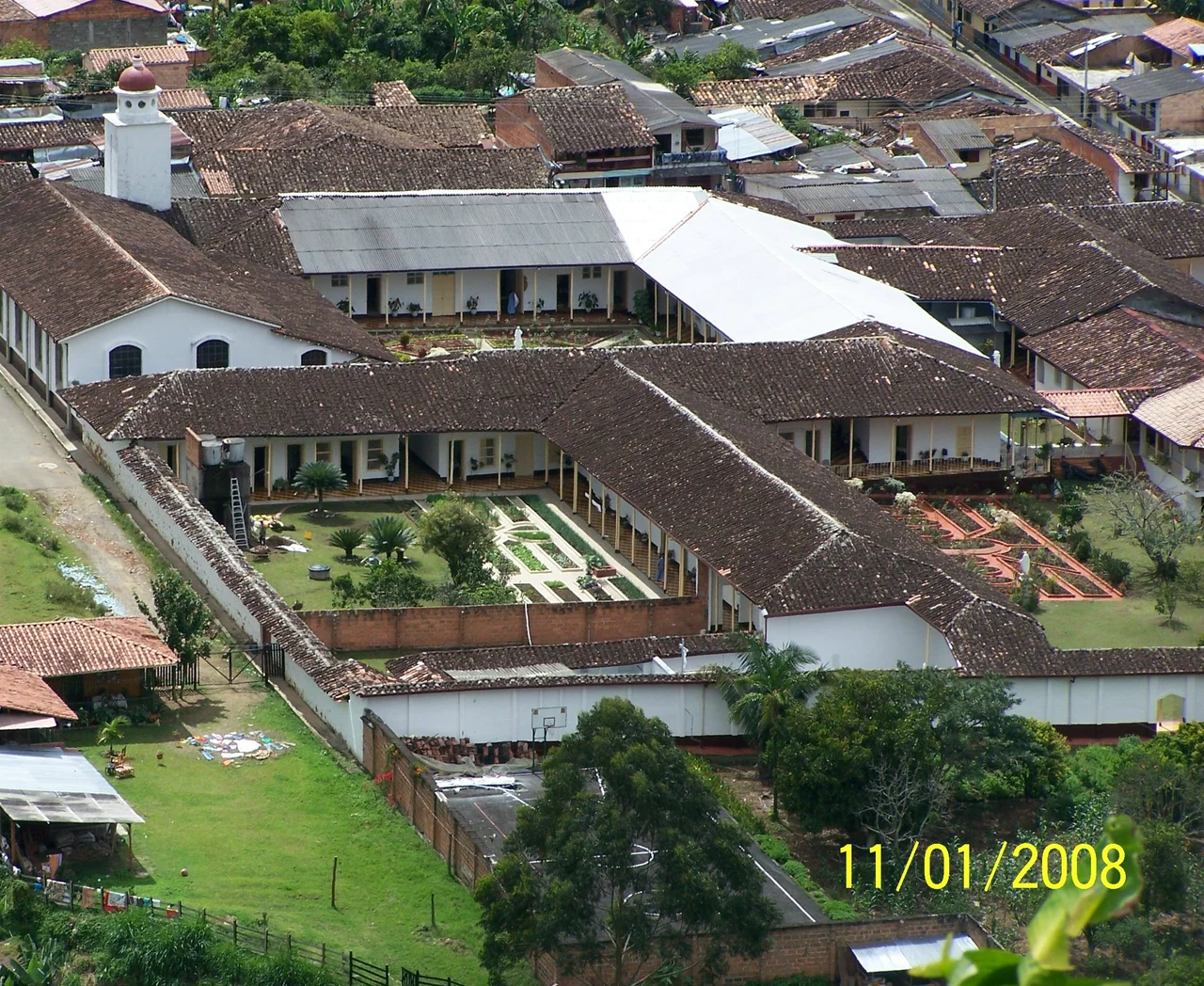
The center of life in Jardin is a single square, the Parque Principal, declared a National Monument along with its basilica. From its stone-paved floor, twenty-odd cafes and bars spill their wood-and-leather chairs into the open air. People sit there. That is the main activity. They drink coffee or, as many do, their favorite liquor, chat with neighbors, watch the moto-ratones rattle past, and stare at the basilica that looms over it all. The church is built in neo-Gothic style from stones cut from a nearby river, which was a practical decision in 1864 and looks like an artistic one now. Across the plaza, a hospital sits only one story tall, built from dark river stone, its interior a series of flower-filled courtyards. Six blocks down, the Casa de la Cultura museum holds the town's records.
Cable Cars and Countryside
Jardin was one of the first small Colombian towns to install a modern cable car system. The idea was practical: help farmers from the mountain villages of La Selva, La Linda, and La Salada haul their goods into town without a long walk down winding roads. It also boosted tourism. Two cable cars now run from the outskirts of town to viewpoints on opposing ridges. One climbs to the Alto de las Flores, the Flower Hilltop, where a statue of Cristo Rey overlooks the valley. The other reaches La Garrucha on the opposite side. Both have cafes and balconies where you can sit and watch the town breathe below you. The ride takes a few minutes. The views last as long as the coffee does.
The Country Around
The hills beyond town hide waterfalls, caves, and creeks with rainbow trout. A three-hour walk leads to the Cueva del Esplendor, a cave with a waterfall plunging through a hole in its ceiling. Five kilometers from the plaza, ponds stocked with trout let visitors catch their own dinner. The restaurants cook what you bring them. Countryside paintball has become popular, oddly enough, for about six US dollars per ninety shots including gear, the scenery being part of the appeal. Nearer to town, a cemetery on the hillside called Morro Amarillo holds graves of the Embera-Chami people, an Indigenous community that still lives ten minutes from the central plaza. You can visit the community with permission. Their presence predates Jardin itself by centuries.
What to Buy, How to Carry It
The most distinctive local product is the Carriel Paisa, a leather handbag with a long shoulder strap. It has the look of something out of a nineteenth-century American western, which is probably not accidental: Antioquian settler culture shared a certain frontier imagination with the mining-era United States. The Carriel has many small hidden pockets for valuables, designed to thwart pickpockets on mountain roads. The outside is finished in hairy leather, sheepskin or calf, which is meant to be a feature rather than a flaw. Half a century ago, nuns in the surrounding convents made most of the local artisan goods. Some still do. The confectionery Dulces de Jardin, started in 1995 by Mariela Arango, sells sweets along with the rest.
Sleeping and Staying
For a town of fewer than twenty thousand people, Jardin has an unusual number of places to sleep. Over forty hotels operate here, more than you would find in municipalities ten times larger. The lodgings range from simple guesthouses to country fincas that once belonged to coffee farmers. The Hotel La Casona, the Hotel Los Balcones, and the Hotel Jardin sit right in the center, though the rooms facing the plaza tend to be noisy with music and bells. Outside town, finca hotels like La Trucheria, La Esmera, and Kantarrana offer a countryside night with valley views and, usually, an attached trout farm. Renting a room in a family home is another common option. You can also stay in rural homes where local farmers once lived, if you are a larger group. The internet runs slow enough that people mostly stop looking at their phones. In Jardin that feels less like a deprivation than a nudge to do what the town has always done: sit on the plaza, order coffee, and watch the afternoon pass.
From the Air
Located at 5.60 degrees North, 75.82 degrees West, in the southwest of Antioquia, Colombia. Jardin sits in a valley between the San Juan River and the Western Cordillera, at roughly 1,750 meters elevation. Medellin lies 134 km north via the Autopista Sur, a 2.5-hour drive through Caldas, Amaga, Bolombolo, Hispania, and Andes. Nearest major airport: Jose Maria Cordova International (SKRG) at Rionegro, serving Medellin. Recommended viewing altitude: FL100 to FL150 for the valley and the coffee country to the north; the surrounding mountains of the Cordillera Occidental rise to 3,800 meters and above, so maintain clearance. Subtropical highland climate with rainfall year-round, so plan for afternoon buildups. Morning is usually clearest.
Nearby Stories
- Tutunendo 36 km away
- Manizales 36 km away
- La Catedral 40 km away
- El Penon de Guatape 47 km away
- Hacienda Napoles 71 km away
- San Francisco, Cundinamarca 110 km away
- Utria National Natural Park 119 km away
- Valle del Cauca Department 151 km away