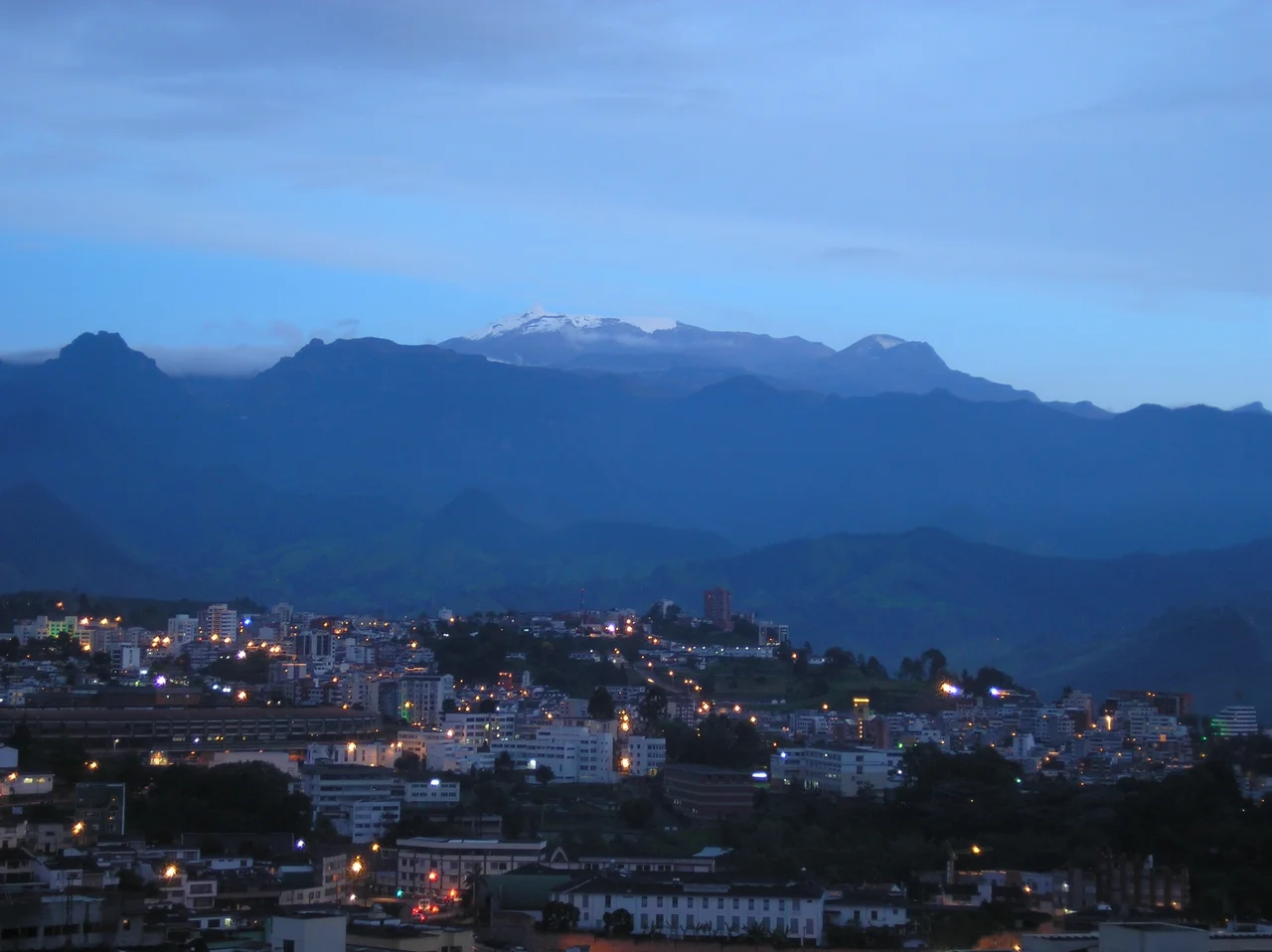

Manizales
Step off the bus in Manizales and glance up. There is a volcano up there - Nevado del Ruiz, 5,321 meters, the peak sometimes white with glacier and sometimes not, depending on what the cloud is doing. The city itself rides a narrow ridge at about 2,150 meters, pressed against the western flank of the Cordillera Central, and the view drops off both sides. On one side, coffee farms roll down toward the Cauca Valley. On the other, the ridge climbs toward the snow. Eight microclimates share this same patch of map. In ten minutes of walking up or down, the air can shift from cool fog in Chipre to balmy breeze in La Linda. Manizales wears the mountain like a coat.
The Expedition of the Twenty
Manizales was founded on October 12, 1849, by twenty Antioquians - the Expedición de los Veinte - who came south from Neira and Salamina looking for land. They chose the ridge for the same reasons the Spanish had chosen the high savannas two centuries earlier. Up here the air stayed cool, the diseases of the lowlands stayed away, and the coffee plants they brought with them thrived between 1,400 and 2,200 meters. The city that grew out of that settlement is now the capital of Caldas department and one of the three pillars of the Eje Cafetero, Colombia's coffee-growing axis, alongside Pereira and Armenia. Almost every cup of Colombian coffee the world drinks passes through somebody's hands here first.
A University Everywhere
Manizales has more universities per capita than any other city in Colombia. Seven main institutions share its 434,000 residents, and the student population of about 30,000 is a constant presence on Avenida Santander and its parallel street, Avenida Paralela. Students walk to class, stop in cafés, gather on Plaza de Bolívar between buildings. The two main plazas anchor the old city. Parque Caldas holds the Basílica Menor Inmaculada Concepción, a church completed in 1921 with a wooden interior that catches the skylight beautifully. Plaza Bolívar holds the government buildings and the Cathedral of Manizales, whose spire reaches 113 meters - the third-tallest church in Latin America. Gold canopy inside. Enormous stained glass. Massive enough that the city's skyline is recognizable from any ridge.
Coffee, Cable Cars, and the View from Chipre
The city's signature public transit is the cable car. Two lines meet at the main bus terminal, one climbing into the city center, the other swinging south to the suburb of Villamaría. A third line is planned. A one-way ride costs about 2,700 Colombian pesos and buys you a view the Andes will charge nobody else to give: the steep-sided barrios, the hills falling away west into the coffee valleys, and beyond them the terraced slopes of the Coffee Cultural Landscape, a UNESCO site since 2011. The best viewpoint in town is Chipre, the high ridge on the western edge. On top sits the Los Colonizadores park with life-sized sculptures of the founders, and from the lookout the view runs 360 degrees - coffee towns Chinchina and Palestina down in the valleys, the Central Cordillera rising to the east.
Santagueda, Thermal Waters, and the Volcano
Manizales sits at the top of many excursions. Forty minutes down the mountain toward warm country lies Santagueda, where the temperature runs 23 to 28 degrees and the fondas serve cold beer and aguardiente Cristal around swimming pools. Further out, the thermal springs - Termales del Otoño, Termales Tierra Viva, Termales del Ruiz - feed hot pools at the base of volcanic slopes. Nevado del Ruiz itself can be visited inside Los Nevados National Park. Guided hikes climb to the 5,200-meter snowline, and the 4,800-meter refugio marks the turnaround for most visitors. The mountain is active. It erupted catastrophically in 1985, triggering lahars that buried the town of Armero and killed more than 25,000 people. A sobering reminder that the same volcano that draws tourists today was a disaster in living memory.
Flying In
La Nubia Airport (SKMZ) serves Manizales but sits at elevation, and the 1,400-meter runway plus frequent fog means it closes often. The new International Coffee Airport, being built in Palestina about 25 minutes away at a slightly lower elevation of 1,525 meters, is meant to fix that. Once open 24/7 with a 2,800-meter runway, it will accept larger aircraft than La Nubia ever could. For now, Pereira's Matecaña International (SKPE) handles overflow when weather shuts Manizales down, and the five-hour bus rides from Medellín and Bogotá remain the most reliable way in. Look for the cone of Nevado del Ruiz on the approach - on clear mornings it dominates the skyline.
From the Air
Located at 5.07°N, 75.51°W at roughly 2,150 m elevation on the Cordillera Central ridge. Main airport is La Nubia (SKMZ), 1,400 m runway, daylight-only operations due to fog. Alternates: Matecaña (SKPE) in Pereira, El Edén (SKAR) in Armenia. The new International Coffee Airport in Palestina will have a 2,800 m runway. Active volcano Nevado del Ruiz (5,321 m) dominates the skyline on clear mornings; afternoon cloud typically obscures it.
Nearby Stories
- Valle de Cocora 14 km away
- San José del Palmar 35 km away
- Jardin 58 km away
- San Francisco, Cundinamarca 66 km away
- Sabana Formation 74 km away
- Hacienda Napoles 75 km away
- Tutunendo 85 km away
- Valle del Cauca Department 111 km away