
Karyes
Six stone women hold up the porch of the Erechtheion on the Athenian Acropolis. They are called caryatids — karyatides in Greek — and for more than two thousand years scholars and travelers have asked where the name came from. The second-century geographer Pausanias had an answer. He wrote that every year in Karyes, the Lacedaemonian virgin dancers performed the dance of caryatis around a statue of the goddess Artemis Caryatis. Those dancers were the original caryatids. The stone women on the Acropolis were made in their image. And the village where those young women danced still exists: a small settlement on the slopes of Mount Parnon in Laconia, high above the Peloponnese, reached today by a road from Sparta.
The Dance That Named an Architectural Form
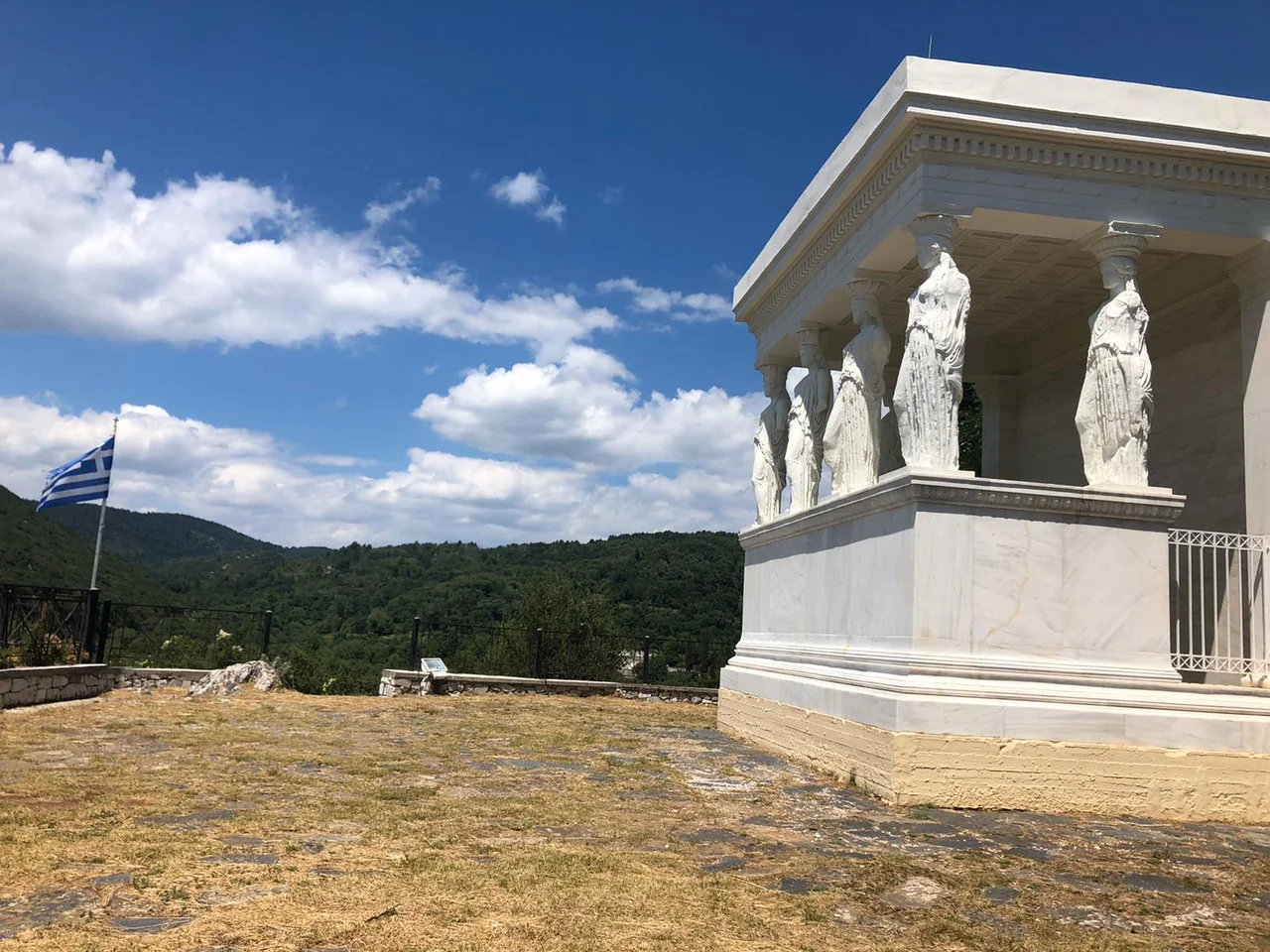
The word caryatid has entered every language that discusses classical architecture, but its origin is specific to one place and one ritual. Pausanias, writing in the 2nd century AD, recorded what had been common knowledge in antiquity: in Karyes, Lacedaemonian virgins danced annually for Artemis Caryatis. The earliest caryatids were those women themselves — later, any female from the Laconian area who performed the caryatis dance earned the name. When Athenian architects wanted to represent female figures bearing the weight of a roof, they turned to this cultural image. Five of the six original caryatid statues from the Erechtheion, removed from the Acropolis due to air pollution, are now in the Acropolis Museum in Athens. The sixth was taken to London in the early 19th century under orders attributed to Lord Elgin and has remained in the British Museum. Whether that removal was legal or ethical remains disputed; what is not in dispute is that the statues' name points back to a mountain village in Laconia.
Sparta's Laconian Highlands
Karyes sits in Laconia, the ancient Spartan heartland, on the southern slopes of Mount Parnon. The village belongs to the municipality of Sparta — the city that once governed the entire Laconian region, fought the Messinian Wars, clashed with Athens in the Peloponnesian War, and faced the Persian invasions. Karyes was part of that world, a village in a landscape of serious consequence. It was known as Arachova — from a Slavic word for walnut — until the name was officially changed to Karyes in 1930, reverting to the ancient classical name. The village square today has coffee shops, bars, and restaurants around it, as village squares in Greece tend to do. A clock tower built in 1955 replaced the previous one from 1930, which was destroyed during the Nazi occupation in 1944. A monument to 118 soldiers stands on the road between Sparta and Karyes, a quieter marker of more recent violence.
The Caryatid Monument and the Plane Trees
In the village square of Karyes, there is a monument to the caryatids — a recognition that this place, not the Acropolis, is where those famous figures originate. Beside the Church of the Assumption stand what the villagers call the Eternal Plane Trees: old, wide-canopied Oriental plane trees that shade the church courtyard and the square beyond. In Greek village life, the plane tree — platanos — is more than shade. It marks the center of a community, the place where people gather, where decisions were once made, where the coffee-house conversation still runs. A village with ancient plane trees is a village that has been continuously inhabited for a long time. Karyes has several churches — Saint Andreas, Saint Demetrios, Saint John, Saint Constantine, Saint Elias — as well as a primary school. The area is approximately 64 square kilometers, mountainous terrain in the shadow of Parnon, with views that open toward the eastern Peloponnese on clear days.
What Remains of Ancient Karyai
The ancient settlement of Karyai occupied the same site or its near vicinity. It was a place of enough significance that Pausanias visited and wrote about it, noting the sanctuary of Artemis and the ritual dances. The exact location of the ancient sanctuary has not been definitively established through excavation, but the tradition connecting the modern village to the ancient site has been consistent enough that scholars and the community both accept the connection. What you find in Karyes today is a lived-in mountain village, not an archaeological site with cordoned-off ruins. The Caryatid Monument in the square is a modern commemoration. The ancient history is present in a subtler form: in the name itself, in the architectural legacy carried on the Acropolis, and in the persistence of a community in a location where community has apparently existed since at least the centuries before our era.
From the Air
Karyes sits at approximately 37.29°N, 22.50°E in the Laconian highlands of the Peloponnese, on the southwestern slopes of Mount Parnon. From the air, the village appears as a small settlement amid forested mountainous terrain with the broad Spartan plain visible to the west. Mount Parnon's ridgeline runs roughly north to south and reaches above 1,900 meters at its highest point. Recommended viewing altitude is 5,000–8,000 feet to appreciate the mountain landscape and the village's relationship to the surrounding terrain. The nearest major airport is LGKL (Kalamata International), approximately 70 km to the west-southwest. Spring and autumn offer the clearest views; winter can bring snow to the upper slopes.
Nearby Stories
- Anthochori, Arcadia 2 km away
- Ancient Theatre of Argos 4.2 km away
- Hermione: The City at the Edge of the World 5.3 km away
- Kalamata Castle 5.6 km away
- Diocese of Amyclae 9.4 km away
- Agistri 15 km away
- Barony of Akova 21 km away
- SS Heraklion 86 km away