.jpg)
Katavi National Park
When the dry season comes to western Tanzania, the Katuma River shrinks until only mudholes remain - and into those holes press hundreds of hippos, stacked so tight their backs form a living pavement. Above them, on the banks, Cape buffalo herds gather in thousands, and Nile crocodiles wait with the patience of reptiles that have been waiting for a long time. Katavi National Park is Tanzania's third-largest, after Ruaha and Serengeti. It is also one of the least visited. In 2012 to 2013, only 1,500 foreign visitors made it through the dust and the light planes and the four-day drives to reach it.
A Park the World Forgot
Katavi was originally a game reserve. It was officially established as a national park in 1974, covering 1,823 square kilometers, and expanded in 1997 to 4,471 square kilometers - an area larger than Luxembourg. The park sits in the western region of Tanzania, about 40 kilometers south of Mpanda town, in Mlele and Nsimbo districts of the Katavi Region. The Rungwa, Manda, and Kimbu peoples were the first custodians of this land. Their knowledge of the floodplains, the woodlands, and the seasonal rhythm of the Katuma River shaped centuries of pastoral and hunting life before the park boundaries were drawn around them. The name Katavi honors a spirit associated with Lake Tanganyika to the west, a reminder that the landscape had names long before the map did.
The Dry Season Spectacle
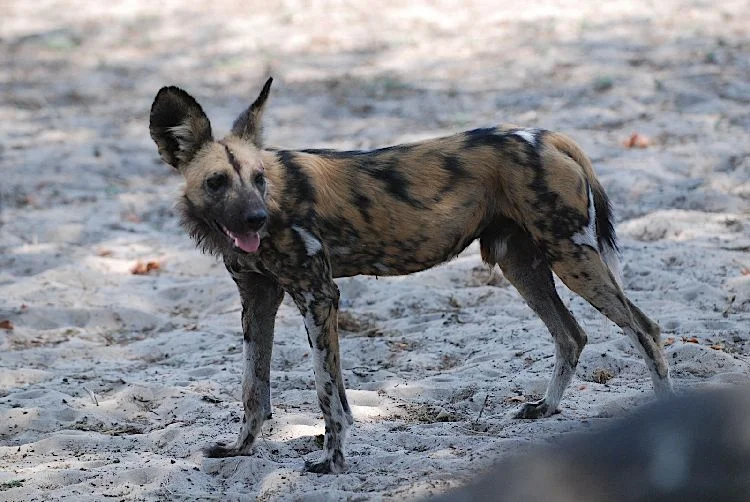
From May through October, as the rains stop and the floodplains drain, Katavi becomes one of Africa's most concentrated wildlife theaters. The Katuma River, which threads through the park, dwindles. Lake Katavi and Lake Chada - both seasonal - shrink to mudflats. Animals that moved freely across hundreds of square kilometers in the wet months are forced into smaller and smaller circles around the remaining water. Cape buffalo herds of a thousand or more mass at the Katuma. Hippo pools become so crowded that animals lie stacked on each other. Crocodiles dig themselves into the banks and wait. Elephants, Masai giraffes, and large herds of zebra push through the dusty woodlands. Lions, leopards, cheetahs, spotted hyenas, and African wild dogs follow the prey. The area southeast of the park near Lake Chada reportedly holds the highest mammal densities.
The Pressure
Katavi's isolation has been both its protection and, in a different way, its problem. Because so few tourists reach the park, there is less money and less oversight than at Serengeti or Ngorongoro. Illegal hunting - much of it described as bushmeat sustenance by people living at the park's edges - has reduced wildlife numbers in sections that used to teem. Some researchers have warned that Katavi's biodiversity, though still impressive, is quietly slipping. There is no easy villain in this story. The communities around the park are among the poorest in Tanzania, and the ecosystem services that parks provide cannot be eaten. Getting Katavi's tourism economy working at a sustainable scale is one of the longer-running projects of Tanzania's conservation agencies.
Getting There
There is effectively no easy way to reach Katavi. Charter flights from Dar es Salaam - operated by Mbali Mbali Shared Charter through Zantas Air Services, or Safari Air Link - take around three hours and land on the dirt Ikuu airstrip near the ranger post. Flights to Mwanza take about two hours. Arusha is a similar three-hour light-aircraft trip, with limited service (Mondays and Thursdays). By road, the numbers are sobering. Mbeya is 550 kilometers away, described as a 'tough but spectacular' drive. Total distance from Dar es Salaam by the most direct route is 1,250 kilometers, requiring sixteen or more hours at an optimistic average speed. People who talk about driving to Katavi tend not to count the hours. They count the days.
Camp Life
As of the most recent reporting, Katavi had three permanent tented camps: Mbali Mbali Katavi Lodge on the Katuma Plain, the Foxes' Katavi Wildlife Camp also on the Katuma, and Chada Katavi on the Chada Plain. Each holds roughly a dozen guests. A public campsite sits at approximately 6 degrees 39 minutes south, 31 degrees 8 minutes east. The experience of staying here is not the experience of a Serengeti lodge. You are far from mobile signal, far from electricity grids, far from anyone who is not guide, cook, or other guest. At night the hippos graze through the camp. In the morning the mist hangs over the floodplains until the sun burns it off. And at midday the light hits the dry grass and turns the whole western horizon pale gold - the color of Tanzania at its emptiest and, for those who reach it, at its most alive.
From the Air
Katavi National Park centers around 6.92°S, 31.33°E in western Tanzania at elevations between 820m (lakes) and 1,500m (ridges). The Ikuu airstrip inside the park is dirt, short, and served by light aircraft only (Cessna Caravan / Pilatus PC-12 class). Mpanda Airport (HTMP) is the nearest paved option, about 40km north. From cruise (FL200+) the Rukwa rift, Lake Tanganyika's northern basin, and the Mahale Mountains to the north all provide useful orientation. Dry season (May-October) offers excellent visibility and the best wildlife viewing; the rainy season makes airstrips marginal.
Nearby Stories
- Katavi Region 34 km away
- Karema, Tanzania 57 km away
- Rukwa Region 89 km away
- Ngualla 109 km away
- Mahale Mountains 117 km away
- Nsumbu National Park 182 km away
- Battle of Tabora 205 km away
- Mbeya Region 206 km away