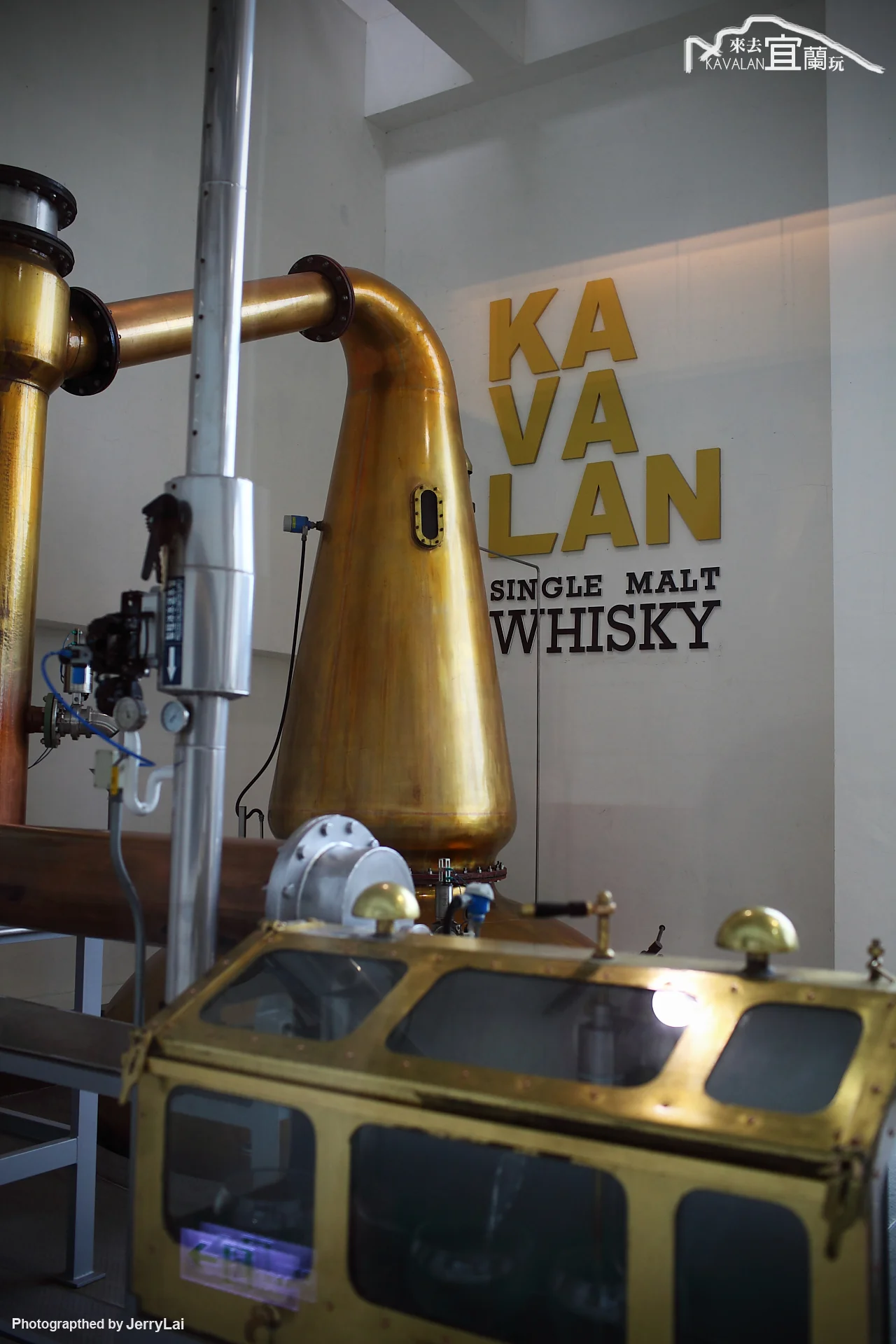

Kavalan Distillery
In January 2010, a panel of whisky experts gathered in Leith, Scotland, for a Burns Night blind tasting. Three of the four contenders were Scotch - the aristocracy of the spirit world, backed by centuries of tradition and the misty authority of Highland terroir. The fourth came from subtropical Taiwan, a country with no whisky heritage whatsoever. The Taiwanese entry won. The distillery behind that upset was Kavalan, named after the indigenous people who once inhabited the rain-soaked Yilan plain on Taiwan's northeast coast. Founded in 2005 by the King Car Group, a beverage company better known for Mr. Brown canned coffee, Kavalan had been making whisky for barely four years. The victory was not a fluke. It was the beginning of a run that would rewrite the rules of what terroir means for whisky.
The Subtropical Advantage
Yilan County sits in a basin between the Xueshan mountain range and the Pacific Ocean, catching monsoon rains and summer heat in equal measure. Temperatures regularly exceed 30 degrees Celsius, and humidity stays high year-round. By Scottish standards, these are terrible conditions for aging whisky. By Kavalan's reckoning, they are perfect. The subtropical climate accelerates the interaction between spirit and wood, compressing years of aging into months. Where a Scottish distillery might wait twelve years for a whisky to mature, Kavalan achieves comparable complexity in three or four. The angels' share - the portion of spirit lost to evaporation each year - runs far higher in Yilan than in Speyside, sometimes reaching 12 percent compared to Scotland's typical 2 percent. Kavalan loses more whisky to the air, but what remains develops flavor at extraordinary speed. The distillery completed construction in December 2005, produced its first spirit in March 2006, and released its first bottling in December 2008 - a timeline that would be unthinkable in Scotland.
Stills, Mistakes, and Mastery
Early in its life, Kavalan bought a set of large German stills to expand production. The investment seemed logical: bigger stills, more whisky, faster growth. But after two years of experimentation between 2008 and 2010, the distillers realized the larger stills stripped away the very qualities they were chasing. The alcohol came out too processed, too clean, lacking the texture and flavor complexity that their smaller stills preserved. Kavalan retired the German equipment - an expensive lesson in the difference between volume and quality. Those retired stills found a second life in 2019 when Kavalan launched a gin made with Taiwanese botanicals: kumquat, red guava, and dried star fruit. The gin turned a costly mistake into a new product line, flavored with ingredients that could only come from this island. Ian Chang, the master blender who had guided Kavalan since its founding, departed in early 2020 after fifteen years of shaping the distillery's identity. By then, the reputation he had helped build needed no single steward.
The Awards Keep Coming
Kavalan's 2012 blind tasting victory opened the floodgates. In 2015, the Vinho Barrique expression was named the world's best single malt whisky at the World Whiskies Awards. The following year, the Solist Amontillado Sherry Single Cask Strength took the title of World's Best Single Cask Single Malt. In 2021, Kavalan dominated the International Wines and Spirits Competition, winning seven of eight Gold Outstanding medals. Forbes noted that the distillery had accumulated dozens of awards since that first blind tasting shock. By June 2023, the International Whisky Competition named Kavalan its Distillery of the Year. The Solist Port Single Cask Strength placed second among the top fifteen whiskies worldwide, and the Triple Sherry Cask ranked fourth among ninety-two whiskies scoring above ninety points. The pattern is consistent: Kavalan does not win in a single category and disappear. It wins across categories, across years, across the varied palates of different judging panels. Taiwan now produces nineteen Kavalan variants, from the entry-level Classic to the single-cask Solist series, each shaped by the same subtropical aging that once seemed like a disadvantage.
A Quiet Revolution in a Rainy Valley
The distillery sits in Yuanshan Township, surrounded by rice paddies and the green wall of the Xueshan foothills. Visitors who make the journey from Taipei - about an hour through the Hsuehshan Tunnel - find a modern facility that looks nothing like the stone-and-copper postcard distilleries of Scotland. There are no pagoda chimneys or centuries-old warehouses. What there is, instead, is evidence of a country that decided to make whisky on its own terms. Taiwan's lack of tradition became Kavalan's freedom: no rules about minimum aging, no orthodoxy about still size, no assumption that only certain climates could produce world-class spirit. The rain falls heavy on the Yilan plain, the air pulls whisky from the casks at four times the Scottish rate, and what remains in the barrel is something the old world never imagined - a tropical whisky that routinely beats the originals at their own game.
From the Air
Located at 24.71°N, 121.69°E in the Yilan Plain of northeastern Taiwan, Kavalan Distillery sits in Yuanshan Township, nestled between the Xueshan Range to the west and the Pacific coast to the east. The facility is visible from moderate altitude as a modern industrial complex amid rice paddies. Taipei Songshan Airport (RCSS/TSA) is approximately 50km to the northwest. Taiwan Taoyuan International Airport (RCTP/TPE) lies about 80km to the west. The Hsuehshan Tunnel, Taiwan's longest highway tunnel, connects Yilan to Taipei through the mountains visible to the west. The Lanyang River delta is a prominent landmark to the east. Weather in this area is frequently wet, with orographic rainfall common against the mountain range.
Nearby Stories
- Xueshan Range 8.2 km away
- Pingxi 9.6 km away
- Neiwan 11 km away
- 2016 Taoyuan Bus Fire 11 km away
- Qingshui Cliff 27 km away
- Sinking of MV Sewol 1086 km away
- Yellow Sea 1147 km away
- Sibuyan Island 1337 km away