
Khutir Nadiia
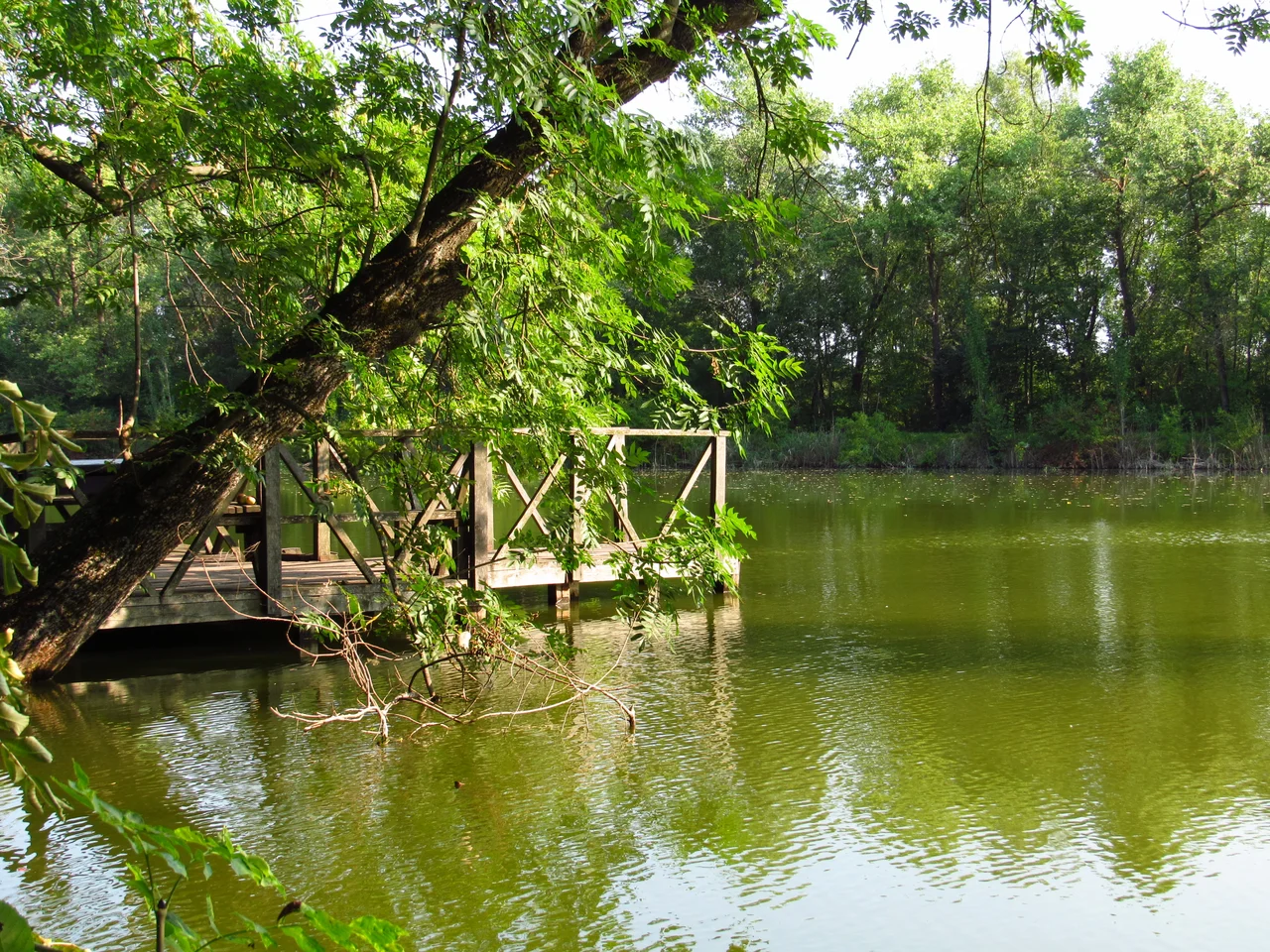
In the spring of 1887, a man came home from three years of political exile and decided to build something out of nothing. Ivan Karpenko-Karyi looked at the flat, wind-scoured farmland his father had settled west of Yelizavetgrad and called it a desert. Then he set about making it, in his own words, an oasis. He planted trees and dug in. Over the next two decades, on this unassuming patch of ground called Khutir Nadiia - Nadiya's Farmstead - he would write most of the plays that made him a founder of modern Ukrainian theater.
A Farm Named for a Wife
The estate began in 1871, when the playwright's father, Karpo Tobilevych, founded a homestead and named it for his wife, Nadiya Tarkovska - Nadiia, meaning "hope." In the early years it was nothing grand: a working farm on the open steppe, kept plain and practical. Two survivors of that first chapter still stand, a simple structure known as the Father's Hut and an old Chumak well, its name recalling the ox-cart salt traders who once crossed these plains hauling their loads from the Black Sea coast. When Ivan chose the farm as his permanent home, he did not tear the modesty away. He worked with it, coaxing green from dry ground, letting the land keep its character while he gave it shade and shape.
Where the Plays Were Written
Karpenko-Karyi wrote eleven of his eighteen plays here, at a desk within sound of the wind moving through the trees he had planted. Among them were the sharp social comedy "Sto tysiach" - "One Hundred Thousand" - the drama "Khaziain" ("The Master"), and the historical tragedy "Sava Chaly." He did not work in isolation. The farm drew the leading lights of the Ukrainian stage: Mykola Sadovsky, Panas Saksahansky, the celebrated actress Maria Zankovetska, and Marko Kropyvnytskyi all passed through or lived a while in the manor. For a time this quiet homestead was, in effect, a workshop for an entire national theater - a place where the language of the plains was being turned into art at a moment when that art was far from safe to make.
The Reserve and Its Wounds
In 1956 the Soviet state declared Khutir Nadiia a museum-reserve, placing it under the care of the regional museum in Kirovohrad. Writers and cultural figures came to honor it - among them the novelist Oles Honchar. The theater on the grounds, destroyed in 1944, was rebuilt in 1982 for the centenary of Ukrainian theater, and a new stage and memorial exhibition later marked the playwright's 150th anniversary. The place has known damage since - not all restorations were gentle, and some sat uneasily with those who loved the farm as it was. Yet the farmstead endures, a candidate once for the Seven Wonders of Ukraine, drawing more than four thousand visitors a year to walk the ground where the oasis was made.
From the Air
Khutir Nadiia sits at 48.483N, 31.949E, roughly 29 km west of Kropyvnytskyi in the village of Mykolaivka, near european route E50. From about 3,000 to 4,000 feet the wooded estate reads as a small green island against the surrounding cultivated steppe. The nearest airport is Kropyvnytskyi (UKKG); Uman lies to the northwest.
Nearby Stories
- Melgunov Kurgan 4.5 km away
- Bug Gard National Nature Park 29 km away
- Maidanetske 45 km away
- Battle of Blue Waters 45 km away
- Maksym Zalizniak Oak 57 km away
- Aktove Canyon 57 km away
- Subotiv 76 km away
- Church of the Nativity of the Theotokos 79 km away