
Kilbirnie
Robert Burns rode away from Kilbirnie with a plough-horse and a poem. The horse, bought at the Saint Brennan's Day Fair, would later be immortalised in his "The Inventory" as a "damn'd red-wud Kilburnie blastie." The local football club, Kilbirnie Ladeside F.C., still wear the nickname today. "The Blasties." In Burns's time it referred to the temperament of a difficult animal. Later it became a reference to the blast furnaces that defined the town's industrial century. A poem, a horse, and a fire: the layered history of a small Ayrshire town in three words.
From Three Houses to Five Thousand
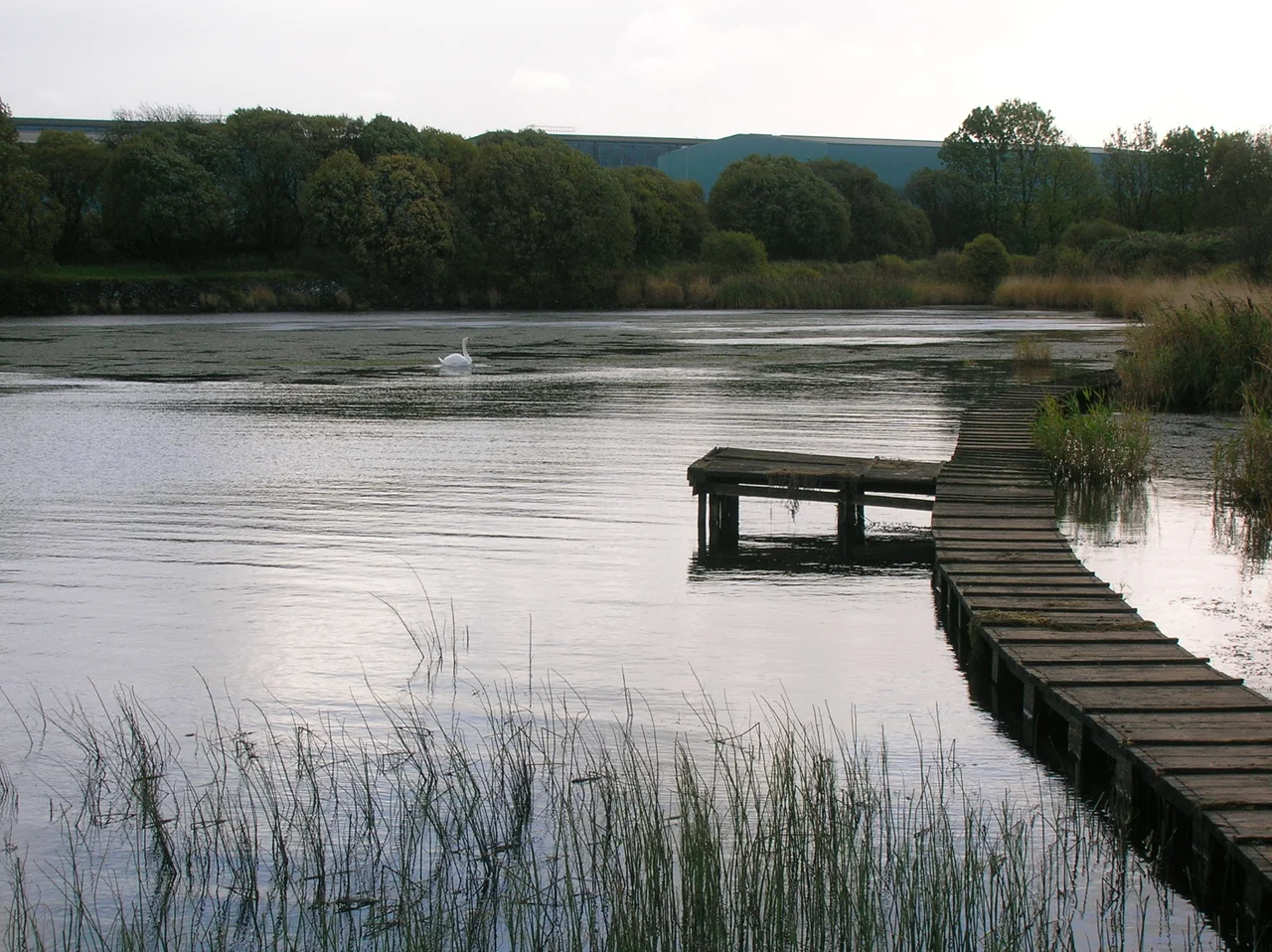
In 1740, Kilbirnie was a clearing with three houses. By 1801 the population had reached 959. Half a century later, in 1851, the Industrial Revolution had swelled the town to 5,484 people, drawn by flax production, weaving, and the iron works rising in the Garnock Valley. The name comes from the parish church, the "Auld Kirk," which still stands as a Category A listed building and one of the oldest churches in Scotland still in use both before and after the Reformation. Long before any of that, the valley held Bronze Age inhabitants who built a crannog in Kilbirnie Loch, reached by a causeway across the water. In 1792 a miller named Mr Dickie was building a road near the Nether Mill pond when he unearthed an empty stone coffin, 6.5 feet by 2.5. He broke it up and used it in the road. Some history Kilbirnie kept; some it paved over.
The Steel Years
Glengarnock Steel Works lit its blast furnaces around 1841 and changed everything. Workers came from across the country and around the world, transforming Kilbirnie into the kind of industrial town where most adult men worked at the steelworks and the town's identity was forged in heat. Merry and Cunninghame ran the works first, then David Colville and Sons, before nationalisation as part of British Steel Corporation. The works closed in 1985, ending nearly a century and a half of fire. The closure left an unemployment blackspot from which the town has not fully recovered. Glengarnock railway station serves modern Kilbirnie with three trains an hour to Paisley and Glasgow, the main lifeline for residents who now commute out of the town to work. The W and J Knox Threadmills, still operating, supply nets for the British Army and the BT Tower, a quiet survivor of the textile traditions that preceded steel.
Strike of 1913
In late March 1913 the National Federation of Women Workers held a meeting and agreed a strike at Kilbirnie. The networkers, women who wove nets for the local mills, walked out in April and stayed out until 2 September. It was the longest recorded strike of women workers in Britain at that time. Their leader was Kate McLean. The community supported them; in May 1913 a meeting in Kilbirnie drew ten thousand supporters. When the women returned to work in September, they returned with improved wages and conditions. The story rarely makes the national accounts of Edwardian labour history, but it should. Five months on strike, in a small Ayrshire town, against the textile manufacturers, ended in victory.
The Hall, the Hills, the Hollywood Years
Walker Memorial Hall, named for one of the town's first physicians, was in the 1960s a famous concert venue, considered second only to the Barrowland Ballroom in Glasgow. Gerry and the Pacemakers played there. So did Bill Haley and His Comets, the architects of rock and roll, in a hall in a steel town in Ayrshire. The hall now houses the town's Citizens Advice Bureau. The film The Decoy Bride, starring David Tennant and Kelly Macdonald, was partially filmed in Kilbirnie. North of the town, on a promontory above the wooded Garnock ravine, stands the ruined 15th-century keep of Glengarnock Castle. The hills between Kilbirnie and Largs were notorious for aircraft crashes in low fog, and wreckage of several of those crashes is still visible in what is now Clyde Muirshiel Regional Park. Notable residents include footballer Gordon McQueen, who played for Manchester United and Leeds, and was later a Sky Sports presenter. A suburb of Wellington, in New Zealand, carries the town's name.
From the Air
Kilbirnie sits at approximately 55.75°N, 4.70°W, in the Garnock Valley of North Ayrshire, about 20 miles southwest of Glasgow. Best viewed from 2,000-4,000 feet, the town and Glengarnock village run along the floor of the valley with Kilbirnie Loch visible just to the east. The hills between Kilbirnie and Largs were notorious for low-fog aircraft crashes; modern aviators should treat the same low-overcast risk seriously. Nearest airports are Glasgow Prestwick (EGPK) to the south and Glasgow International (EGPF) about 17 nm northeast. The Clyde estuary and Great Cumbrae lie to the west; the ruined keep of Glengarnock Castle stands about 2 miles north on a promontory over the Garnock.
Nearby Stories
- Machrie Moor Stone Circles 2.6 km away
- Murder of Kriss Donald 3.7 km away
- Troon 5.5 km away
- Luss 6.8 km away
- HMS Vandal 11 km away
- Doune Castle 16 km away
- Knockshinnoch Disaster 17 km away
- Gulf of Corryvreckan 28 km away