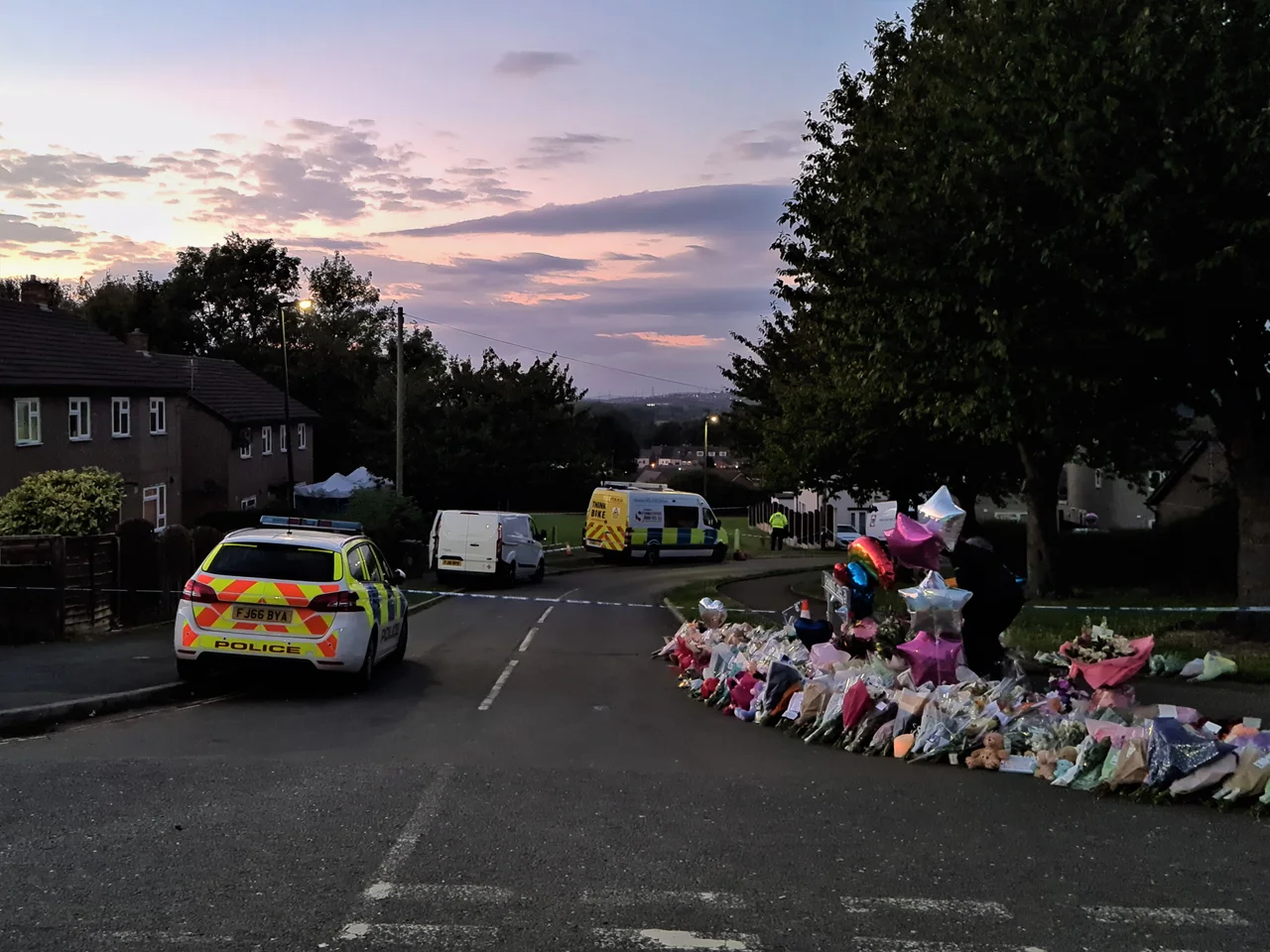

Killamarsh murders
Terri Harris was thirty-five years old and pregnant. Her son John Paul Bennett was thirteen, and her daughter Lacey Bennett was eleven. Lacey had a friend over for a sleepover on the evening of 18 September 2021: Connie Gent, also eleven, who lived elsewhere and was at Chandos Crescent in Killamarsh that night because Lacey had asked her, and because it was that kind of Saturday. The four of them were killed in the house. The man arrested the next morning, Damien Bendall, was Terri's partner, on probation at the time. He was sentenced in December 2022 to a whole-life prison term. The deepest weight of this story is not the perpetrator. It is the four people whose lives ended in that house and the inquiries that followed asking why nothing had been done to keep them safe.
A Family on Chandos Crescent
Killamarsh sits on the Derbyshire side of the Sheffield commuter belt, an outer suburb of villages and modern estates where many of the houses are recent and most of the residents work in Sheffield or Rotherham. Chandos Crescent was a quiet residential street on the edge of the town. Terri Harris had been living there with her two children, John Paul and Lacey, both from a previous relationship. She was expecting another child. John Paul was thirteen, the older of the two, the kind of age where a boy might still have an Xbox in his room and not yet be allowed to stay up too late. Lacey was eleven, in her last year of primary school. Connie Gent, also eleven, was Lacey's friend, and the two girls had planned the sleepover the way eleven-year-olds plan sleepovers, with the certainty that nothing more serious would happen than a film and snacks and staying up later than their parents would have liked.
What Happened That Night
Phone records placed the killings shortly after 21:42 on the evening of 18 September 2021. The children were preparing for bed. At 07:26 the next morning Derbyshire Constabulary received a 999 call from the house. Police officers reached the property at 07:39 and arrested Bendall outside it. The four victims were inside. The details of what Bendall did, established through the police investigation and his own guilty plea in court, are part of the public record and do not need rehearsing here. What matters about the night is that four people who should have been safe in their home were not, and that two of them were children who had merely gone upstairs to bed. A fifth life - the unborn child Terri Harris was carrying - was lost with her.
The Failure That Was Documented
Damien Bendall was on probation at the time of the killings, which meant that the National Probation Service had been responsible for managing the risk he posed to others. After his conviction, HM Inspectorate of Probation conducted a Serious Further Offence review into how the service had handled him. The coroner for Derby and Derbyshire produced a separate Prevention of Future Deaths report. Both documents are publicly available. Both concluded that the probation service had failed in this case: domestic abuse and child safeguarding checks had not been carried out when they should have been, inexperienced staff had been left to make assessments they were not equipped to make, and the risk Bendall posed to a partner and her children had not been properly identified or acted on. The Inspectorate's January 2023 review put the failings starkly. The coroner's November 2023 report addressed them as a system-wide problem rather than an individual one. Neither document brought back Terri, John Paul, Lacey, Connie, or the baby. Both insisted, in their different official languages, that the protections society claimed to have in place had not protected them.
What Stands There Now
On 21 July 2023, on the orders of North East Derbyshire District Council, the house at 56 Chandos Crescent was demolished, along with the house next door. The council had consulted with local residents and with the victims' families before the demolition. The land was left clear. A community does not have a single right way to handle a place where something like this happened; some prefer the building to remain, lived in by other families, the street unchanged. Killamarsh chose otherwise. The empty plot now sits among the rows of identical neighbouring houses, a small absence that local people understand. The vigil held in the days after the killings, attended by hundreds, named all four victims aloud. The names matter most: Terri Harris, mother; John Paul Bennett, son; Lacey Bennett, daughter; Connie Gent, friend on a sleepover. The probation reforms that have followed - changes to risk assessment, to caseload limits, to safeguarding checks - are part of what should be done. They came too late for those four.
From the Air
Killamarsh is at 53.322 N, 1.318 W, on the northeast edge of Derbyshire, immediately south of Sheffield in South Yorkshire. The location sits at about 70 m elevation in the wider Sheffield commuter belt. Best viewed at a distance from 3,000 ft AGL or above, as a small suburban town within a band of woodland and former industrial land. Nearest airports: Doncaster Sheffield (EGCN) 14 nm east-northeast; Sheffield City Heliport 4 nm north. The M1 motorway runs 2 nm to the west.
Nearby Stories
- Flixborough Disaster 0.8 km away
- Peveril Castle 1.7 km away
- Newstead Abbey 2.6 km away
- Huddersfield Town Hall 3.8 km away
- Ackworth School 7.9 km away
- RAF Scampton 11 km away
- RAF Cranwell 16 km away
- Croxden Abbey 18 km away